

The source of the book
This book is published for the public benefit under a Creative Commons license, or with the permission of the author or publisher. If you have any objections to its publication, please contact us.
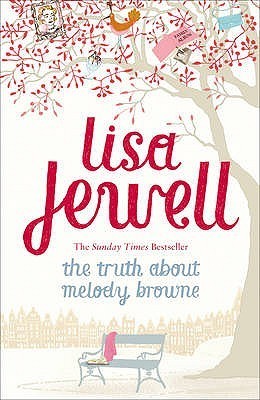
The Truth About Melody Browne PDF - Lisa Jewell
Lisa Jewell • romantic novels • 326 Pages
(0)
Quate
Review
Save
Share
Book Description
The Truth About Melody Browne by Lisa Jewell is an emotionally rich novel of memory, identity, family secrets, and self-discovery, offering a different but deeply recognizable side of the author best known today for her psychological suspense and domestic mysteries. Rather than beginning with a conventional crime investigation, the novel begins with a haunting absence: Melody Browne cannot remember her life before the age of nine. A childhood house fire destroyed her family’s possessions and left her with no clear memory of the years that came before it, creating a blank space at the center of her identity. Now in her early thirties, living in London and raising her teenage son, Melody has built an ordinary, independent life, but she carries the quiet feeling that something essential is missing. (simonandschuster.com)
A Moving Story About Memory and the Search for Belonging
At the heart of The Truth About Melody Browne is a simple but powerful question: who are we when the beginning of our own story has been erased? Melody knows the outline of her adult life. She knows herself as a mother, a Londoner, a woman who left home young and learned to manage on her own. Yet the first part of her life remains hidden behind smoke, trauma, and silence. The fire that changed everything did more than burn a house; it removed photographs, keepsakes, familiar objects, and the private evidence from which most people build a sense of who they are. Without those memories, Melody has lived with a version of herself that feels incomplete.
The story begins to shift when Melody attends a hypnotist show while on a date and suddenly experiences strange fragments of memory. These images do not fit the life she thought she knew. They suggest places, people, and emotional connections that have been buried for decades. At first, the memories are confusing rather than comforting, but they become impossible to ignore. Melody begins to follow them, piece by piece, moving through London streets, seaside towns, old houses, and unexpected encounters with people who seem to recognize and love a version of her she cannot yet remember. (simonandschuster.com)
A Lisa Jewell Novel with Heart, Mystery, and Emotional Depth
Although The Truth About Melody Browne is not as dark as some of Lisa Jewell’s later psychological thrillers, it contains many of the qualities that make her fiction so compelling: secrets hidden inside families, emotional suspense, carefully revealed backstory, and ordinary lives shaped by extraordinary events. The mystery here is not only about what happened in Melody’s childhood. It is also about how memory protects, distorts, and sometimes returns when a person is ready to face the truth. Readers who enjoy family mystery novels, emotional women’s fiction, contemporary British fiction, and character-driven suspense will find a story that is gentle in tone but powerful in its emotional pull.
Jewell’s gift lies in making the reader care about the answers before the full mystery is clear. Melody is not investigating a crime in the traditional sense; she is investigating herself. Each recovered memory raises another question. Each new person she meets opens another door. Each place that feels strangely familiar suggests that the life she has accepted as complete may be only one part of a much larger truth. This structure gives the novel a quiet page-turning quality. It invites the reader to keep going not because of shock alone, but because Melody’s need to understand herself feels intimate and urgent.
Family Secrets and the Fragility of Personal History
One of the strongest themes in The Truth About Melody Browne is the fragility of personal history. Most people rely on family stories, old photographs, childhood objects, remembered rooms, and repeated anecdotes to build a stable sense of identity. Melody has been deprived of much of that foundation. The destruction of her childhood home represents a larger emotional loss: the loss of proof. Without the objects and memories that would normally connect her to her early years, she has had to trust the version of events available to her, even if that version has always felt incomplete.
As the novel unfolds, Lisa Jewell explores how families can be both loving and secretive, protective and damaging, truthful and evasive. The people connected to Melody’s past are not simply clues in a puzzle; they are living emotional presences, each carrying their own history, pain, loyalty, and silence. This gives the novel a layered emotional texture. The truth Melody seeks is not a single dramatic revelation, but a gradual reconstruction of a childhood scattered across different people and places. The more she learns, the more she must reconsider what family means: the family that raised her, the family she created with her son, and the family history that may have existed beyond her memory.
Melody Browne as a Compelling and Relatable Heroine
Melody is a memorable heroine because her search is both unusual and deeply relatable. Few readers have experienced memory loss as dramatic as hers, but many understand the feeling of not fully belonging, of sensing that the past has shaped them in ways they cannot completely explain. Melody’s life as a single mother gives the novel an additional emotional layer. She is not only looking backward for herself; she is also approaching a new stage in life as her son grows older. His near-adulthood forces her to confront her own unfinished questions, making the search for her past feel timely rather than abstract.
Her courage is quiet rather than dramatic. She does not rush through the story as a detective or thriller heroine. Instead, she follows fragile clues, endures confusion, allows herself to feel discomfort, and slowly accepts that the truth may be more complicated than she imagined. This makes her journey emotionally satisfying. The reader watches her move from uncertainty toward a fuller understanding of herself, even when that understanding brings pain. In this way, The Truth About Melody Browne becomes a novel about resilience as much as mystery.
A Softer but Still Suspenseful Side of Lisa Jewell
Readers who know Lisa Jewell through novels such as Then She Was Gone, The Family Upstairs, Invisible Girl, or None of This Is True may notice that The Truth About Melody Browne has a warmer, more reflective atmosphere. Yet it still shows the author’s sharp instinct for suspense and secrets. Jewell understands how to make the past feel alive. She knows how to place emotional tension inside domestic spaces, and how to use small details—a name, a street, a room, a remembered image—to change the meaning of an entire life.
This novel also reflects Jewell’s long-standing interest in women at turning points. Melody is not a glamorous or exaggerated character; she is ordinary in the best literary sense, someone whose life feels real enough that her discoveries matter. The mystery is compelling because it affects her whole identity. When she begins to recover memories, she is not simply learning facts; she is recovering lost emotional territory. She must decide what to do with the people, places, and truths that return to her, and how to integrate them into the life she has already built.
Why Readers Will Be Drawn to The Truth About Melody Browne
The Truth About Melody Browne is ideal for readers looking for a Lisa Jewell book about family secrets, a novel about lost memories, or a moving contemporary mystery that combines emotional warmth with a slowly unfolding past. It will appeal to those who enjoy stories about identity, motherhood, childhood trauma, hidden family histories, and the way one forgotten event can shape an entire life. The book offers suspense without relying only on darkness, and emotional depth without becoming heavy or inaccessible.
The novel’s appeal also comes from its sense of journey. Melody’s search takes her beyond the boundaries of the life she knows, into unfamiliar places that somehow feel connected to her. That movement gives the story both physical and psychological momentum. The reader travels with her through confusion, recognition, doubt, and discovery, sharing her hope that somewhere beneath the lost years there is an answer that will finally make sense of everything.
A Thoughtful Novel About Truth, Memory, and Starting Again
Ultimately, The Truth About Melody Browne by Lisa Jewell is a touching and absorbing story about a woman trying to reclaim the missing chapters of her own life. It is a novel about how the past survives even when memory fails, how secrets can shape a family across years, and how truth can be painful while still offering freedom. Through Melody’s search for her childhood, Jewell creates a story that is mysterious, heartfelt, and quietly powerful.
For readers who appreciate emotional suspense, family drama, contemporary fiction, and novels about women uncovering hidden truths, The Truth About Melody Browne offers a rewarding reading experience. It shows Lisa Jewell’s talent for combining readable storytelling with psychological insight, and it reminds readers that discovering the truth about the past is not only about solving a mystery. Sometimes it is about becoming whole.
Lisa Jewell
Lisa Jewell is a British author whose name has become strongly associated with psychological thrillers, domestic suspense, family secrets, missing-person mysteries, and emotionally layered crime fiction. Her fiction is widely read because it combines page-turning tension with a close understanding of ordinary lives: marriages, friendships, neighborhoods, memories, grief, obsession, and the quiet unease that can exist behind respectable doors. Her publisher describes her as a number one New York Times bestselling author of twenty-four novels, including Don’t Let Him In, None of This Is True, The Family Upstairs, Then She Was Gone, Invisible Girl, and Watching You; the same publisher notes that her novels have sold more than fifteen million copies internationally and have been translated into more than thirty languages.
Jewell’s career began with Ralph's Party, a novel that helped establish her as a fresh voice in popular fiction at the end of the 1990s. In her early work, she was often associated with warm, witty, relationship-driven fiction, but her career later moved into darker psychological territory. That shift is one of the reasons her body of work is so appealing: she did not abandon character or emotional realism when she entered the thriller field. Instead, she brought those strengths into stories about secrecy, manipulation, disappearance, memory, and danger. As a result, her thrillers feel intimate as well as suspenseful. The fear in her books often begins not with a spectacular crime scene, but with a person noticing that something in a familiar relationship does not quite fit.
One of Jewell’s defining qualities is her ability to make ordinary settings feel charged with hidden meaning. A family home, a London street, a garden, a pub, or a quiet community can become the center of a mystery where the past refuses to stay buried. In novels such as Then She Was Gone, The Family Upstairs, The Night She Disappeared, Invisible Girl, and None of This Is True, she often explores what happens when private histories collide with public identities. Her characters are rarely simple heroes or villains. They are grieving parents, lonely strangers, unreliable witnesses, wounded children, charming manipulators, and people who have learned to survive by hiding pieces of themselves. This psychological depth gives her stories a strong emotional pull.
Jewell is especially effective at writing suspense that is accessible without being shallow. Her chapters are usually shaped by momentum, revelation, and shifting points of view, but beneath the structure lies a steady interest in trauma, denial, family damage, and the stories people tell in order to protect themselves. Readers who come to her books for twists often stay for the emotional stakes. She understands that a secret is not only a plot device; it is also a burden that changes how people love, remember, trust, and fear. This makes her novels highly suitable for fans of domestic thrillers, crime fiction, book club mysteries, and psychological suspense novels that combine readability with emotional complexity.
Her reputation has continued to grow with the modern thriller audience. Penguin has described her as an author once beloved for romance who has become a household name in crime fiction, with books frequently appearing on the Sunday Times bestseller list. None of This Is True also became a major reader favorite; the BBC reported that it won Book of the Year at the 2024 TikTok Book Awards, reflecting the way Jewell’s suspense reaches both traditional readers and contemporary online reading communities.
A major part of Jewell’s appeal lies in her control of uncertainty. She rarely gives the reader a complete picture at the beginning. Instead, she offers fragments: a memory that may be wrong, a person whose charm feels slightly rehearsed, a disappearance that has never been fully explained, or a household whose surface calm hides something rotten. The reader is invited to assemble the truth alongside the characters, but the truth usually arrives with emotional consequences. That structure gives her books their compulsive rhythm, making them the kind of novels readers often describe as difficult to put down.
For readers discovering Lisa Jewell, her work offers a strong entry point into contemporary British suspense. She writes about fear, but also about longing, grief, family bonds, social performance, and the way the past can return through the smallest detail. Her novels appeal to readers who enjoy clever plotting, morally complicated characters, and stories where danger grows from the most familiar spaces. Whether the book begins with a missing girl, a strange inheritance, a dangerous friendship, or a man who seems too perfect to trust, Jewell’s fiction promises a carefully built atmosphere of suspicion and emotional discovery.
Earn Rewards While Reading!
Every 10 pages you read and spent 30 seconds on every page, earns you 5 reward points! Keep reading to unlock achievements and exclusive benefits.
Read
Rate Now
5 Stars
4 Stars
3 Stars
2 Stars
1 Stars
The Truth About Melody Browne Quotes
Top Rated
Latest
Quate
Be the first to leave a quote and earn 10 points
instead of 3
'%20/%3e%3c/svg%3e "None of This Is True")
Comments
Be the first to leave a comment and earn 5 points
instead of 3