

The source of the book
This book is published for the public benefit under a Creative Commons license, or with the permission of the author or publisher. If you have any objections to its publication, please contact us.
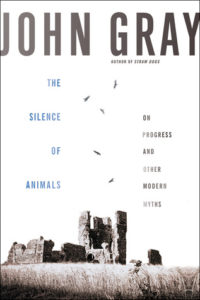
The Silence of Animals PDF - John Gray
John Gray • psychology • 122 Pages
(0)
Quate
Review
Save
Share
Book Description
The Silence of Animals by John Gray: A Profound Exploration of Progress, Myth, and the Human Animal
The Silence of Animals: On Progress and Other Modern Myths by John Gray is a searching work of philosophical nonfiction that challenges one of the most powerful beliefs of the modern world: the idea that humanity is steadily moving toward moral, political, or spiritual improvement. Gray, a noted political philosopher, returns to the unsettling questions that made Straw Dogs so widely discussed, asking readers to reconsider what human beings are, why they need myths, and whether the promise of progress is itself one of the most persistent modern illusions. The book is published as a work of nonfiction philosophy and is presented by its publishers as a continuation of Gray’s earlier thinking on human nature, meaning, and the myths that shape civilization. (Macmillan Publishers)
A Philosophical Challenge to the Myth of Human Progress
At the center of The Silence of Animals is Gray’s provocative argument that human beings are not as free from illusion as they imagine. Modern societies often replace religious faith with secular beliefs in science, reason, politics, technology, or historical progress, yet Gray suggests that many of these beliefs still function like myths. They give people meaning, direction, and comfort, but they may also hide the darker, more unstable realities of human life. For readers searching for a book about progress and modern myths, this work offers a bold and often unsettling alternative to optimistic narratives about civilization.
Gray does not reject intelligence, imagination, or culture; instead, he questions the stories people tell themselves about what these things can achieve. His writing examines the human need to escape from uncertainty, suffering, violence, and mortality through grand narratives. In doing so, The Silence of Animals becomes not only a critique of progress but also a meditation on consciousness itself: why humans cannot simply live, why they constantly interpret their lives through stories, and why silence may belong more naturally to animals than to human beings.
The Human Animal and the Search for Meaning
One of the most memorable aspects of John Gray’s The Silence of Animals is its focus on the human being as an animal that refuses to accept its animal nature. Gray asks why people seek meanings beyond the facts of existence and why the imagination so often carries them away from the world directly in front of them. This makes the book especially appealing to readers interested in human nature, existential philosophy, secular thought, pessimism, myth, and the limits of reason.
The title itself points toward a central contrast: animals live without the burden of explaining themselves, while humans are restless, divided, and driven by stories. Gray’s reflections suggest that the silence of animals is not emptiness but a kind of freedom from the compulsive self-narration that defines human consciousness. This idea gives the book its haunting atmosphere. It is not simply a philosophical argument; it is a literary and contemplative journey into the ways people try to escape being what they are.
A Literary and Intellectual Journey Through Extremity
Rather than presenting a narrow academic argument, Gray builds The Silence of Animals through encounters with literature, memoir, poetry, fiction, and philosophy. Publisher descriptions note that the book draws on writers such as J. G. Ballard, Jorge Luis Borges, Joseph Conrad, and Sigmund Freud, using their work to explore human extremity, fantasy, fear, violence, and the outer limits of experience. (Macmillan Publishers) This gives the book a rich, wide-ranging texture that will appeal to readers who enjoy philosophy written through literature rather than abstract theory alone.
Gray’s method is reflective and associative. He moves between thinkers, stories, historical moments, and unsettling images, allowing ideas to accumulate rather than unfold as a simple thesis. The result is a book that feels part essay, part philosophical meditation, and part literary inquiry. Readers who appreciate writers such as Nietzsche, Schopenhauer, Conrad, Ballard, or Borges may find in Gray a voice that is intellectually severe yet stylistically elegant, skeptical of human self-importance while deeply attentive to the strange beauty of human imagination.
Reading Experience and Style
The reading experience of The Silence of Animals is intense, elegant, and often challenging. Gray’s prose is compact and atmospheric, balancing philosophical argument with literary allusion and cultural criticism. This is not a conventional self-improvement book, nor is it a straightforward political philosophy text. It is better understood as a work of modern philosophical essays that invites reflection on the limits of hope, the fragility of civilization, and the myths that help humans endure their own condition.
Readers should expect a book that resists easy reassurance. Gray’s perspective is often described as pessimistic, but the value of the book lies in the seriousness with which it treats illusion, suffering, and the hunger for meaning. Instead of offering a program for redemption, The Silence of Animals encourages a clearer gaze. It asks whether freedom might begin not in another theory of progress, but in releasing the need for history to justify human existence.
Who Should Read The Silence of Animals?
The Silence of Animals by John Gray is ideal for readers of philosophy, political thought, cultural criticism, literary nonfiction, and existential writing. It will especially interest those who question optimistic ideas about modernity, human perfectibility, and the belief that science or politics can solve the deepest conflicts of human life. Fans of Straw Dogs will recognize Gray’s recurring concern with the human animal, while new readers will discover a distinctive voice that combines skepticism, literary range, and philosophical force.
This book is also well suited to readers who enjoy nonfiction that crosses boundaries between philosophy and literature. Because Gray draws from a broad intellectual tradition, the book can be read as a guide to modern anxieties as much as a critique of progress. It speaks to anyone interested in why humans create myths, why secular societies still need forms of faith, and why the desire for meaning remains so powerful even in a disenchanted age.
Why This Book Still Matters
The lasting relevance of The Silence of Animals: On Progress and Other Modern Myths lies in its refusal to flatter the reader. In an age often dominated by promises of innovation, transformation, and endless improvement, Gray’s book offers a counterpoint: a reminder that human beings remain vulnerable, imaginative, violent, fearful, and self-deceiving. Its subject is not only whether progress is real, but whether the need to believe in progress reveals something essential about the human mind.
For readers looking for a thoughtful and provocative John Gray book on progress, myth, and human nature, The Silence of Animals offers a powerful encounter with one of contemporary philosophy’s most skeptical voices. It is a dark, beautifully written, and intellectually demanding work that does not ask readers to abandon thought, but to question the consoling stories thought so often creates. Its power comes from the way it turns the reader back toward the world itself: strange, indifferent, vivid, and silent.
John Gray
John Gray is an American author, relationship counselor, and public speaker best known for the influential relationship book Men Are from Mars, Women Are from Venus. His work has become closely associated with popular psychology, communication advice, emotional understanding, and practical guidance for couples seeking healthier and more compassionate relationships. Gray’s writing style is accessible, direct, and highly practical, which helped his books reach a wide audience beyond academic readers and professional therapists. Rather than presenting relationships as abstract theories, he explains everyday emotional conflicts through familiar situations: one partner wants to talk while the other withdraws, one person offers advice when the other wants empathy, or both partners feel unloved because they express care in different ways. This ability to turn common misunderstandings into simple, memorable frameworks is one of the main reasons John Gray became a recognizable name in self-help and relationship literature.
John Gray gained international fame after the publication of Men Are from Mars, Women Are from Venus in 1992. The book uses the metaphor of men and women coming from different planets to describe how partners may interpret love, stress, intimacy, silence, and support in different ways. Its central message is not that relationships are doomed by difference, but that difference can be understood, respected, and managed through better communication. Gray argues that many conflicts arise not from lack of affection, but from mismatched expectations. One partner may think support means giving solutions, while the other may need listening and emotional validation. One may need private time to recover from stress, while the other may interpret distance as rejection. By naming these patterns in plain language, Gray gave readers a vocabulary for discussing emotional needs without turning every disagreement into blame.
Beyond his most famous title, John Gray has written many books that expand the Mars and Venus approach into dating, marriage, intimacy, parenting, health, and personal growth. Works such as Mars and Venus in the Bedroom, Mars and Venus on a Date, and Children Are from Heaven show his interest in applying relationship principles across different stages of life. His books often emphasize patience, appreciation, emotional timing, and the importance of understanding how people respond to stress. He encourages readers to notice recurring patterns in conversation, to avoid assuming bad intentions, and to communicate needs in a way that invites cooperation rather than defensiveness. These themes made his books especially useful for readers looking for relationship advice that feels concrete rather than abstract.
The global popularity of John Gray’s writing reflects the universal appeal of his subject matter. Love, conflict, attraction, disappointment, and reconciliation are experiences shared across cultures, even when customs and family expectations differ. His books have been translated into numerous languages and have reached readers in many countries, making him one of the most commercially successful relationship authors of the modern era. At the same time, his work has also attracted criticism from readers and scholars who believe that some of his descriptions of gender differences can be too broad or simplified. This debate is part of his wider cultural impact: Gray’s ideas became so familiar that they shaped conversations about relationships far beyond the pages of his books. Whether readers fully agree with his framework or approach it critically, John Gray remains an important figure in the history of self-help writing, known for bringing relationship communication into mainstream discussion and for encouraging couples to replace accusation with curiosity, patience, and mutual understanding.
Earn Rewards While Reading!
Every 10 pages you read and spent 30 seconds on every page, earns you 5 reward points! Keep reading to unlock achievements and exclusive benefits.
Read
Rate Now
5 Stars
4 Stars
3 Stars
2 Stars
1 Stars
The Silence of Animals Quotes
Top Rated
Latest
Quate
Be the first to leave a quote and earn 10 points
instead of 3
Other books by John Gray
'%20/%3e%3c/svg%3e "Mars and Venus in the Bedroom : A Guide to Lasting Romance and Passion")
John Gray.
Human Development
(0)
4800
English
Comments
Be the first to leave a comment and earn 5 points
instead of 3