

The source of the book
This book is published for the public benefit under a Creative Commons license, or with the permission of the author or publisher. If you have any objections to its publication, please contact us.
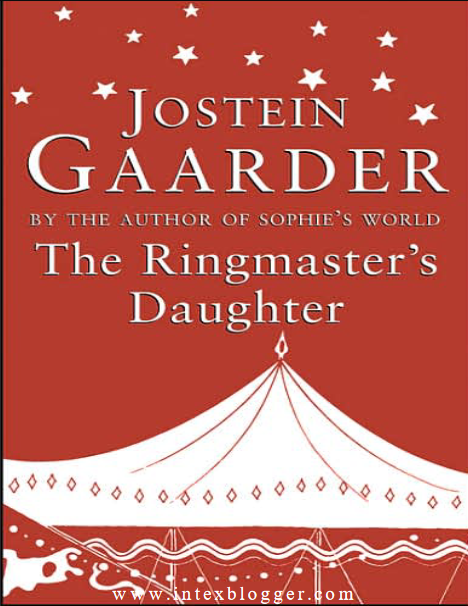
The Ringmaster's Daughter PDF - Jostein Gaarder
Jostein Gaarder • Literary novels • 263 Pages
(0)
Author
Jostein GaarderCategory
literatureSection
Number Of Downloads
85
Number Of Reads
237
File Size
0.77 MB
Views
1,805
Quate
Review
Save
Share
Book Description
The Ringmaster’s Daughter by Jostein Gaarder is a literary novel first published in Norwegian in 2001 under the title Sirkusdirektørens datter. Its original publisher was Aschehoug Forlag, and the English title became available in translation in later editions, including a Phoenix/W&N paperback edition listed in 2003. Written by the Norwegian author best known internationally for Sophie’s World, the novel combines metafiction, satire, mystery, and psychological drama. It is especially suited to readers interested in stories about storytelling itself: who owns ideas, what happens when imagination becomes a commodity, and how fiction can both connect and damage human lives.
The plot of The Ringmaster’s Daughter centers on Petter, a lonely and unusually imaginative Norwegian boy who grows up with few close friendships and a strong preference for the private world of his mind. From childhood, Petter is not merely daydreaming; he is constantly generating stories, images, possible lives, and narrative patterns. As he becomes an adult, this creative power develops into something more morally complicated. He does not want the public identity, exposure, or emotional risk that comes with being a published author, so instead of writing under his own name, he begins supplying plots and ideas to other writers.
Petter’s hidden enterprise becomes known as a kind of “Author Aid,” a service for writers suffering from creative blockage. At first, the arrangement seems clever and profitable. Petter sits behind the scenes, feeding novelists, playwrights, and other literary professionals with the raw material they need. He can create more stories than he can use, and his clients receive the inspiration they lack. Yet the more successful the scheme becomes, the more dangerous it grows. Petter’s gift turns into a web, and he becomes trapped in the consequences of selling imagination without openly taking responsibility for it.
Running through the novel is the story suggested by the title: the image of a ringmaster searching for a lost daughter. One of the embedded tales involves a trapeze artist, Panina Manina, whose death reveals an amber amulet connected to a child lost years earlier. This motif of a father recognizing or recovering a lost daughter echoes through Petter’s own life and gives the novel its emotional pattern. The book is not only about professional deceit in the literary world; it is also about parenthood, absence, recognition, and the strange ways stories can return to their teller.
Petter’s personal life deepens the novel’s tension. He meets Maria, falls in love with her, and becomes involved in an unusual relationship marked by secrecy and separation. Maria eventually leaves for Stockholm and asks Petter to father her child before they part. This episode becomes crucial later, although Petter does not immediately understand its full meaning. As his business expands across Europe, rumors begin to spread in literary circles about a mysterious figure who supplies plots to many writers. The same imagination that once protected him from loneliness now exposes him to suspicion.
The danger becomes more concrete at a publishing event in Bologna, where Petter is warned that people may be looking for him. He flees and goes into hiding on the Amalfi Coast. There he meets Beate, a woman with whom he begins another emotionally charged relationship. As Petter reveals some of his stories to her, her reaction suggests that these stories are not new to her. Gradually, he realizes that Beate may have inherited them through Maria, and that Beate is his daughter. (ويكيبيديا)
The Ringmaster’s Daughter is therefore a novel about a storyteller who loses control of his own stories. Jostein Gaarder uses Petter’s life to explore the seductions of creativity, the vanity of authorship, and the ethical limits of invention. The novel’s plot moves like a puzzle, with stories inside stories gradually reflecting the narrator’s own hidden wounds. By the end, the reader sees that Petter’s greatest mystery is not how many plots he can invent, but whether he can understand the real human ties that his imagination has obscured.
Jostein Gaarder
Jostein Gaarder is a Norwegian author, intellectual, and former teacher whose writing has made philosophy, wonder, and moral reflection accessible to readers across generations. Born in Oslo in 1952, he grew up in an environment shaped by education and literature, and his later studies in language, religion, and philosophy helped form the distinctive voice that defines his fiction. Before gaining international recognition as a novelist, Gaarder worked as a teacher, a background that is deeply visible in his books: he writes not as someone simplifying ideas from above, but as a storyteller inviting readers into the act of questioning. His most famous work, «Sofies verden», transformed a history of philosophy into a compelling narrative of discovery, mystery, and intellectual awakening. The novel’s success rests on a rare balance: it introduces major philosophical traditions while preserving the suspense and emotional movement of fiction. Rather than presenting ideas as abstract lessons, Gaarder dramatizes them through letters, puzzles, conversations, and a young protagonist’s gradual realization that reality is more layered than it first appears. This method has become one of his literary signatures. Across works such as «Kabalmysteriet», «I et speil, i en gåte», and «Appelsinpiken», he repeatedly returns to the power of childhood curiosity, the fragility of life, and the human need to search for meaning. His characters often stand at thresholds: between childhood and adulthood, belief and doubt, life and death, the visible world and the invisible questions behind it. Gaarder’s prose is clear and approachable, yet it carries philosophical density. He is especially skilled at building stories within stories, using metafictional structures and symbolic details to remind readers that narratives shape how people understand themselves. His books often invite the reader to become a participant rather than a passive observer; the act of reading becomes an act of thinking. This quality explains why his work appeals to both young adult readers and adults who are drawn to reflective fiction. Gaarder does not write philosophy as an academic discipline locked inside institutions; he presents it as a living practice rooted in astonishment. The recurring themes of time, memory, faith, mortality, love, and responsibility give his novels emotional warmth, while his intellectual range gives them lasting educational value. Beyond literature, Gaarder is also associated with environmental concern and ethical engagement, and this awareness appears in his writing as a broader concern for the planet and for future generations. His work suggests that philosophical curiosity should lead not only to self-understanding but also to responsibility toward other people and the natural world. In the landscape of modern Norwegian literature, Gaarder occupies a highly recognizable place: he is a novelist of ideas who turned difficult questions into memorable stories without losing their seriousness. For book websites, library profiles, and author pages, Jostein Gaarder can be described as a writer who unites narrative imagination with intellectual clarity, making him one of the most widely read Norwegian authors of contemporary times. His legacy is inseparable from his ability to show that the deepest questions are not reserved for specialists; they belong to every reader willing to pause, wonder, and ask what it means to be alive.
Earn Rewards While Reading!
Every 10 pages you read and spent 30 seconds on every page, earns you 5 reward points! Keep reading to unlock achievements and exclusive benefits.
Read
Rate Now
5 Stars
4 Stars
3 Stars
2 Stars
1 Stars
The Ringmaster's Daughter Quotes
Top Rated
Latest
Quate
Be the first to leave a quote and earn 10 points
instead of 3
Other books by Jostein Gaarder
'%20/%3e%3c/svg%3e "Sophie's World: A Novel about the History of Philosophy")
6584
English
Comments
Be the first to leave a comment and earn 5 points
instead of 3