

The source of the book
This book is published for the public benefit under a Creative Commons license, or with the permission of the author or publisher. If you have any objections to its publication, please contact us.
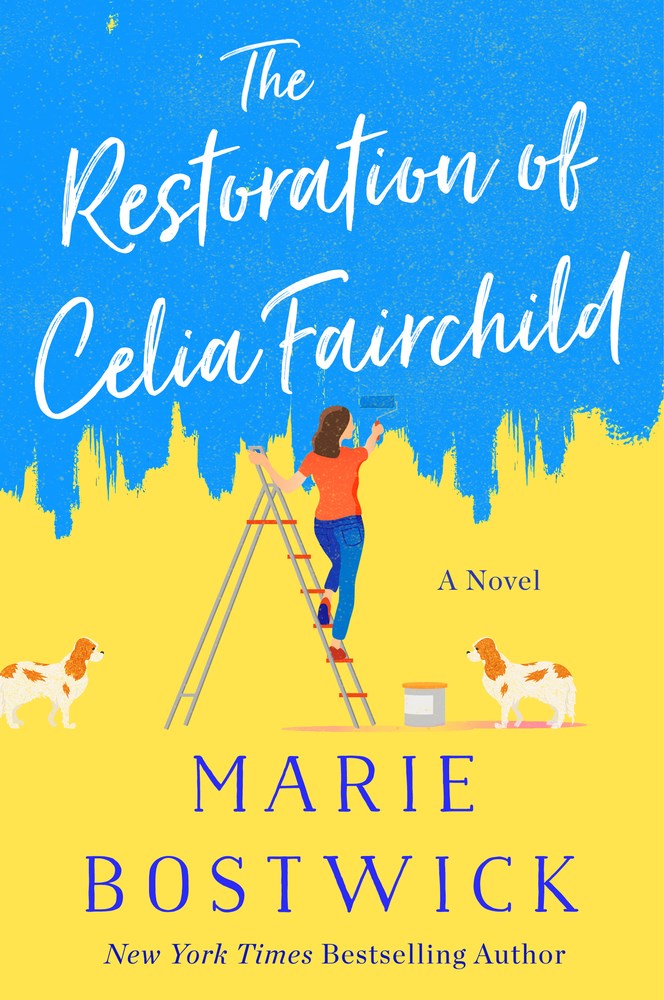
The Restoration of Celia Fairchild PDF - Marie Bostwick
Marie Bostwick • romantic novels • 416 Pages
(0)
Quate
Review
Save
Share
Book Description
Marie Bostwick is a bestselling American novelist known for warm, emotionally generous fiction about friendship, family, resilience, reinvention, and the healing power of community. Her novel The Restoration of Celia Fairchild was published by William Morrow Paperbacks on March 2, 2021, and is presented as a wise, witty story about a fired advice columnist who returns to Charleston and discovers both lost family history and a new sense of belonging. (Marie Bostwick)
The Restoration of Celia Fairchild follows Celia Fairchild, a New York advice columnist known to readers as “Dear Calpurnia,” a woman who seems gifted at solving everyone’s problems except her own. At the beginning of the novel, Celia is emotionally bruised by the collapse of a marriage she had hoped would become the foundation for the family she longs to create. When she receives an unexpected response to a “Dear Birthmother” letter, she sees a possible path toward adoption and motherhood, but her carefully organized hopes are thrown into chaos when she loses her job and professional identity. With her income and stability suddenly uncertain, Celia turns to the only practical option available: the Charleston house left to her by her estranged Aunt Calpurnia. What appears at first to be a financial solution soon becomes a deeper journey into memory, inheritance, identity, and emotional restoration.
Set largely in Charleston, The Restoration of Celia Fairchild uses the renovation of an old, neglected house as a powerful metaphor for Celia’s own inner rebuilding. When she arrives, she discovers that the property is in terrible condition and that her aunt had become a hoarder, leaving behind not only a damaged home but also layers of family secrets, grief, and unresolved history. Celia must decide whether she can repair the house quickly enough to sell it or make it suitable for the adoption process, but the physical restoration gradually becomes inseparable from a more personal transformation. As she sorts through rooms, objects, memories, and difficult truths, she begins to understand that family is not always defined by easy bonds or perfect histories. Sometimes it is found through chosen connections, loyal friends, generous neighbors, and the courage to confront what has been avoided for years.
Marie Bostwick brings her signature warmth, humor, and emotional insight to this novel, making Celia a sympathetic and believable heroine. Celia is not simply a woman in crisis; she is a woman who has spent her life giving advice while quietly carrying her own loneliness, disappointments, and longing for home. Her return to Charleston forces her to face the gap between the person she appears to be and the person she is still becoming. Around her, Bostwick builds a rich supporting cast of old friends, new neighbors, and strong, creative women who help Celia discover that accepting help can be as courageous as offering it. The novel’s appeal lies in this balance between personal vulnerability and communal strength. It is a story about adoption, friendship, Southern family history, emotional risk, and the possibility of beginning again after public and private loss.
For readers of contemporary women’s fiction, book club fiction, and heartfelt family drama, The Restoration of Celia Fairchild offers an uplifting yet thoughtful reading experience. The novel explores themes of belonging, chosen family, forgiveness, home renovation, female friendship, self-worth, and second chances without losing its lightness of touch. Bostwick’s prose is accessible and inviting, with scenes that move between humor, tenderness, and reflection. The Charleston setting adds atmosphere, history, architecture, and Southern charm, while the house itself becomes almost a living character: broken, cluttered, demanding, but full of hidden value. Through Celia’s efforts to restore the property, the novel suggests that lives, like houses, may be damaged by neglect, misunderstanding, or time, yet still hold the structure needed for renewal.
The Restoration of Celia Fairchild is a strong choice for readers who enjoy novels by authors such as Debbie Macomber, Robyn Carr, Susan Wiggs, and other writers of emotionally satisfying fiction centered on women’s lives and relationships. It is especially suitable for reading groups because it invites discussion about motherhood, adoption, identity, career loss, inherited trauma, friendship, community, and the meaning of home. Marie Bostwick uses Celia’s story to show that restoration is not only about repairing what is broken; it is also about deciding what deserves to be saved, what must be released, and what kind of future can be built from the materials left behind.
Marie Bostwick
Marie Bostwick is an American novelist widely recognized for uplifting contemporary and historical fiction centered on friendship, family, resilience, women’s lives, and the quiet courage required to begin again. A New York Times and USA Today bestselling author, she has built a devoted readership through stories that combine emotional warmth with meaningful conflict, offering novels that feel comforting without becoming simplistic. Her work often explores ordinary people at turning points: women facing grief, change, uncertainty, aging, disappointment, reinvention, or the awakening realization that a life can be repaired, redirected, and made fuller through honesty and community. Bostwick is especially admired for creating relatable, layered female characters whose strength develops through relationships rather than isolation. They are wives, mothers, friends, artists, widows, neighbors, sisters, and seekers, yet they are never reduced to a single role. Instead, her fiction allows them to struggle, fail, forgive, question themselves, and discover new possibilities through shared experience. One of her best-known achievements is the Cobbled Court Quilt series, beginning with A Single Thread and continuing through novels such as A Thread of Truth, A Thread So Thin, Threading the Needle, Ties That Bind, and Apart at the Seams. In these books, quilting is more than a craft motif; it becomes a metaphor for healing, patience, memory, and the joining of separate lives into a stronger pattern. The series helped establish Bostwick as a favorite among readers who enjoy book club fiction, women’s fiction, community-centered storytelling, and novels where creative work becomes a path toward emotional restoration. She is also the author of the Too Much, Texas series, including Between Heaven and Texas and From Here to Home, as well as many stand-alone novels, among them Fields of Gold, River’s Edge, The Second Sister, The Promise Girls, Just in Time, Hope on the Inside, The Restoration of Celia Fairchild, Esme Cahill Fails Spectacularly, and The Book Club for Troublesome Women. Her debut novel, Fields of Gold, brought early attention to her fiction, while later books expanded her reputation for thoughtful storytelling with broad reader appeal. Hope on the Inside follows a woman who discovers renewed purpose by teaching crafts and quilting in a women’s prison, allowing Bostwick to examine dignity, second chances, creativity, and human connection in an unexpected setting. The Restoration of Celia Fairchild presents another of her signature themes: rebuilding a life after public and private collapse, with humor, tenderness, and moral insight. Her 2025 novel The Book Club for Troublesome Women moves into the early 1960s and follows suburban women whose reading group becomes a catalyst for self-discovery, friendship, and social awareness. That novel reflects Bostwick’s skill at blending historical atmosphere with intimate emotional arcs, making large cultural changes visible through personal choices, conversations, doubts, and acts of courage. Across her career, Bostwick’s style is accessible, graceful, and emotionally generous. She favors believable dialogue, sympathetic but imperfect characters, domestic settings rich with meaning, and plots that invite readers to reflect on their own relationships and hopes. Her novels are especially well suited for reading groups because they raise questions about identity, loyalty, forgiveness, work, marriage, creativity, and the ways women support one another across difference. Although her tone is often hopeful, her books do not ignore grief, loneliness, injustice, or fear; rather, they suggest that healing can come through friendship, purposeful work, faith in ordinary kindness, and the willingness to tell the truth. Living in Washington state and remaining active with readers through events, book clubs, and her lifestyle writing, Bostwick continues to occupy a cherished place in American popular fiction as an author of warm, wise, and deeply humane stories
Earn Rewards While Reading!
Every 10 pages you read and spent 30 seconds on every page, earns you 5 reward points! Keep reading to unlock achievements and exclusive benefits.
Read
Rate Now
5 Stars
4 Stars
3 Stars
2 Stars
1 Stars
The Restoration of Celia Fairchild Quotes
Top Rated
Latest
Quate
Be the first to leave a quote and earn 10 points
instead of 3
'%20/%3e%3c/svg%3e "The Book Club for Troublesome Women")
Comments
Be the first to leave a comment and earn 5 points
instead of 3