

The source of the book
This book is published for the public benefit under a Creative Commons license, or with the permission of the author or publisher. If you have any objections to its publication, please contact us.
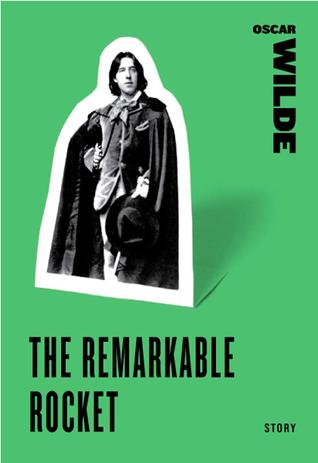
The Remarkable Rocket PDF - Oscar Wilde
Oscar Wilde • Fantasy novels • 28 Pages
(0)
Quate
Review
Save
Share
Book Description
The Remarkable Rocket by Oscar Wilde is a witty and satirical short story that showcases the author’s signature blend of humor, irony, and moral reflection. Written by the celebrated Irish writer Oscar Wilde, this tale is part of The Happy Prince and Other Tales, a collection that continues to enchant readers of all ages with its imaginative storytelling and deeper philosophical undertones. At first glance, the story appears to be a playful fable about fireworks and celebration, but beneath its sparkling surface lies a sharp commentary on vanity, pride, and self-delusion.
Set during a royal wedding celebration, the story introduces a cast of fireworks that are prepared for a grand display. Among them is a rocket who is convinced of his own extraordinary importance. From the very beginning, the rocket believes he is destined for greatness, repeatedly insisting on his emotional depth, sensitivity, and superiority over the other fireworks. However, his inflated self-image contrasts comically with his actual behavior, as he frequently bursts into tears and dampens himself, making him nearly unusable for the celebration. This humorous contradiction forms the foundation of the story’s satire, as Wilde gently ridicules self-importance and exaggerated self-perception.
A Satirical Fable About Pride and Self-Deception
At its core, The Remarkable Rocket is a story about pride taken to absurd extremes. The rocket is so consumed by his belief in his own significance that he cannot perceive reality accurately. He constantly speaks in grandiose language, expecting admiration from everyone around him, even when he is clearly failing to meet expectations. His emotional fragility and dramatic expressions of sorrow are ironically paired with his conviction that he is destined to illuminate the sky in a way no other firework can.
Wilde uses this character to explore the nature of vanity and how it distorts perception. The rocket does not simply think highly of himself; he constructs an entire identity based on imagined superiority. This makes him blind to the reactions of others and unable to recognize his own limitations. The humor of the story comes from this gap between self-perception and reality, a recurring theme in Wilde’s work.
Humor, Irony, and Wilde’s Literary Style
One of the defining features of this story is its use of irony. The rocket’s speeches are filled with exaggerated self-praise, yet his actual performance is underwhelming. Even when he finally is launched, the result is far from the spectacular explosion he imagines. Instead, he ends up soaked, discarded, and forgotten. This outcome sharply contrasts with his expectations, reinforcing the idea that arrogance often leads to disappointment.
Wilde’s writing style is elegant yet playful, filled with witty dialogue and subtle critique. He often gives inanimate objects human traits, allowing readers to reflect on human behavior through exaggerated metaphor. The fireworks are not just objects in a display; they become symbolic representations of personality types, with the rocket embodying arrogance and self-obsession. This allegorical approach makes the story accessible to younger readers while offering deeper philosophical meaning for adults.
Themes of Vanity, Identity, and Social Critique
A central theme in The Remarkable Rocket is vanity and the danger of excessive self-regard. The rocket’s belief in his own importance prevents him from engaging meaningfully with the world around him. He is more interested in how he is perceived than in what he actually accomplishes. This reflects a broader critique of social behavior, particularly among individuals who value appearance and reputation over substance.
Another important theme is identity. The rocket constructs a version of himself that has little connection to reality. He imagines himself as sensitive, artistic, and destined for greatness, yet his actions contradict these claims. Wilde uses this contrast to highlight how identity can become a performance rather than an authentic expression of self.
The story also subtly critiques social hierarchy and pretension. The rocket’s belief in his superiority mirrors the attitudes of individuals in society who assume importance based on status or self-image rather than genuine merit. Through humor and exaggeration, Wilde invites readers to question how value and worth are determined.
The Climax and the Rocket’s Fate
As the story progresses, the rocket’s behavior becomes increasingly frustrating to those around him. His constant emotional outbursts and arrogance make him unpopular among the other fireworks, who view him as unreliable and self-absorbed. Despite this, he remains convinced that his moment of glory is imminent.
When the long-awaited celebration finally begins, the rocket is launched, but instead of soaring triumphantly, he fails to make the dramatic impact he envisioned. Wet from his own tears and largely ineffective, he is ultimately discarded as useless. Ironically, even in his failure, the rocket continues to believe that his performance was deeply meaningful, interpreting his lack of success as proof of the world’s inability to understand his greatness.
This ending reinforces the story’s central irony: self-delusion can persist even in the face of overwhelming evidence. The rocket’s inability to recognize his own failure adds a final layer of comedy and tragedy to his character.
Why The Remarkable Rocket Remains Relevant
Despite being written in the late 19th century, The Remarkable Rocket continues to resonate with modern readers because its themes are timeless. In an age where self-image, recognition, and social validation play significant roles in daily life, the rocket’s exaggerated vanity feels surprisingly familiar. The story serves as a reminder of the importance of humility and self-awareness, encouraging readers to reflect on the difference between perception and reality.
The tale also stands out as an example of Wilde’s ability to blend entertainment with moral insight. It is both humorous and thought-provoking, offering multiple layers of interpretation. Younger readers may enjoy it as a simple and amusing fable, while older readers can appreciate its satirical depth and commentary on human behavior.
A Lasting Example of Wilde’s Wit and Moral Fables
Within the broader context of Oscar Wilde’s work, this story exemplifies his talent for combining charm with critique. Oscar Wilde often used fairy tales and fables not merely to entertain but to expose the contradictions of society and human nature. The Remarkable Rocket fits perfectly into this tradition, using a whimsical character to explore serious ideas about ego and self-perception.
The story’s enduring appeal lies in its simplicity and clarity. It does not require complex interpretation to be enjoyable, yet it rewards deeper reading with insights into human psychology and social behavior. The rocket’s journey, though comedic, reflects a universal truth: unchecked pride can distort reality and lead to isolation or failure.
Conclusion: A Brilliantly Humorous Moral Reflection
The Remarkable Rocket remains one of Wilde’s most memorable short stories due to its clever use of satire, vivid characterization, and timeless moral lessons. Through the exaggerated figure of a self-important firework, the story explores themes of vanity, identity, and the consequences of self-deception. It invites readers to laugh at the rocket’s absurdity while also recognizing elements of truth within his behavior.
Ultimately, the story is not just about a failed firework display—it is about the human tendency to overestimate oneself and the importance of maintaining humility in the face of reality. This combination of humor and insight ensures that The Remarkable Rocket continues to shine as a small but powerful example of Oscar Wilde’s literary genius.
Oscar Wilde
Oscar Wilde (1854-1900) was an Irish playwright, poet, and novelist who is widely regarded as one of the greatest writers of the Victorian era. He was born in Dublin, Ireland, and educated at Trinity College, Dublin, and Magdalen College, Oxford. Wilde was a flamboyant figure in Victorian society, known for his wit, dandyism, and homosexuality, which was then considered a crime.
Wilde's literary career began in the 1880s, when he gained popularity with his comedic plays, including "Lady Windermere's Fan," "A Woman of No Importance," and "The Importance of Being Earnest." These plays were known for their clever wordplay, social commentary, and satirical portrayal of Victorian society.
In addition to his plays, Wilde also wrote novels, including "The Picture of Dorian Gray," which tells the story of a beautiful young man who makes a Faustian pact to remain young and beautiful while his portrait ages and becomes ugly. The novel caused controversy when it was first published in 1890 because of its decadent themes and homoerotic undertones.
Despite his literary success, Wilde's personal life was tumultuous. In 1895, he was convicted of homosexual acts and sentenced to two years of hard labor. The trial and subsequent imprisonment destroyed his reputation and health, and he died in Paris in 1900, at the age of 46.
Wilde's legacy lives on through his works, which continue to be celebrated for their wit, humor, and social commentary. His writing has influenced generations of writers, and his plays continue to be performed and adapted for film and television. Today, Wilde is remembered not only as a great writer, but also as a symbol of resistance against Victorian moralism and hypocrisy.
Earn Rewards While Reading!
Every 10 pages you read and spent 30 seconds on every page, earns you 5 reward points! Keep reading to unlock achievements and exclusive benefits.
Read
Rate Now
5 Stars
4 Stars
3 Stars
2 Stars
1 Stars
The Remarkable Rocket Quotes
Top Rated
Latest
Quate
Be the first to leave a quote and earn 10 points
instead of 3
Other books by Oscar Wilde
Other books like The Remarkable Rocket
'%20/%3e%3c/svg%3e "Fantastic Beasts: The Crimes of Grindelwald - the Original Screenplay")
J. K. Rowling.
Fantasy novels
(0)
7573
English
Comments
Be the first to leave a comment and earn 5 points
instead of 3