

The source of the book
This book is published for the public benefit under a Creative Commons license, or with the permission of the author or publisher. If you have any objections to its publication, please contact us.
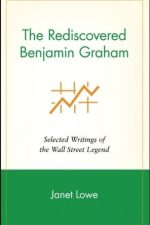
The Rediscovered Benjamin Graham PDF - Benjamin Graham
Benjamin Graham • Financial management • 312 Pages
(0)
Quate
Review
Save
Share
Book Description
The Rediscovered Benjamin Graham: Selected Writings of the Wall Street Legend is a nonfiction investment book built around the work of Benjamin Graham, the influential financial thinker widely associated with value investing. The volume was published in 1999 by Wiley in New York, with Benjamin Graham named as the central author and Janet Lowe credited for bringing together and presenting the selected material. Library records list the book under Graham and Lowe, with the subjects of investment analysis, securities, and finance.
This book is not a novel, so it does not have a fictional plot, characters, or dramatic storyline. Instead, The Rediscovered Benjamin Graham offers a curated journey through Graham’s investment ideas, using articles, lectures, interviews, and market observations that help readers understand why his approach remained influential long after his lifetime. The book’s purpose is to reintroduce Graham’s thinking beyond his most famous works, such as Security Analysis and The Intelligent Investor, and to show the range of his views on markets, business behavior, investor psychology, and long-term economic problems.
The content centers on Graham’s belief that investing should be grounded in analysis rather than speculation. Across the selected writings, he emphasizes the importance of studying the underlying value of a business, examining securities with discipline, and avoiding emotional reactions to market noise. Readers encounter Graham not simply as a stock picker, but as a teacher of financial judgment. His ideas encourage investors to think independently, demand a margin of safety, and distinguish between price movements and real business value.
Janet Lowe’s role is important because the book functions as a rediscovery of Graham’s lesser-known writings. The collection includes rare or previously unpublished articles, lectures, and interviews, giving readers a broader view of his intellectual development and practical advice. Open Library’s description notes that Lowe presents foundations of Graham’s reputation, including his market observations and his assessment of long-term economic issues.
A summary of the book’s content can be described as a progression through Graham’s financial philosophy. It begins from the idea that markets are often inefficient in the short term, creating opportunities for careful investors. Graham argues that serious investing requires patience, research, and a willingness to resist popular opinion. He repeatedly returns to the principle that investors should buy securities only when the price offers a rational relationship to value. This makes the book especially useful for readers interested in value investing, fundamental analysis, and the history of Wall Street thought.
The book also reveals Graham’s ethical and intellectual side. He was concerned not only with profit, but also with sound reasoning, fair dealing, and the responsibilities of financial professionals. His writings show skepticism toward market fads and overconfidence, warning readers that rising prices can easily be mistaken for permanent value. This makes The Rediscovered Benjamin Graham relevant for modern investors, because the emotional pressures Graham described still appear in every market cycle.
Another major theme is education. Graham writes as someone trying to train investors to think more clearly. He does not present investing as a game of predictions, but as a disciplined process based on evidence. The book therefore appeals to readers who want to understand the roots of value investing rather than only learn quick techniques. It gives historical context to concepts such as security analysis, intrinsic value, diversification, and investor discipline.
Overall, The Rediscovered Benjamin Graham is a valuable nonfiction collection for readers who want a deeper understanding of Benjamin Graham’s investment philosophy. Published by Wiley in 1999, the book preserves and organizes important writings that might otherwise remain overlooked. Its “story” is the story of an investment mind at work: cautious, analytical, ethical, and focused on the difference between market price and business value. For anyone studying value investing, Benjamin Graham, or classic financial literature, this book offers a thoughtful companion to his better-known works.
Benjamin Graham
Benjamin Graham is one of the most influential financial authors of the twentieth century and is widely regarded as the intellectual father of value investing. Born in London in 1894 and raised in the United States, Graham developed a way of thinking about money, markets, and business ownership that continues to shape professional investment practice and personal finance education. His importance as an author comes not only from the success of his investment career, but from his ability to turn practical market experience into a disciplined philosophy that ordinary readers, analysts, fund managers, and students could understand and apply. Graham’s most famous works, Security Analysis, written with David Dodd, and The Intelligent Investor, established a rigorous framework for studying securities, estimating business value, and protecting capital against speculation, emotional decision-making, and excessive optimism. Instead of treating stocks as pieces of paper to be traded according to rumors or market excitement, Graham taught readers to see each share as a fractional ownership interest in a real business. This shift in perspective is central to his literary and intellectual legacy. His writing repeatedly returns to the distinction between price and value: price is what the market quotes today, while value must be studied through assets, earnings, dividends, debt, management quality, and long-term earning power. One of Graham’s most enduring ideas is the margin of safety, a principle that encourages investors to buy only when a security appears to be priced significantly below a conservative estimate of its worth. This concept reflects both analytical humility and practical wisdom, because Graham understood that even careful investors can make mistakes and that the future rarely unfolds exactly as expected. He also introduced readers to the memorable image of the market as an emotional business partner whose changing quotations should be used rather than obeyed. Through this metaphor, Graham gave investors a language for resisting panic, excitement, and herd behavior. As a professor at Columbia, he influenced generations of students, including Warren Buffett, who later became one of the best-known advocates of Graham’s principles. Yet Graham’s appeal reaches far beyond one famous student. His books remain valuable because they combine technical analysis with moral seriousness. He respected evidence, patience, caution, and independence of mind. He warned against confusing investment with speculation, and he insisted that successful investing requires character as much as intelligence. His prose is measured, logical, and practical, avoiding sensational promises and emphasizing procedures that can be repeated. Readers encounter an author who values clarity over glamour and sound judgment over fashionable opinion. The continuing relevance of Benjamin Graham lies in the fact that financial markets change faster than human nature. New technologies, new products, and new trading platforms may alter the surface of investing, but fear, greed, impatience, and overconfidence remain familiar forces. Graham’s work helps readers recognize those forces and build habits that reduce their power. For anyone interested in long-term investing, financial literacy, business valuation, or the history of modern investment thought, Benjamin Graham remains an essential author whose books provide both a practical education and a durable philosophy of rational decision-making.
Earn Rewards While Reading!
Every 10 pages you read and spent 30 seconds on every page, earns you 5 reward points! Keep reading to unlock achievements and exclusive benefits.
Read
Rate Now
5 Stars
4 Stars
3 Stars
2 Stars
1 Stars
The Rediscovered Benjamin Graham Quotes
Top Rated
Latest
Quate
Be the first to leave a quote and earn 10 points
instead of 3
Other books by Benjamin Graham
Other books like The Rediscovered Benjamin Graham
'%20/%3e%3c/svg%3e "Learn to Earn: A Beginner's Guide to the Basics of Investing")
13971
English
Comments
Be the first to leave a comment and earn 5 points
instead of 3