

The source of the book
This book is published for the public benefit under a Creative Commons license, or with the permission of the author or publisher. If you have any objections to its publication, please contact us.
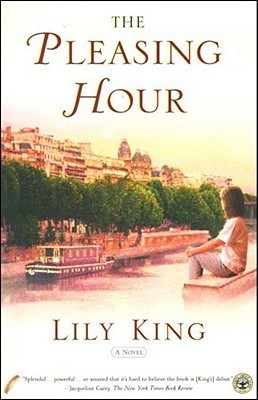
The Pleasing Hour PDF - Lily King
Lily King • romantic novels • 267 Pages
(0)
Quate
Review
Save
Share
Book Description
The Pleasing Hour by Lily King is a beautifully observed work of literary fiction that follows Rosie, a young American woman who travels to France to work as an au pair for the Tivot family. Far from home and carrying the weight of a private loss, Rosie enters a household that appears elegant, cultivated, and controlled from the outside, yet is quietly shaped by emotional distance, buried pain, and complicated attachments. The novel was Lily King’s debut and has been described by publishers as a story of family, betrayal, and the naivety of youth, centered on a young woman whose coming-of-age unsettles simple ideas about innocence and experience.
At the heart of the novel is Rosie’s attempt to escape one life by entering another. In Paris, she cares for the Tivot children and becomes increasingly drawn into the rhythms, tensions, and longings of their family. The children offer her warmth and immediacy, while their father, Marc, represents a kind of emotional closeness she has been missing. Nicole, the children’s polished and distant mother, remains harder to reach, both fascinating and intimidating Rosie as the household’s silences begin to suggest deeper wounds. What begins as the story of an American abroad gradually becomes a layered exploration of intimacy, grief, and the unseen histories that shape the present.
A Coming-of-Age Story Set in France
Readers looking for a coming-of-age novel set in France will find in The Pleasing Hour a story that is atmospheric without being simply picturesque. Lily King uses Paris, Provence, family homes, meals, language barriers, and cultural dislocation not merely as background, but as part of Rosie’s emotional education. France becomes a place of beauty and estrangement, a landscape in which Rosie is both guest and outsider, observer and participant. Her limited understanding of the language mirrors her deeper uncertainty about the family she serves, the adults she admires, and the choices that have brought her there.
The novel’s power lies in how carefully it resists easy transformation. Rosie does not arrive in Europe as a blank slate, nor does France magically repair what she has lost. Instead, her time with the Tivot family exposes her to other kinds of sorrow and other forms of endurance. As she encounters Nicole’s guardedness, Marc’s needs, the children’s hunger for attention, and the family’s older secrets, Rosie begins to understand that pain is not always visible and that maturity often arrives through discomfort rather than clarity. This makes the novel especially appealing to readers who enjoy character-driven fiction, emotionally intelligent storytelling, and novels about young women learning to see beyond themselves.
Family, Motherhood, Betrayal, and Emotional Inheritance
One of the most compelling aspects of The Pleasing Hour is its treatment of family as both shelter and burden. The Tivot household seems to offer Rosie the intimacy she longs for, but it is also filled with unspoken rivalries, disappointments, and inherited wounds. The novel explores the delicate and often painful ways people seek love from one another: children from parents, spouses from each other, the lonely from the seemingly secure, and the young from those they imagine to be wiser or more complete.
Themes of motherhood, betrayal, grief, and family secrets run throughout the story, giving the novel a quiet emotional suspense. Lily King is less interested in dramatic revelation for its own sake than in the slow unveiling of how the past continues to live inside ordinary gestures, domestic routines, and guarded conversations. When Rosie is eventually drawn toward the older generation of Nicole’s family, the novel widens into a story of memory, war, and the lasting consequences of choices made long before Rosie arrived. Publisher descriptions note that Rosie’s discoveries connect the family’s present tensions to a past darkened by war, duplicity, and tragedy.
Lily King’s Sensitive and Elegant Storytelling
Lily King is widely known for novels that combine emotional precision with graceful prose, and her debut already shows many of the qualities that later readers would associate with her work. Her writing is intimate, observant, and attentive to the small shifts in conversation, atmosphere, and feeling that reveal character. Rather than relying on melodrama, King builds tension through restraint: a silence at the table, a child’s neediness, a mother’s coolness, a young woman’s longing to be useful and loved.
This makes The Pleasing Hour a strong choice for readers who appreciate literary novels about relationships, especially stories where the central drama unfolds through emotional nuance. The novel pays close attention to cultural difference, the vulnerability of youth, the ethics of desire, and the ways people misunderstand both themselves and others. Rosie’s position as an au pair gives her unusual access to the private life of a family while also reminding her that she does not fully belong to it. That tension gives the book much of its tenderness and unease.
Who Should Read The Pleasing Hour?
The Pleasing Hour by Lily King is ideal for readers who enjoy thoughtful literary fiction with a strong sense of place and emotional depth. It will appeal to those searching for an American au pair in Paris novel, a reflective story about a young woman abroad, or a family drama shaped by secrets from the past. Readers of novels about grief, identity, motherhood, forbidden attachments, and the difficult passage from innocence to experience will find much to admire in King’s careful, compassionate storytelling.
The book may also resonate with fans of quiet but powerful narratives in which the most important events are not always the loudest ones. Its pleasures come from atmosphere, character, and emotional layering: the gradual realization that every person Rosie encounters is carrying a story she cannot immediately see. For readers who discovered Lily King through later works such as Writers & Lovers, Euphoria, or Five Tuesdays in Winter, this debut offers a valuable look at the early development of her distinctive fictional voice. King’s official biography notes that The Pleasing Hour was published in 1999 and received recognition including the Barnes & Noble Discover Award, a Whiting Writer’s Award, and New York Times Notable Book status.
A Quietly Powerful Novel About Seeing Others Clearly
At its deepest level, The Pleasing Hour is a novel about learning to see beyond the self. Rosie arrives in France wounded, inexperienced, and hungry for comfort, but her time with the Tivot family teaches her that other people’s lives are more complex than they first appear. Nicole is not simply cold, Marc is not simply kind, the children are not merely charming, and Rosie herself is not only a victim of loss. Each character is shaped by need, history, and contradiction, and Lily King allows those contradictions to remain alive on the page.
Elegant, intimate, and emotionally perceptive, The Pleasing Hour offers a rich reading experience for anyone drawn to literary coming-of-age fiction, family secrets novels, and stories of young women confronting love, guilt, and maturity in an unfamiliar world. It is a novel of subtle discoveries rather than easy answers, inviting readers into a world where beauty and pain are closely intertwined, and where the act of understanding another person can become its own form of transformation.
Lily King
Lily King is an acclaimed American novelist and short-story writer whose fiction has become widely admired for its emotional intelligence, elegant realism, and searching portraits of ambition, love, grief, family, and artistic life. She is best known as the author of the novels The Pleasing Hour, The English Teacher, Father of the Rain, Euphoria, Writers & Lovers, and Heart the Lover, as well as the story collection Five Tuesdays in Winter. Across these books, King has developed a distinctive literary voice: intimate without being narrow, psychologically precise without losing narrative momentum, and deeply attentive to the ways people are shaped by desire, memory, work, loss, and the fragile hope of reinvention. Raised in Massachusetts, she studied English literature at the University of North Carolina at Chapel Hill and later earned an M.A. in creative writing from Syracuse University. Before becoming a major name in contemporary literary fiction, she worked as a high-school English teacher in Valencia, Spain, and held bookstore, restaurant, and teaching jobs while writing the novel that would become The Pleasing Hour. That debut introduced many of the qualities that continue to define her work: finely observed social settings, young women negotiating unfamiliar emotional landscapes, and a style that is both graceful and sharply alert to vulnerability. The Pleasing Hour won the Barnes & Noble Discover Award, received recognition from The New York Times, and helped establish King as a writer of serious promise. She followed it with The English Teacher and Father of the Rain, novels that explored family conflict, secrecy, dependency, and the complex inheritance of childhood. Her breakthrough came with Euphoria, a historically inflected novel inspired by the world of anthropology and loosely connected to the life and intellectual atmosphere surrounding Margaret Mead. Set in the 1930s and driven by a charged triangle of intellect, rivalry, and attraction, Euphoria won the Kirkus Prize for Fiction and the New England Book Award and was a finalist for the National Book Critics Circle Award. King’s reputation expanded further with Writers & Lovers, a novel about Casey Peabody, a grieving and financially strained aspiring writer who waits tables while trying to finish her manuscript and choose a future that can contain both art and love. The book resonated strongly with readers because it treated creative labor not as glamour but as endurance, uncertainty, and faith. Five Tuesdays in Winter displayed King’s gifts in short fiction, while Heart the Lover continued her long engagement with romance, memory, intellectual intimacy, and the emotional consequences of youth carried into later life. King’s work has received major honors, including the Whiting Award, the Maine Book Award, the New England Book Award, and the Kirkus Prize, and has been recognized by prize lists such as the Story Prize, PEN/Faulkner Award, National Book Critics Circle Award, Joyce Carol Oates Prize, and Women’s Prize for Fiction. She lives in Portland, Maine, and remains a significant figure for readers seeking literary novels about women artists, emotional resilience, family inheritance, and the complicated negotiations between independence, att
Earn Rewards While Reading!
Every 10 pages you read and spent 30 seconds on every page, earns you 5 reward points! Keep reading to unlock achievements and exclusive benefits.
Read
Rate Now
5 Stars
4 Stars
3 Stars
2 Stars
1 Stars
The Pleasing Hour Quotes
Top Rated
Latest
Quate
Be the first to leave a quote and earn 10 points
instead of 3
'%20/%3e%3c/svg%3e "Heart the Lover")
Comments
Be the first to leave a comment and earn 5 points
instead of 3