

The source of the book
This book is published for the public benefit under a Creative Commons license, or with the permission of the author or publisher. If you have any objections to its publication, please contact us.
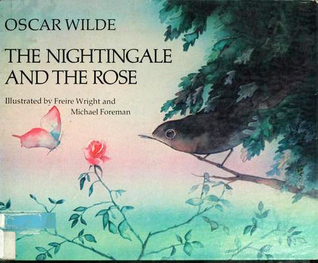
The Nightingale and the Rose PDF - Oscar Wilde
Oscar Wilde • romantic novels • 14 Pages
(0)
Quate
Review
Save
Share
Book Description
The Nightingale and the Rose is one of the most emotionally powerful and widely studied short stories by Oscar Wilde, a master of aestheticism and literary symbolism whose works continue to shape English literature. This timeless tale blends romance, tragedy, and philosophical reflection into a compact yet deeply resonant narrative that explores the nature of love, sacrifice, and human indifference. Frequently studied in schools and literature courses, the story stands as a defining example of Wilde’s ability to merge beauty with sorrow in a way that lingers long after reading.
Written in Wilde’s signature lyrical style, the story presents a fable-like structure that feels both simple on the surface and profoundly layered beneath. It follows a young student who longs for love but is faced with a condition: he can only win the affection of a girl if he brings her a red rose. What follows is a poignant exploration of how desire, misunderstanding, and emotional sacrifice shape human relationships, contrasted sharply with the natural purity represented by the nightingale.
A Timeless Tale of Love, Sacrifice, and Irony
At its heart, The Nightingale and the Rose is a meditation on the idealized concept of love versus its harsh reality. The nightingale, a symbol of selfless devotion, believes deeply in the purity of love and is willing to sacrifice everything to help the student achieve his romantic goal. In contrast, the human characters in the story represent emotional superficiality, material expectations, and the fragility of romantic ideals when confronted with reality.
The student’s love interest is portrayed not as a deeply developed character but as a symbol of romantic rejection and material preference. Her condition for love—a red rose—sets the stage for the nightingale’s ultimate sacrifice, as it gives its life to create the flower through an act of symbolic pain and beauty. This central act becomes one of the most discussed moments in Wilde’s short fiction, representing the intersection of beauty, suffering, and futility.
Despite the nightingale’s sacrifice, the story concludes with a sharp twist of irony. The student’s romantic pursuit is ultimately dismissed, revealing a harsh critique of how easily ideals can be discarded when confronted with vanity or practicality. This ending reinforces Wilde’s recurring literary theme: the conflict between aesthetic idealism and emotional reality.
Symbolism and Literary Depth
One of the reasons The Nightingale and the Rose remains so widely read and analyzed is its dense use of symbolism. The nightingale itself represents pure, selfless love—an emotion that exists beyond logic, reward, or expectation. Its willingness to sacrifice life for an abstract ideal highlights Wilde’s exploration of beauty as something both transcendent and tragic.
The red rose is another powerful symbol, representing love in its most desired and romanticized form. However, its creation through suffering raises philosophical questions about the cost of beauty and whether true love must always involve sacrifice. The story’s natural imagery contrasts sharply with human emotional fragility, emphasizing Wilde’s belief in the superiority of artistic and emotional sincerity over materialistic values.
The student symbolizes intellectualism without emotional depth, a recurring figure in Wilde’s critique of modern society. His inability to understand the value of the nightingale’s sacrifice reflects a broader commentary on how reason alone cannot grasp the essence of love or beauty. This tension between intellect and emotion is central to Wilde’s storytelling philosophy.
Themes of Beauty, Pain, and Disillusionment
The story explores several interconnected themes that contribute to its lasting literary appeal. One of the most prominent is the idea that beauty often comes at a cost. The nightingale’s sacrifice suggests that the creation of something truly beautiful may require suffering, raising questions about whether such sacrifices are justified or meaningful.
Another major theme is disillusionment. The student’s romantic expectations are ultimately unfulfilled, highlighting the gap between idealized love and real human relationships. Wilde uses this outcome to challenge the reader’s assumptions about romance, suggesting that society often misunderstands the true nature of emotional connection.
The contrast between nature and humanity is also central. Nature, represented by the nightingale, is pure, intuitive, and selfless, while humanity is portrayed as self-interested, superficial, and emotionally inconsistent. This contrast reinforces Wilde’s broader philosophical perspective on the relationship between art, emotion, and authenticity.
Reading Experience and Emotional Impact
Despite its brevity, The Nightingale and the Rose delivers a powerful emotional experience. Wilde’s prose is rich, poetic, and carefully structured, drawing readers into a world where beauty and tragedy coexist. The story’s emotional intensity builds gradually, culminating in a conclusion that is both heartbreaking and thought-provoking.
Readers often find themselves reflecting on the meaning of sacrifice and whether the nightingale’s actions were noble or tragic. This ambiguity is part of what makes the story so enduring. It does not provide easy answers but instead encourages introspection about love, value, and the consequences of emotional idealism.
The story’s fairy-tale tone also enhances its impact. By presenting complex philosophical ideas through a simple narrative structure, Wilde ensures that the story remains accessible while still intellectually rich. This balance between simplicity and depth is one of the hallmarks of his literary style.
Educational and Literary Significance
In literary studies, The Nightingale and the Rose is often examined as a key example of late Victorian aestheticism. It reflects Wilde’s belief in “art for art’s sake” while simultaneously questioning the limitations of that philosophy. The story is frequently included in curricula because it offers opportunities to explore symbolism, irony, narrative structure, and thematic analysis.
It is also widely used to introduce readers to allegorical storytelling. Each character and object serves a symbolic purpose, making the story a useful tool for understanding how literature can communicate abstract ideas through narrative form. Students and scholars alike continue to find new interpretations in its layered meaning.
The story’s relevance extends beyond literary analysis. Its exploration of emotional authenticity versus superficial desire remains applicable to modern discussions about relationships, expectations, and human behavior. This universality is one of the reasons it continues to resonate across generations and cultures.
A Lasting Legacy in Short Fiction
Over time, The Nightingale and the Rose has become one of the most recognized works in short fiction, representing Oscar Wilde’s unique ability to blend beauty, irony, and emotional depth. It remains a defining example of how a short story can carry the weight of philosophical inquiry while maintaining narrative elegance.
Its influence can be seen in later literary works that explore similar themes of sacrifice, love, and disillusionment. Writers continue to draw inspiration from Wilde’s ability to transform simple narratives into profound emotional experiences. The story’s continued popularity in literature anthologies and educational materials underscores its enduring importance.
Ultimately, this short story stands as a reminder of the complexity of human emotion and the often painful gap between idealism and reality. Through its poetic language and symbolic richness, it invites readers to reflect on what love truly means and what, if anything, it is worth sacrificing for.
Conclusion
The Nightingale and the Rose remains a timeless literary work that captures the essence of Oscar Wilde’s artistic vision. Through its delicate balance of beauty and tragedy, it explores love, sacrifice, and disillusionment in a way that continues to resonate deeply with readers. Its symbolic depth, emotional power, and philosophical undertones make it not only a classic of English literature but also a profound reflection on the human condition.
Oscar Wilde
Oscar Wilde (1854-1900) was an Irish playwright, poet, and novelist who is widely regarded as one of the greatest writers of the Victorian era. He was born in Dublin, Ireland, and educated at Trinity College, Dublin, and Magdalen College, Oxford. Wilde was a flamboyant figure in Victorian society, known for his wit, dandyism, and homosexuality, which was then considered a crime.
Wilde's literary career began in the 1880s, when he gained popularity with his comedic plays, including "Lady Windermere's Fan," "A Woman of No Importance," and "The Importance of Being Earnest." These plays were known for their clever wordplay, social commentary, and satirical portrayal of Victorian society.
In addition to his plays, Wilde also wrote novels, including "The Picture of Dorian Gray," which tells the story of a beautiful young man who makes a Faustian pact to remain young and beautiful while his portrait ages and becomes ugly. The novel caused controversy when it was first published in 1890 because of its decadent themes and homoerotic undertones.
Despite his literary success, Wilde's personal life was tumultuous. In 1895, he was convicted of homosexual acts and sentenced to two years of hard labor. The trial and subsequent imprisonment destroyed his reputation and health, and he died in Paris in 1900, at the age of 46.
Wilde's legacy lives on through his works, which continue to be celebrated for their wit, humor, and social commentary. His writing has influenced generations of writers, and his plays continue to be performed and adapted for film and television. Today, Wilde is remembered not only as a great writer, but also as a symbol of resistance against Victorian moralism and hypocrisy.
Earn Rewards While Reading!
Every 10 pages you read and spent 30 seconds on every page, earns you 5 reward points! Keep reading to unlock achievements and exclusive benefits.
Read
Rate Now
5 Stars
4 Stars
3 Stars
2 Stars
1 Stars
The Nightingale and the Rose Quotes
Top Rated
Latest
Quate
Be the first to leave a quote and earn 10 points
instead of 3
'%20/%3e%3c/svg%3e "A Florentine Tragedy")
Comments
Be the first to leave a comment and earn 5 points
instead of 3