

The source of the book
This book is published for the public benefit under a Creative Commons license, or with the permission of the author or publisher. If you have any objections to its publication, please contact us.
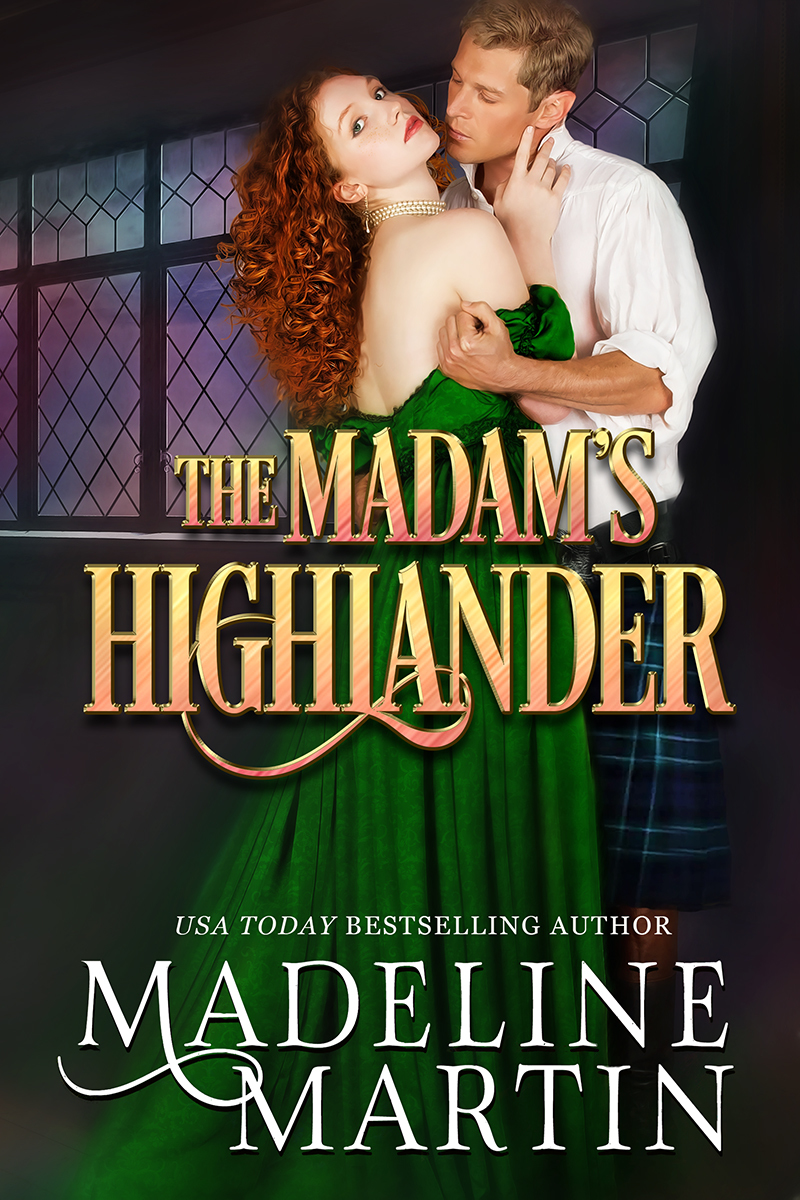
The Madam's Highlander PDF - Madeline Martin
Madeline Martin • romantic novels • 142 Pages
(0)
Quate
Review
Save
Share
Book Description
The Madam’s Highlander by Madeline Martin: A Passionate Scottish Historical Romance
The Madam’s Highlander by Madeline Martin is a compelling Scottish historical romance that brings together danger, honor, social defiance, and unexpected love in a world shaped by political tension and personal sacrifice. Set against the atmosphere of eighteenth-century Scotland, the novel follows two characters who appear, at first, to stand on opposite sides of respectability and loyalty: Freya Campbell, a strong and unconventional woman who runs one of Edinburgh’s most infamous establishments, and Ewan Fraser, a principled Highlander serving as a captain in the Black Watch. Their story unfolds in a time when Scotland is under pressure, families are vulnerable, and survival often requires difficult choices.
At its heart, The Madam’s Highlander is a romance about trust where trust should be impossible. Freya Campbell is not a passive heroine waiting to be rescued; she is a woman who has built protection, income, and purpose from a position society would normally condemn. As the madam of Molly’s, an Edinburgh bawdy house, she supports more than herself. Her work gives shelter and opportunity to women who have been left exposed by war, hardship, and the limited choices available to them. This makes Freya a memorable historical romance heroine: practical, sharp, protective, and deeply aware of the cost of vulnerability.
Ewan Fraser enters the story carrying a different burden. As a Highlander and a captain in the Black Watch, he is bound to duty, discipline, and the need to restore honor to a family name shadowed by the past. His role places him in a complicated position, especially in a Scotland where loyalties are fiercely questioned and English authority presses heavily on Scottish life. Ewan’s concern for his mother and his determination to protect those he loves reveal a man guided not by pride alone, but by responsibility. When his path crosses Freya’s, the result is not an easy courtship but a charged, emotionally layered connection between two people who must decide whether love can survive mistrust, danger, and the judgment of the world around them.
A Story of Honor, Survival, and Unlikely Love
Madeline Martin gives The Madam’s Highlander the emotional shape of a classic Highlander romance novel, while also adding a heroine whose circumstances make the story feel fresh and distinctive. Freya is not written as a conventional lady of society; she is a woman who has learned how to command a room, negotiate with men, and shield other women from the worst consequences of poverty and war. Her world is one of risk and reputation, but it is also one of loyalty. Through Freya, the novel explores how strength can grow from necessity and how compassion can exist in places society refuses to respect.
Ewan, meanwhile, represents the conflict between public duty and private conscience. As a Black Watch captain, he is associated with authority, order, and the difficult politics of the period. Yet he is also a Highlander with a personal history, a wounded sense of family honor, and a fierce desire to keep his loved ones safe. His attraction to Freya challenges his assumptions, not only about her profession but about courage, sacrifice, and what true integrity looks like. Their relationship develops through friction and necessity, making the romance feel earned rather than effortless.
The tension between Freya and Ewan is one of the strongest appeals of the book. Their differences are not superficial; they are rooted in identity, social position, politics, and personal pain. Freya has reason to distrust men who wear uniforms and serve power. Ewan has reason to guard his reputation and avoid scandal. Yet the more they are forced to work together, the more they begin to see past the roles imposed on them. This emotional movement from suspicion to recognition gives the novel its romantic force and makes it especially appealing to readers who enjoy enemies-to-lovers tension, protective heroes, and strong-willed heroines.
A Rich Historical Setting in Edinburgh and the Scottish Highlands
The setting of The Madam’s Highlander adds depth to the romance. Edinburgh is not merely a backdrop; it is part of the novel’s atmosphere, a place where public image, private desire, political fear, and social survival intersect. The bawdy house Freya runs becomes more than a scandalous location. It functions as a refuge, a business, and a symbol of how women without traditional protection can create their own systems of support. Through this setting, the book offers readers the appeal of historical romance with social tension, where the heroine’s world is shaped by class, gender, money, and reputation.
The broader Scottish context also gives the novel a dramatic sense of pressure. England’s tightening hold on Scotland creates the kind of uncertain world where every choice feels consequential. Families can be threatened, loyalties can be questioned, and love can become dangerous when it crosses lines of politics and identity. Readers looking for a Scottish romance set in a turbulent historical period will find that the book uses its setting to heighten both the stakes and the emotional intensity of the central relationship.
Madeline Martin’s historical romance writing often blends adventure, emotional vulnerability, and richly imagined period detail. In this novel, those elements come together in a compact but satisfying story that focuses on character conflict and romantic development. The historical world is present enough to create atmosphere and urgency, but the emotional center remains Freya and Ewan: two people trying to protect their families, define their honor, and decide whether love is worth the risk.
Why Freya Campbell Stands Out as a Historical Romance Heroine
Freya Campbell is one of the key reasons The Madam’s Highlander by Madeline Martin feels memorable within the Highland romance genre. She is independent not because the story tells the reader she is strong, but because her choices prove it. She runs a difficult business, protects vulnerable women, provides for her family, and understands how to survive in a society that offers her little mercy. Her strength is not cold or emotionless; it is practical, protective, and rooted in responsibility.
This makes Freya especially appealing for readers who enjoy strong female characters in historical romance. She is not defined only by romance, nor is she reduced to scandal. Her position as a madam gives the novel room to examine respectability from a more complicated angle. Freya may not fit society’s ideal image of a virtuous woman, but her actions reveal loyalty, compassion, intelligence, and courage. In many ways, the book asks readers to look beyond reputation and consider the deeper measure of a person’s worth.
Her connection with Ewan becomes powerful because he must learn to see her fully. The romance does not depend simply on attraction; it depends on recognition. Ewan must recognize the honor in a woman whose life does not match conventional expectations, while Freya must decide whether a man associated with power and authority can still be worthy of her trust. This balance gives the romance an emotional maturity that suits readers who enjoy love stories built on respect as much as passion.
A Highlander Hero Torn Between Duty and Desire
Ewan Fraser is a classic romantic hero in many ways: honorable, protective, burdened by family history, and willing to risk himself for those he loves. Yet his role as a captain in the Black Watch gives him a more complicated edge. He is not simply a Highland warrior outside the system; he is a man working within a military structure that many Scots view with suspicion. This creates a meaningful internal conflict, especially when his duty intersects with Freya’s world and the dangers threatening both their families.
For readers who enjoy Highlander heroes, Ewan offers the appeal of strength combined with conscience. He is not perfect, and he does not have the luxury of simple choices. His desire to restore his name and protect his mother gives him a deeply personal motivation, while his growing bond with Freya forces him to reconsider what honor truly means. In a romance like this, the hero’s transformation is as important as the heroine’s trust, and Ewan’s journey gives the story much of its emotional weight.
The relationship between Ewan and Freya is charged because both characters are guarded. They are attracted to each other, but neither can afford naivety. The danger surrounding them makes their connection urgent, while their personal histories make it difficult. This combination of passion and caution is ideal for readers who want a historical romance with emotional stakes, where love is not simply a matter of desire but a choice made in the face of real consequences.
Perfect for Readers of Scottish Historical Romance
The Madam’s Highlander is a strong choice for readers who enjoy Scottish historical romance, Highlander romance books, and stories where the central couple must overcome social judgment, political danger, and personal mistrust. It will especially appeal to fans of unconventional heroines, honorable warriors, protective family motives, and romances set in dangerous historical landscapes. The novel offers the pleasure of a passionate love story while also giving readers a heroine with agency and a hero whose sense of duty is tested by the woman he comes to admire.
Readers looking for a romance that includes both tenderness and tension will find much to enjoy here. The book combines the intimacy of a character-driven love story with the atmosphere of a Scotland under pressure. It is not simply about two people falling in love; it is about two people learning whether they can stand together when the world around them gives them every reason to remain apart.
Madeline Martin’s storytelling gives the novel a balance of emotion, danger, and historical appeal. The romance is passionate without losing sight of character, and the conflict is dramatic without overwhelming the personal journey at the center. Freya and Ewan’s story works because both characters have something real to lose. Their love matters because it asks them to risk pride, safety, reputation, and certainty.
A Compelling Romance About Courage Beyond Reputation
At its core, The Madam’s Highlander by Madeline Martin is a story about the courage to look beyond appearances. Freya is more than the scandal attached to her profession, and Ewan is more than the uniform that makes others doubt him. Together, they create a romance built on discovery: discovering truth beneath reputation, loyalty beneath suspicion, and hope in a world that feels increasingly unstable.
For readers searching for a Madeline Martin Highlander romance with a bold heroine, a conflicted hero, and a richly dramatic Scottish setting, The Madam’s Highlander offers an engaging and emotionally satisfying reading experience. It brings together the danger of history, the warmth of unexpected love, and the enduring appeal of two strong people finding one another when trust is both difficult and necessary.
Madeline Martin
Madeline Martin is an American author of historical fiction and historical romance whose work is widely recognized for its emotional warmth, careful historical atmosphere, and strong focus on women who discover courage through books, friendship, resistance, and personal reinvention. She is best known to many contemporary readers for novels that place literature itself at the center of the story, including The Last Bookshop in London, The Librarian Spy, The Keeper of Hidden Books, The Booklover’s Library, and The Secret Book Society. Across these works, Martin repeatedly returns to the idea that books can become shelter, weapon, map, memory, and quiet rebellion. Her heroines often live in times when the world around them is unstable or restrictive: wartime London under bombardment, occupied Europe under censorship and danger, communities where women’s choices are controlled, or societies in which reading can become an act of independence. Rather than treating history as a decorative backdrop, Martin uses historical settings to ask intimate questions about identity, loyalty, fear, love, moral choice, and the endurance of hope. Her fiction is especially appealing to readers of book-club fiction, women’s historical fiction, World War Two novels, library-centered stories, and emotionally rich narratives about ordinary people facing extraordinary pressure. In The Last Bookshop in London, she portrays a young woman whose work in a bookshop becomes a lifeline during the Blitz, showing how stories can sustain a community when daily life is shadowed by loss. In The Librarian Spy, she connects librarianship, intelligence work, and resistance, emphasizing the power of information and the courage of women whose contributions to history are often quiet but essential. In The Keeper of Hidden Books, she explores banned literature, occupied Poland, and the danger of preserving truth when regimes try to control what people read and remember. The Booklover’s Library highlights themes of motherhood, work, dignity, and the solace of reading, while The Secret Book Society moves into Victorian London to examine forbidden reading, female friendship, secrecy, and the desire for freedom in a world that polices women’s voices. Martin’s earlier and continuing work in historical romance also shapes her storytelling. Her romance novels often include high emotional stakes, vivid settings, bold heroines, and relationships built through conflict, trust, and transformation. That background gives her historical fiction a strong sense of character chemistry and emotional momentum without weakening its larger interest in history and social conditions. Martin grew up in a military family and spent much of her childhood in Germany, an experience that helped deepen her fascination with the past, travel, place, and the ways history lives inside personal memory. She has also spoken about writing for many years before becoming a full-time author, after a long career in corporate life, which adds to the persistence and discipline visible in her publishing journey. Her books have reached an international audience and have been translated into many languages, making her a notable voice for readers who enjoy accessible but thoughtful historical storytelling. Martin’s style is clear, immersive, and compassionate. She favors heroines who may begin uncertain, frightened, or socially constrained but who gradually learn to act with conviction. She writes danger and grief with seriousness, yet her novels usually carry an undercurrent of hope: the belief that reading can preserve humanity, that friendship can change the course of a life, and that women’s stories deserve to be remembered. For author pages, bookstore descriptions, and reader-focused websites, Madeline Martin can be described as a bestselling historical novelist whose work celebrates the courage of women, the resilience of communities, and the enduring power of books in the darkest chapters of history.
Earn Rewards While Reading!
Every 10 pages you read and spent 30 seconds on every page, earns you 5 reward points! Keep reading to unlock achievements and exclusive benefits.
Read
Rate Now
5 Stars
4 Stars
3 Stars
2 Stars
1 Stars
The Madam's Highlander Quotes
Top Rated
Latest
Quate
Be the first to leave a quote and earn 10 points
instead of 3
Other books by Madeline Martin
'%20/%3e%3c/svg%3e "The Keeper of Hidden Books")
Madeline Martin.
Historical novels
(0)
28
English
Comments
Be the first to leave a comment and earn 5 points
instead of 3