

The source of the book
This book is published for the public benefit under a Creative Commons license, or with the permission of the author or publisher. If you have any objections to its publication, please contact us.
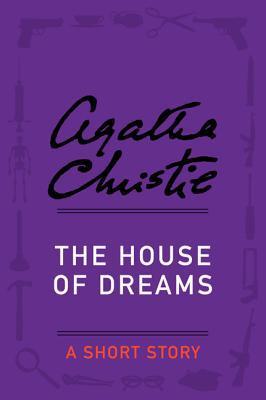
The House of Dreams: an Agatha Christie Short Story PDF - Agatha Christie
Agatha Christie • Literary novels • 35 Pages
(0)
Quate
Review
Save
Share
Book Description
The House of Dreams: An Agatha Christie Short Story by Agatha Christie
The House of Dreams: An Agatha Christie Short Story is a haunting and atmospheric short story by Agatha Christie, best known as the Queen of Crime but also remembered for her ability to write stories that move beyond traditional detective fiction. First published in 1926 in The Sovereign Magazine, the story was later collected in While the Light Lasts and Other Stories in the UK and The Harlequin Tea Set and Other Stories in the US. Unlike many of Christie’s famous mystery works, this story carries a strong supernatural theme and is a reworking of an unpublished early story titled The House of Beauty.
Book Type and Genre
The type of The House of Dreams is:
Short Story / Psychological Mystery / Supernatural Fiction / Classic Literature
This is not a conventional murder mystery or detective story featuring Hercule Poirot or Miss Marple. Instead, it is a psychological and supernatural short story that explores dreams, longing, fate, obsession, and the mysterious border between reality and imagination. Readers looking for a classic Agatha Christie crime puzzle may find this story unusual, while those interested in Christie’s darker, more emotional, and more symbolic writing will discover a memorable and distinctive work.
About the Story
The House of Dreams follows John Segrave, a sensitive young man whose ordinary life feels incomplete and unsatisfying. He is drawn into a strange inner world after dreaming of a beautiful house that seems to hold deep emotional meaning for him. The dream does not feel like a passing image or a simple fantasy; it becomes a powerful presence in his life, shaping his desires, fears, and understanding of what happiness might mean.
As the story develops, the house becomes more than a place. It is a symbol of beauty, escape, love, and danger. Christie uses this dreamlike image to create a mood of quiet suspense, allowing the mystery to grow through atmosphere rather than clues. The result is a story that feels intimate, unsettling, and emotionally charged, with a tone closer to gothic fiction and psychological supernatural literature than to a traditional detective plot.
Themes and Reading Experience
One of the strongest elements of The House of Dreams is its focus on the power of dreams. The story asks whether dreams are merely illusions created by the mind or whether they can reveal hidden truths that ordinary life cannot explain. Through John Segrave’s experience, Agatha Christie explores the tension between duty and desire, everyday reality and private fantasy, human love and something more mysterious beyond it.
The story also touches on themes of romantic longing, spiritual uncertainty, death, destiny, and emotional dissatisfaction. These themes give the short story a melancholy and reflective quality. Christie’s writing is elegant and restrained, building an atmosphere of unease without relying on dramatic action or shocking twists. The mystery here is not only about what will happen, but about what the dream means and why it has such a powerful hold over the main character.
Why This Agatha Christie Story Stands Out
The House of Dreams stands out because it reveals a different side of Agatha Christie. Many readers know her for clever plots, hidden motives, and brilliant detectives, but this short story shows her interest in mood, symbolism, and emotional mystery. It demonstrates that Christie could create suspense not only through crime and investigation, but also through suggestion, dream imagery, and psychological tension.
For readers exploring Agatha Christie short stories, this work is especially interesting because it does not follow the familiar formula of a classic whodunit. Instead, it offers a more unusual reading experience: quiet, strange, romantic, and unsettling. It is a compact story, but its atmosphere lingers because it deals with universal questions about longing, illusion, and the hidden desires that shape a person’s life.
Who Should Read The House of Dreams?
The House of Dreams: An Agatha Christie Short Story is ideal for readers who enjoy classic short fiction, supernatural mystery stories, and psychological fiction with a literary tone. It is also a strong choice for Agatha Christie fans who want to discover her less familiar works and see how her storytelling changes when she moves away from crime-solving and into a more dreamlike, symbolic style.
This story will appeal to readers who like fiction that is atmospheric rather than action-driven, mysterious rather than straightforward, and emotional rather than purely analytical. It is a good fit for anyone interested in the early creative range of Agatha Christie and in stories where dreams, romance, and the supernatural come together in a subtle and memorable way.
A Classic Short Story of Dreams, Mystery, and the Supernatural
The House of Dreams is a brief but powerful example of Agatha Christie’s ability to write beyond the boundaries of detective fiction. With its supernatural mood, psychological depth, and haunting central image, the story offers a thoughtful and unusual reading experience. It is a story about the dreams people chase, the beauty they imagine, and the mysterious forces that may lie beneath ordinary life.
For readers searching for an Agatha Christie short story that combines classic literature, psychological mystery, supernatural fiction, and dark romantic atmosphere, The House of Dreams is a distinctive and rewarding choice.
Agatha Christie
Agatha Christie is one of the most influential authors in the history of detective fiction, a writer whose name has become almost synonymous with mystery, crime novels, elegant suspense, and the classic art of the carefully constructed puzzle. Born in England and later celebrated around the world, she built a literary career that transformed popular crime writing into a refined form of storytelling based on logic, psychology, timing, and narrative misdirection. Her novels and short stories are admired not only because they entertain, but also because they invite the reader to think, observe, compare clues, and question assumptions. Christie understood that the most effective mystery is not simply a question of who committed the crime, but a study of why people hide, lie, fear exposure, protect secrets, and behave differently under pressure. This combination of intellectual challenge and human insight made her work enduringly popular with readers of many cultures and generations.
Christie is best known for creating two of the most recognizable fictional detectives in world literature: Hercule Poirot and Miss Marple. Hercule Poirot, the meticulous Belgian detective, relies on order, method, and what he famously regards as the power of the mind. He is precise, observant, and often theatrical, yet beneath his distinctive manners lies a sharp understanding of motive and deception. Miss Marple, by contrast, appears gentle, quiet, and rooted in village life, but her understanding of human nature is formidable. She recognizes patterns of jealousy, greed, vanity, resentment, and fear because she has seen similar behavior in ordinary social life. Through these two figures, Christie explored different paths to truth: analytical reasoning on one hand and social observation on the other. Their lasting appeal shows how deeply she understood that detection is not only about evidence, but also about character.
Among Christie’s most famous works are Murder on the Orient Express, And Then There Were None, Death on the Nile, The Murder of Roger Ackroyd, The ABC Murders, and The Mysterious Affair at Styles. Each of these books demonstrates a different aspect of her craft. Murder on the Orient Express uses the enclosed space of a train to create tension, suspicion, and a memorable moral dilemma. And Then There Were None presents isolation, guilt, and fear with extraordinary control, turning a remote setting into a psychological trap. Death on the Nile combines travel, romance, jealousy, and murder in a way that shows Christie’s talent for atmosphere as well as structure. The Murder of Roger Ackroyd is often praised for its bold narrative method and its impact on the conventions of detective fiction. These works continue to attract new readers because they are not merely historical curiosities; they still function as gripping stories with strong pacing, memorable reveals, and carefully planted clues.
Agatha Christie’s style is often described as clear, economical, and highly readable, yet that apparent simplicity hides remarkable technical skill. She rarely wastes a detail. A casual remark, a small object, a shift in tone, or a minor inconsistency may later become essential to the solution. Her plots often depend on the reader looking in the wrong direction, but she usually plays fair by making the truth available before the final explanation. This fairness is one reason her books remain satisfying: the ending feels surprising, but not arbitrary. Christie also had a gift for creating social settings that appear orderly while concealing emotional violence. Country houses, trains, archaeological sites, hotels, boats, and quiet villages become stages on which hidden rivalries and buried histories emerge. Her knowledge of poisons, travel, domestic routines, and social manners helped her create mysteries that feel both theatrical and plausible.
The legacy of Agatha Christie extends far beyond the printed page. Her novels have been translated widely, adapted for stage, film, radio, and television, and continuously reintroduced to new audiences. Her play The Mousetrap became one of the most famous long-running theatrical works in the world, reinforcing her reputation as a master of suspense in dramatic form as well as prose. For book websites, libraries, and readers searching for classic mystery novels, Agatha Christie remains a central author because her work defines many of the expectations associated with detective fiction: the closed circle of suspects, the hidden motive, the unexpected witness, the misleading clue, the final gathering, and the brilliant explanation. Yet her importance is not limited to formula. She gave the mystery genre emotional texture, moral complexity, and a sense of elegant design. Agatha Christie continues to stand as a landmark figure in world literature, a writer whose stories prove that a well-made mystery can be both popular entertainment and a lasting work of narrative intelligence.
Earn Rewards While Reading!
Every 10 pages you read and spent 30 seconds on every page, earns you 5 reward points! Keep reading to unlock achievements and exclusive benefits.
Read
Rate Now
5 Stars
4 Stars
3 Stars
2 Stars
1 Stars
The House of Dreams: an Agatha Christie Short Story Quotes
Top Rated
Latest
Quate
Be the first to leave a quote and earn 10 points
instead of 3
Other books by Agatha Christie
'%20/%3e%3c/svg%3e "Murder on the Orient Express: A Hercule Poirot Mystery")
Agatha Christie.
Crime novels and mysteries
(0)
4570
English
Comments
Be the first to leave a comment and earn 5 points
instead of 3