

The source of the book
This book is published for the public benefit under a Creative Commons license, or with the permission of the author or publisher. If you have any objections to its publication, please contact us.
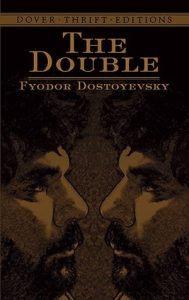
The Double PDF - Fyodor Dostoevsky
Fyodor Dostoevsky • literature • 258 Pages
(0)
Quate
Review
Save
Share
Book Description
The Double by Fyodor Dostoevsky
The Double by Fyodor Dostoevsky is a dark, unsettling, and psychologically rich classic of Russian literature, centered on the fragile inner world of Yakov Petrovich Golyadkin, a minor government clerk in nineteenth-century Saint Petersburg. Often described as one of Dostoevsky’s early explorations of the divided self, the book introduces themes that would later become central to his greatest works: alienation, humiliation, social anxiety, moral pressure, paranoia, and the terrifying uncertainty of personal identity. In this strange and absorbing story, an ordinary man’s life begins to collapse when he encounters another man who looks exactly like him, shares his name, and seems to move through the world with all the confidence, charm, and social ease that he himself painfully lacks.
A Classic Psychological Novel About Identity and Alienation
At the heart of The Double is a haunting question: what happens when the self becomes divided against itself? Golyadkin is not a heroic figure, nor is he a simple villain. He is awkward, defensive, proud, vulnerable, and painfully conscious of the way others see him. Dostoevsky follows him through offices, streets, social gatherings, private rooms, and anxious conversations, turning the everyday world of bureaucracy and polite society into a landscape of dread. The result is a psychological novel that feels both deeply rooted in its Russian setting and startlingly modern in its treatment of insecurity, social performance, and mental disintegration.
The arrival of Golyadkin’s double transforms the story from social satire into something more disturbing and symbolic. This mysterious other self appears to possess everything Golyadkin lacks: confidence, adaptability, popularity, and a talent for pleasing superiors. As the double rises, Golyadkin feels himself shrinking, exposed, and replaced. Dostoevsky uses this eerie premise not merely as a supernatural device, but as a way to explore the pressures of a society in which status, rank, reputation, and approval can feel like matters of survival. The book’s atmosphere grows increasingly unstable, leaving readers to wonder how much of the crisis is external, how much is internal, and where the boundary between reality and obsession begins to dissolve.
Dostoevsky’s Early Vision of the Divided Self
Readers who know Crime and Punishment, Notes from Underground, The Idiot, or The Brothers Karamazov will recognize in The Double the early formation of Dostoevsky’s fascination with tortured consciousness. Britannica notes that Dostoevsky is widely regarded for his psychological depth, and The Double stands as an important early example of that gift: a work in which the drama takes place as much inside the mind as in the outer world.
What makes the novel especially compelling is its refusal to simplify Golyadkin’s suffering. He is comic, but also pitiable; ridiculous, but also human. His speech circles around itself, his thoughts repeat anxiously, and his desperate attempts to maintain dignity often deepen his embarrassment. Through him, Dostoevsky captures the terror of being socially invisible, misunderstood, mocked, or replaced. The double becomes a living embodiment of comparison: the person one fears one should have been, the rival one cannot defeat, and the mirror that reflects back every weakness with unbearable clarity.
A Darkly Comic Portrait of Bureaucratic Society
Although The Double is often read as a study of madness and identity, it is also a sharp satire of bureaucracy and social ambition. Golyadkin lives in a world of offices, titles, etiquette, and carefully measured respectability, where every gesture seems to carry hidden meaning. A slight from a superior, an awkward entrance at a gathering, or a whisper among colleagues can become overwhelming. Dostoevsky turns this environment into a pressure chamber, showing how a rigid social order can distort personality and magnify insecurity.
The novel’s Saint Petersburg setting is essential to its mood. The city feels cold, formal, and impersonal, full of corridors, carriages, official rooms, and uneasy encounters. Against this background, Golyadkin’s inner turmoil becomes even more intense. He longs to be accepted, yet mistrusts those around him; he wants recognition, yet fears exposure; he insists on his independence, yet constantly measures himself against the opinions of others. This tension gives the book its strange power, blending Russian satire, psychological realism, and almost dreamlike absurdity.
Why The Double Still Feels Modern
More than a century and a half after its publication, The Double remains relevant because its central anxieties have not disappeared. The fear of being replaced, the pressure to perform a better version of oneself, the suspicion that others are secretly judging or conspiring, and the painful gap between private insecurity and public appearance all feel intensely contemporary. Golyadkin’s double can be read as a rival, a hallucination, a social mask, or a symbolic projection of everything he cannot accept in himself. This openness gives the novel lasting interpretive richness.
For modern readers, The Double by Fyodor Dostoevsky offers a powerful reading experience precisely because it is uncomfortable. It does not offer easy explanations or sentimental reassurance. Instead, it pulls the reader into a mind under pressure and shows how quickly ordinary life can become uncanny when self-trust begins to fail. The book anticipates later literary explorations of doubles, split identity, alienation, and existential crisis, making it especially valuable for readers interested in psychological fiction, classic literature, Russian novels, and the darker side of human consciousness.
A Meaningful Read for Students, Classic Literature Readers, and Dostoevsky Fans
The Double is an excellent choice for readers who want to understand Dostoevsky’s development as a novelist. While it is shorter and more concentrated than his major later novels, it contains many of the concerns that would define his literary world: wounded pride, inner contradiction, social humiliation, moral confusion, and the unstable relationship between freedom and self-destruction. It is also a rewarding text for students and readers interested in literary modernism, existential themes, narrative ambiguity, and the psychology of the double.
The novel may be especially appealing to readers who enjoy works that blur the line between realism and nightmare. Its events unfold in a recognizable social world, yet the emotional atmosphere is distorted by anxiety and suspicion. Dostoevsky’s style creates a sense of claustrophobia, repetition, and nervous motion, mirroring Golyadkin’s mental state. This makes The Double a demanding but memorable book: not a simple plot-driven classic, but a layered psychological encounter with a man losing his place in the world and perhaps losing his hold on himself.
The Reading Experience
Reading The Double is like entering a fog of embarrassment, fear, and dark comedy. The novel often feels uncomfortable because it magnifies feelings many people prefer to hide: envy, shame, social panic, resentment, and the desperate need to be seen favorably. Dostoevsky does not distance the reader safely from these emotions. Instead, he brings them close, making Golyadkin’s confusion and humiliation feel immediate. The result is a book that can be disturbing, ironic, tragic, and strangely funny all at once.
This complexity is part of the reason The Double continues to attract readers of world literature. It is not only a story about a man who meets his double; it is a story about the instability of identity under social pressure. It asks whether a person can remain whole in a world that constantly judges, ranks, and reflects him back to himself in distorted forms. For anyone interested in Dostoevsky’s psychological imagination, this novel offers a fascinating and essential early vision.
An Enduring Work of Russian Psychological Fiction
The Double by Fyodor Dostoevsky remains a distinctive and important work for readers seeking a classic novel about identity, paranoia, alienation, and the divided self. Its eerie premise, bureaucratic setting, and intense psychological focus make it one of Dostoevsky’s most intriguing shorter works. Through Golyadkin’s encounter with his uncanny double, the novel explores the fear of losing one’s individuality, the pain of social exclusion, and the fragile boundary between self-knowledge and self-deception.
For readers discovering Dostoevsky for the first time, The Double offers a concentrated introduction to his world of troubled minds and moral unease. For longtime admirers, it reveals the early shape of themes that would later reach monumental force in his greatest novels. Dark, ironic, unsettling, and intellectually rich, The Double is a classic of Russian psychological literature that continues to speak to anyone who has ever felt divided between who they are, who they appear to be, and who the world expects them to become.
Fyodor Dostoevsky
Fyodor Dostoevsky was a Russian novelist, philosopher, and essayist, widely considered to be one of the greatest writers in Western literature. He was born in Moscow in 1821 and raised in a middle-class family. His father was a doctor who treated the poor for free, which instilled in Dostoevsky a deep sense of social justice and compassion for the downtrodden.
Dostoevsky began his writing career in the 1840s, with a series of novellas and short stories that explored the complexities of human nature and the dark side of Russian society. His first major novel, "Poor Folk," was published in 1846 and won critical acclaim. However, it was his later works, such as "Crime and Punishment," "The Idiot," and "The Brothers Karamazov," that established him as a literary master.
Dostoevsky's writing is known for its psychological depth, philosophical themes, and exploration of the human condition. His characters often struggle with moral dilemmas and existential questions, grappling with issues of faith, morality, and the meaning of life. His works also explore the political and social issues of his time, including poverty, crime, and political oppression.
Dostoevsky's life was marked by personal tragedy and political turmoil. He was arrested in 1849 for his involvement with a group of liberal intellectuals and sentenced to death, only to have the sentence commuted to hard labor in Siberia. He returned to Russia after serving his sentence, but continued to struggle with poverty and illness throughout his life. He died in 1881 at the age of 59.
Despite his tumultuous life, Dostoevsky's legacy as a writer and thinker endures. His works continue to be widely read and studied today, and his ideas about the human condition and the role of faith in society continue to resonate with readers around the world.
Earn Rewards While Reading!
Every 10 pages you read and spent 30 seconds on every page, earns you 5 reward points! Keep reading to unlock achievements and exclusive benefits.
Read
Rate Now
5 Stars
4 Stars
3 Stars
2 Stars
1 Stars
The Double Quotes
Top Rated
Latest
Quate
Be the first to leave a quote and earn 10 points
instead of 3
'%20/%3e%3c/svg%3e "الجريمة والعقاب 1")
Comments
Be the first to leave a comment and earn 5 points
instead of 3