

The source of the book
This book is published for the public benefit under a Creative Commons license, or with the permission of the author or publisher. If you have any objections to its publication, please contact us.
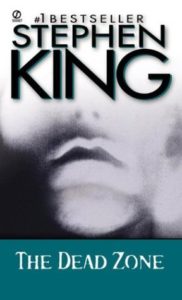
The Dead Zone PDF - Stephen King
Stephen King • Horror novels • 466 Pages
(0)
Quate
Review
Save
Share
Book Description
Stephen King’s The Dead Zone is a 1979 science fiction thriller novel originally published by Viking Press. Written by American author Stephen King, the book blends psychological suspense, supernatural ability, political anxiety, and moral conflict into one of King’s most focused and emotionally grounded stories. The novel follows Johnny Smith, an ordinary schoolteacher whose life is permanently changed after a devastating car accident leaves him in a coma for nearly five years. When he wakes, Johnny discovers that physical contact with people and objects can trigger visions of the past, present, and possible future.
At the beginning of The Dead Zone, Johnny Smith is portrayed as a kind, thoughtful man with a promising future. He is in love with Sarah Bracknell, and his life seems stable until a night out ends in tragedy. After the accident, Johnny awakens to a world that has moved on without him. Sarah has married someone else, his body is weakened, and his mother’s religious obsession has grown more intense. Even more disturbing is his new psychic ability, which makes him both feared and sought after by people who want answers.
Johnny’s visions are not presented as a simple gift. They isolate him, exhaust him, and force him into situations where knowledge becomes a burden. When he touches a nurse, he sees information that helps her family. When he holds certain objects or shakes someone’s hand, he receives flashes that can be helpful, terrifying, or incomplete. The “dead zone” of the title refers to the damaged part of Johnny’s brain, the area where some details remain blocked from his perception. This limitation makes his power uncertain and adds tension to the story.
As the plot develops, Johnny becomes involved in solving a series of murders in Castle Rock, a fictional Maine town that would later become important in King’s wider body of work. His psychic ability helps reveal the identity of a serial killer, but the case also shows the cost of being pulled into public attention. Johnny does not want fame. He wants peace, privacy, and some version of the life he lost. Instead, he becomes known as a man who can see hidden truths, and that reputation follows him.
The central conflict of the novel intensifies when Johnny meets Greg Stillson, an ambitious politician with a violent and unstable personality hidden beneath his public image. After shaking Stillson’s hand, Johnny has a horrifying vision of him as a future president whose actions could lead to catastrophe. This moment changes the novel from a story about personal tragedy into a moral thriller. Johnny must decide whether a vision of the future gives him the right, or even the responsibility, to act against another person before that future happens.
Stephen King uses The Dead Zone to explore fate, free will, trauma, and political fear. Johnny is not a traditional superhero figure; he is a wounded man trying to make ethical choices with incomplete information. His power does not make life easier. It forces him to confront painful questions: Can the future be changed? Is violence justified if it prevents greater violence? How much should one person sacrifice for others?
The novel’s strength comes from the way King balances supernatural suspense with human emotion. Johnny’s grief over Sarah, his strained family relationships, his physical suffering, and his fear of becoming a public spectacle make him deeply sympathetic. The story is also notable for its restrained tone compared with some of King’s more overt horror novels. While it contains frightening scenes, its suspense often comes from moral pressure rather than monsters.
The Dead Zone remains an important Stephen King novel because it combines a compelling psychic premise with a tragic character study. Its plot moves from romance and loss to crime investigation and political danger, but the emotional center remains Johnny Smith. Through his journey, King presents a man who gains the ability to see what others cannot, only to discover that knowledge can be one of the heaviest burdens a person can carry.
Stephen King
Stephen King is one of the most influential, widely read, and culturally recognizable authors in modern popular literature, celebrated above all for his mastery of horror while also making major contributions to suspense, crime fiction, fantasy, science fiction, psychological drama, and literary storytelling. Born in Portland, Maine, he developed a fictional world deeply connected to small towns, working families, childhood fears, buried secrets, and the unsettling possibility that ordinary life can suddenly open into terror. His work is often associated with supernatural forces, haunted places, violent outsiders, and monstrous presences, yet his lasting power comes from a deeper understanding of human weakness, grief, addiction, memory, loyalty, cruelty, and moral choice. King does not simply frighten readers; he invites them into fully imagined communities where fear grows naturally from character, atmosphere, and emotional truth.
Stephen King’s breakthrough came with Carrie, a novel that transformed the pain of adolescence, social rejection, religious fanaticism, and uncontrolled power into a compact and unforgettable story. The success of that book allowed him to become a full-time writer, and it was followed by a remarkable series of major works including Salem’s Lot, The Shining, The Stand, The Dead Zone, Cujo, Pet Sematary, It, Misery, The Green Mile, Bag of Bones, Under the Dome, Doctor Sleep, Billy Summers, Fairy Tale, and 11/22/63. His long-running sequence The Dark Tower occupies a special place in his career because it connects western imagery, epic fantasy, horror, metafiction, and myth into a vast narrative about destiny, sacrifice, obsession, and storytelling itself. King also wrote several works under the name Richard Bachman, a pseudonym that allowed him to explore darker social and psychological material while testing whether a story could succeed without the power of his famous name attached to it.
A defining quality of Stephen King’s fiction is his ability to build believable characters before placing them under extreme pressure. Children, writers, teachers, nurses, prisoners, police officers, parents, and lonely outsiders often stand at the center of his stories, and their emotional struggles are as important as the supernatural events around them. His prose is direct, energetic, and accessible, but it is also rich in cultural observation, humor, rhythm, and suspense. He has a particular gift for making locations feel alive: Derry, Castle Rock, Jerusalem’s Lot, and other fictional places operate almost like recurring characters, carrying histories of violence, memory, and collective fear. Through these settings, King has created an interconnected literary landscape that rewards both casual readers and devoted fans.
Stephen King’s influence extends far beyond the printed page. Many of his works have been adapted into major films, television series, miniseries, and streaming productions, helping shape the global visual language of horror and suspense. Adaptations such as The Shawshank Redemption, Stand by Me, Misery, The Green Mile, Carrie, The Shining, and It have made his stories familiar to audiences across generations. His nonfiction book On Writing is also highly respected because it combines memoir, practical advice, and a clear philosophy of craft, emphasizing discipline, honesty, revision, and the importance of reading. King has received major honors for his contribution to American letters and the arts, including prestigious lifetime and national awards. His enduring reputation rests on a rare combination of productivity, narrative confidence, emotional directness, and imaginative range. For readers searching for an author who can combine fear with humanity, entertainment with insight, and popular appeal with lasting literary impact, Stephen King remains one of the essential names in contemporary fiction.
Earn Rewards While Reading!
Every 10 pages you read and spent 30 seconds on every page, earns you 5 reward points! Keep reading to unlock achievements and exclusive benefits.
Read
Rate Now
5 Stars
4 Stars
3 Stars
2 Stars
1 Stars
The Dead Zone Quotes
Top Rated
Latest
Quate
Be the first to leave a quote and earn 10 points
instead of 3
'%20/%3e%3c/svg%3e "Carrie")
Comments
Be the first to leave a comment and earn 5 points
instead of 3