

The source of the book
This book is published for the public benefit under a Creative Commons license, or with the permission of the author or publisher. If you have any objections to its publication, please contact us.
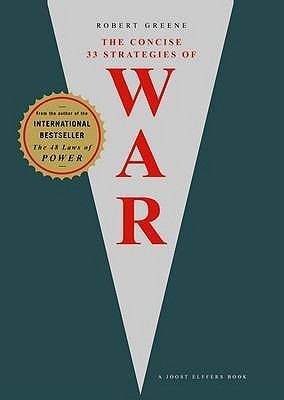
The Concise 33 Strategies Of War PDF - Robert Greene
Robert Greene • Human Development • 140 Pages
(0)
Quate
Review
Save
Share
Book Description
The Concise 33 Strategies of War by Robert Greene is a sharp, accessible guide to conflict, power, discipline, and strategic thinking, adapted from Greene’s wider work on the timeless lessons of war and human behavior. Rather than treating war only as a matter of armies and battlefields, the book presents strategy as a way of understanding pressure, rivalry, decision-making, leadership, self-control, and the subtle contests that shape everyday life. This concise edition distills Greene’s original ideas into a more direct and readable form, making it especially useful for readers who want the core principles of The 33 Strategies of War in a focused format.
A Practical Guide to Strategy in Everyday Life
At its center, The Concise 33 Strategies of War explores how people respond to conflict: how they panic, hesitate, overreact, underestimate opponents, lose discipline, or become trapped by old habits. Greene’s approach is built around the idea that strategy is not aggression for its own sake, but the ability to think clearly when emotions are high and the stakes are real. The “war” in this book can refer to competition in business, tension in relationships, leadership challenges, negotiation, creative ambition, personal discipline, or the quiet struggle to stay focused in a chaotic world.
Greene draws on military history, political maneuvering, philosophy, and psychology to show how strategic principles can be applied beyond the battlefield. The book uses historical examples and memorable lessons to explain how great leaders, commanders, and thinkers handled danger, uncertainty, timing, deception, morale, and power. Readers will find references to figures such as Napoleon, Hannibal, Margaret Thatcher, and Ulysses S. Grant, along with broader lessons taken from centuries of conflict and political thought.
The Core Idea Behind the Book
The main value of The Concise 33 Strategies of War lies in its insistence that most conflicts are won or lost before any open confrontation begins. Greene emphasizes preparation, mental balance, patience, positioning, and the ability to see the larger pattern behind events. The book encourages readers to stop reacting impulsively and start observing situations with greater calm and precision. In this sense, it is not simply a book about winning against others; it is also a book about mastering yourself before you try to influence the world around you.
This makes the book especially appealing to readers interested in strategy books, power dynamics, self-development, leadership, business competition, military strategy, and psychology of conflict. Greene’s writing is direct, dramatic, and often provocative, but the deeper purpose is practical: to help readers recognize patterns of weakness, avoid predictable mistakes, and act with greater intention. The concise format makes the lessons easier to absorb for readers who want powerful ideas without the full length of the original edition.
Themes of Power, Control, and Strategic Awareness
One of the strongest themes in The Concise 33 Strategies of War is the importance of self-command. Greene repeatedly returns to the idea that confusion, anger, fear, vanity, and impatience can be more dangerous than any external opponent. A person who cannot control their reactions becomes easy to manipulate, while a person who can pause, analyze, and choose the right response gains a powerful advantage. This theme gives the book relevance not only for executives, entrepreneurs, and leaders, but also for anyone trying to handle pressure more intelligently.
Another major theme is the relationship between conflict and perception. Greene shows that strategy often depends on how situations appear: when to reveal strength, when to conceal intentions, when to wait, when to move quickly, and when to avoid unnecessary battles altogether. The book teaches readers to think in terms of timing, terrain, morale, alliances, and psychological advantage. These ideas make The Concise 33 Strategies of War a compelling read for anyone who wants to understand how competition works beneath the surface of ordinary interactions.
Why Readers Choose This Concise Edition
This edition is ideal for readers who are curious about Robert Greene’s strategic ideas but prefer a shorter, more concentrated version of the original work. The Concise 33 Strategies of War keeps the essential framework and memorable lessons while offering a faster reading experience. For busy readers, students, professionals, and fans of Greene’s other books, this concise edition provides an efficient way to engage with one of his most influential explorations of conflict and strategy.
Readers who enjoyed The 48 Laws of Power, The Art of Seduction, Mastery, or other books by Robert Greene will recognize his signature style: historical storytelling, bold principles, psychological insight, and a fascination with the hidden forces behind success and failure. The book also appeals to readers of classic works such as The Art of War by Sun Tzu, because it translates strategic thinking into a modern language of social life, career ambition, leadership, and personal discipline. It is not a gentle or sentimental book; it is designed for readers who want to look directly at rivalry, pressure, and the realities of power.
Reading Experience and Style
The reading experience of The Concise 33 Strategies of War is focused, intense, and idea-driven. Greene writes with a sense of urgency, presenting each strategy as a lesson that can be studied, remembered, and applied. The book does not read like a traditional military history, even though it draws heavily from historical conflict. Instead, it functions as a manual of strategic awareness, using history as a mirror for modern life.
Because the book is concise, each section carries weight. The reader is encouraged to reflect on personal patterns: where they have been too passive, too emotional, too predictable, too dependent on approval, or too slow to adapt. This reflective quality gives the book lasting value. It can be read once for its bold ideas, then returned to later as a reference during moments of difficulty, competition, or decision-making.
Who This Book Is For
The Concise 33 Strategies of War is well suited for readers who want to strengthen their understanding of conflict without reading a purely academic or technical work. It is a strong choice for entrepreneurs facing competition, managers leading teams, students of power and politics, readers interested in military history, and anyone who wants to become more disciplined in stressful situations. It is also useful for readers who enjoy books that combine history, psychology, leadership, and self-improvement in a practical, memorable way.
The book may be especially valuable for readers who feel they often react too quickly, avoid necessary confrontation, or struggle to understand the motives of others. Greene’s strategies encourage a more deliberate approach: assess the situation, understand the people involved, control your emotions, choose your battles, and act with purpose. Even readers who do not agree with every principle may find the book useful as a way to think more clearly about power, competition, and human behavior.
A Focused Introduction to Robert Greene’s Strategic Thinking
As a concise adaptation of Greene’s larger work, The Concise 33 Strategies of War offers a compact entry point into one of the author’s most important themes: the need to understand conflict rather than deny it. Greene does not suggest that life should be lived in constant hostility. Instead, he argues that conflict is part of human reality, and that ignoring it can leave people vulnerable, confused, or unprepared. By studying strategy, readers can become less reactive and more aware of the forces shaping their choices.
For anyone searching for a clear, powerful, and practical book on strategy, conflict, leadership, power, and self-mastery, The Concise 33 Strategies of War by Robert Greene offers a compelling reading experience. It condenses a wide range of historical and psychological lessons into a book that challenges readers to think harder, act more calmly, and approach difficult situations with sharper judgment. Its lasting appeal comes from the way it turns the language of war into a broader study of human ambition, discipline, and survival in the modern world.
Robert Greene
Robert Greene, born on May 14, 1959, is an esteemed American author renowned for his compelling books on strategy, power dynamics, and human behavior. With a diverse background and a profound understanding of various disciplines, Greene has become a prominent figure in the realms of literature and philosophy.
Raised in Los Angeles as the younger son of Jewish parents, Greene's early life was marked by intellectual curiosity and a quest for diverse experiences. He embarked on his academic journey at the University of California, Berkeley, later completing his Bachelor of Arts degree in classical studies at the University of Wisconsin–Madison. Before finding his calling as an author, Greene immersed himself in an eclectic array of professions, including construction work, translation, magazine editing, and screenwriting in Hollywood.
Greene's transformative moment came in 1995 while working at Fabrica, an art and media school in Italy, where he met Joost Elffers, a book packager. Inspired by Greene's insights on power dynamics, Elffers encouraged him to develop his ideas into a book. This collaboration led to the publication of "The 48 Laws of Power," Greene's seminal work that explores the intricate and often controversial principles of power dynamics in human relationships. Since then, Greene has authored several other bestsellers, including "The Art of Seduction," "The 33 Strategies of War," "Mastery," "The Laws of Human Nature," and "The Daily Laws."
Central to Greene's philosophy is the concept that power is inherently amoral—neither good nor evil—and that understanding its dynamics is crucial for personal and professional success. His books have garnered international acclaim for their insightful analysis, historical references, and practical applications in various aspects of life, from business to personal development.
Beyond his literary achievements, Greene is recognized for his multilingual proficiency and his interest in Zen Buddhism. He is also noted for his mentorship of authors like Ryan Holiday, reflecting his commitment to nurturing talent and sharing his wisdom with the next generation of thinkers and writers.
Greene's impact extends beyond academia and into social and political spheres. He has been vocal about his liberal political views and has supported figures like Barack Obama in the United States presidential election. Despite his Jewish heritage, Greene maintains a nuanced stance on spirituality, drawing parallels to Albert Einstein's contemplative views on religion.
In 2018, Greene faced a significant health challenge—a stroke that temporarily paralyzed his left hand and leg. Undeterred, he continued to persevere, exemplifying resilience and determination in both his personal and professional life.
Today, Robert Greene resides in Los Angeles with his partner, Anna Biller, a filmmaker. His contributions to literature and philosophy continue to inspire readers worldwide, challenging them to rethink conventional wisdom and empowering them with the knowledge to navigate the complexities of human interactions and power dynamics.
Robert Greene's journey from eclectic beginnings to becoming a globally respected author underscores his enduring influence in shaping contemporary discourse on strategy, power, and the human condition. As he continues to explore new avenues of thought and creativity, Greene remains a beacon of intellectual curiosity and insight, leaving an indelible mark on the literary landscape of our time.
Earn Rewards While Reading!
Every 10 pages you read and spent 30 seconds on every page, earns you 5 reward points! Keep reading to unlock achievements and exclusive benefits.
Read
Rate Now
5 Stars
4 Stars
3 Stars
2 Stars
1 Stars
The Concise 33 Strategies Of War Quotes
Top Rated
Latest
Quate
Be the first to leave a quote and earn 10 points
instead of 3
'%20/%3e%3c/svg%3e "48 Laws of Power")
Comments
Be the first to leave a comment and earn 5 points
instead of 3