

The source of the book
This book is published for the public benefit under a Creative Commons license, or with the permission of the author or publisher. If you have any objections to its publication, please contact us.
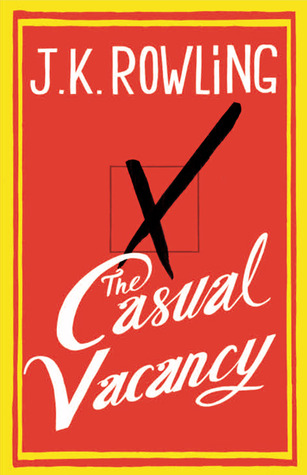
The Casual Vacancy PDF - J. K. Rowling
J. K. Rowling • science fiction novels • 394 Pages
(0)
Quate
Review
Save
Share
Book Description
The Casual Vacancy by J. K. Rowling
The Casual Vacancy by J. K. Rowling is a sharply observed adult novel about a small English community where private resentments, public conflicts, class divisions, family tensions, and political ambition all rise to the surface after one sudden death. Set in the fictional town of Pagford, the novel begins when Barry Fairbrother, a respected member of the parish council, dies unexpectedly, leaving behind an empty council seat — the “casual vacancy” of the title. What first appears to be a local administrative matter quickly becomes the catalyst for a much larger social drama, exposing the rivalries, prejudices, secrets, and unresolved pain hidden behind the town’s polite exterior.
Known worldwide for the Harry Potter series, J. K. Rowling takes a very different direction in this novel, offering readers a work of contemporary literary fiction that is realistic, darkly comic, socially aware, and emotionally intense. Instead of magic, adventure, and fantasy, The Casual Vacancy focuses on ordinary people under pressure: parents and teenagers, shopkeepers and councillors, teachers and students, the privileged and the neglected. Through their intersecting lives, Rowling builds a detailed portrait of a town divided not only by politics, but also by class, reputation, money, addiction, neglect, and the desire to be seen as respectable.
A Small Town with Deep Divisions
At the heart of The Casual Vacancy is Pagford, a picturesque English town that appears peaceful from the outside but is full of conflict beneath the surface. The death of Barry Fairbrother creates an opening on the parish council, and the competition to fill his seat reveals how bitterly divided the community has become. One of the central tensions involves the relationship between Pagford and a nearby housing estate known as the Fields, a poorer area that many residents would rather distance themselves from. Barry had been one of the voices willing to defend the people of the Fields, and his absence leaves vulnerable members of the community even more exposed.
Rowling uses this local election not as a simple political plot, but as a way to explore how communities decide who belongs and who is pushed aside. The novel examines how public decisions are often shaped by private motives, personal grudges, social prejudice, and fear of losing status. Every argument about schools, social services, addiction treatment, housing, and council boundaries becomes part of a larger moral question: what responsibility does a community have toward its most vulnerable people?
A Dark, Socially Conscious Adult Novel
Readers searching for J. K. Rowling adult fiction will find that The Casual Vacancy is intentionally mature in tone, subject matter, and style. The novel deals with difficult themes, including poverty, domestic conflict, substance abuse, self-harm, bullying, grief, social exclusion, political hypocrisy, and the emotional damage passed from one generation to the next. These subjects are handled through a wide cast of characters whose lives overlap in ways that are sometimes painful, sometimes ironic, and often revealing.
The book is not a fantasy novel and should not be approached as another version of Rowling’s earlier work. Instead, it is a darkly comic social novel that uses realism to examine contemporary British life. Its humor is sharp rather than comforting, and its emotional force comes from the contrast between how people wish to appear and who they really are when status, fear, anger, or desperation take control. Rowling’s gift for building communities and connecting multiple storylines remains visible, but here it is used to create a more adult, morally complicated world.
Characters Shaped by Secrets, Ambition, and Pain
One of the strongest elements of The Casual Vacancy is its large ensemble cast. Rowling moves between different households, age groups, and social positions, allowing the reader to see Pagford from many angles. The town’s adults are often preoccupied with reputation, influence, marriage, business, local politics, and long-standing resentments. Meanwhile, the teenagers in the novel experience the consequences of adult failure more directly, living with pressure, loneliness, neglect, anger, and the constant awareness of social judgment.
Rather than presenting characters as purely good or bad, Rowling builds them through contradictions. Some people who speak the language of morality behave selfishly. Others who are judged harshly by the town show courage, loyalty, or emotional intelligence. The novel’s shifting perspectives make it clear that every person in Pagford has a private story, but not every private story receives compassion from the wider community. This layered approach gives the book its depth and makes it especially compelling for readers who enjoy character-driven fiction, social realism, and novels about hidden lives within close communities.
Themes of Class, Community, and Responsibility
The Casual Vacancy is especially powerful as a novel about class division. Pagford’s conflict with the Fields reflects broader questions about privilege, social mobility, public image, and the way comfortable communities often define themselves by excluding those who make them uncomfortable. Rowling shows how poverty is not simply a background condition but a force that shapes education, health, family life, opportunity, and identity. At the same time, she examines how people with power often protect themselves with language that sounds reasonable while avoiding the human cost of their decisions.
The novel also explores the difference between charity and responsibility. Some characters want to help others only when that help does not disturb their own comfort. Others understand that real community requires attention to people who are inconvenient, troubled, vulnerable, or easy to ignore. Through Barry Fairbrother’s legacy and the conflicts that follow his death, the book asks whether one person’s empathy can survive in a system shaped by selfishness, denial, and social pressure.
The Reading Experience
Reading The Casual Vacancy by J. K. Rowling is an immersive experience, but it is also a demanding one. The novel is rich in detail, with many characters, intersecting storylines, and emotional undercurrents. It rewards readers who appreciate slow-building tension, realistic dialogue, social observation, and morally complex situations. The pace comes not from action or mystery in the traditional sense, but from the gradual exposure of secrets and the growing sense that small acts of cruelty, silence, or indifference can have serious consequences.
The tone is often bleak, but not empty. Rowling’s interest in human behavior gives the novel energy and purpose, even when the subject matter is difficult. The story captures the claustrophobic feeling of a town where everyone knows everyone else, yet very few people truly understand one another. For readers who enjoy novels about community conflict, family drama, political tension, and the hidden emotional lives of ordinary people, The Casual Vacancy offers a layered and memorable reading experience.
Who Should Read The Casual Vacancy?
The Casual Vacancy is a strong choice for readers looking for adult contemporary fiction, British literary fiction, or a socially engaged novel with a large cast of interconnected characters. It will appeal to readers interested in stories about class, local politics, family dysfunction, social inequality, and the gap between public respectability and private behavior. It is also an important book for anyone interested in J. K. Rowling’s writing beyond the world of Harry Potter, because it shows her working in a completely different mode: realistic, unsentimental, and focused on adult society.
This novel is best suited to readers who are comfortable with mature themes and emotionally challenging material. It is not designed as escapist fantasy or light entertainment; instead, it offers a sharp, sometimes uncomfortable look at how communities function when compassion competes with self-interest. Its value lies in its honesty about human weakness, its attention to social systems, and its refusal to make difficult lives appear simple.
Why The Casual Vacancy Remains a Notable J. K. Rowling Novel
The Casual Vacancy remains a distinctive work because it marks a bold shift in J. K. Rowling’s literary career. By moving from fantasy to adult social realism, Rowling invites readers to consider her storytelling skills in a new context. The novel’s structure, with its many voices and perspectives, shows her continued interest in communities, institutions, loyalty, prejudice, courage, and the consequences of individual choices. Yet the world of Pagford is far more grounded and unforgiving, shaped not by magical conflict but by social neglect, personal failure, and the ordinary cruelties of everyday life.
For a book page, The Casual Vacancy by J. K. Rowling can be described as a compelling, darkly humorous, and thought-provoking adult novel about a seemingly quiet town shaken by death, politics, and hidden resentment. It is a story about what happens when a community is forced to reveal its true values, and about the people who suffer most when those values are built on exclusion. Rich in character, serious in theme, and sharp in its portrayal of social tension, The Casual Vacancy offers a mature reading experience for anyone interested in contemporary fiction that looks closely at power, class, family, and responsibility.
J. K. Rowling
J. K. Rowling is a British author, storyteller, philanthropist, and one of the most influential literary figures of contemporary popular fiction, best known as the creator of the Harry Potter series. Born Joanne Rowling on 31 July 1965 in England, she developed a love of stories at an early age and began writing imaginative tales as a child, long before her name became associated with one of the most successful book series in modern publishing. She studied French and Classics at the University of Exeter, and her early professional life included work with Amnesty International, an experience that helped shape her awareness of injustice, power, fear, courage, and human dignity. These concerns later became central to her fiction, where magical adventure often carries deep moral and emotional weight. The idea for Harry Potter came to Rowling in 1990 during a delayed train journey, and over the following years she transformed that initial vision into a richly structured fictional universe filled with schools, spells, histories, friendships, rivalries, secrets, and conflicts between good and evil. The first book, Harry Potter and the Philosopher’s Stone, was published in 1997, introducing readers to a young boy who discovers both his magical identity and a larger destiny. The series eventually grew into seven novels, published between 1997 and 2007, and became a global cultural phenomenon, inspiring films, stage productions, games, fan communities, academic studies, translations, and generations of new readers. Rowling’s writing is often praised for its accessible style, careful plotting, emotional momentum, humor, mystery, and ability to develop characters across a long narrative arc. Her themes include friendship, loyalty, prejudice, grief, free choice, sacrifice, institutional power, and the difficult process of growing up. Although Harry Potter remains her most famous creation, Rowling’s career extends beyond fantasy for young readers. Her adult novel The Casual Vacancy explores community, class, politics, family tension, and social hypocrisy in a realistic setting. Under the pseudonym Robert Galbraith, she created the Cormoran Strike crime novels, beginning with The Cuckoo’s Calling, a series known for detailed investigation, psychological characterization, complex plotting, and the evolving professional partnership between Cormoran Strike and Robin Ellacott. Rowling also returned to children’s literature with The Ickabog and The Christmas Pig, works that show her continuing interest in fable, loss, hope, truth, and the imaginative power of storytelling. Her achievements have been recognized through numerous literary awards and public honors, including distinctions for services to children’s literature, literature, and philanthropy. Beyond writing, Rowling has supported charitable causes through organizations such as Lumos and Volant Charitable Trust, focusing especially on vulnerable children, women, poverty, social inequality, and medical research connected to neurological disease. As an author profile for a book website, J. K. Rowling stands out not only because of extraordinary sales and international fame, but because her fiction helped renew global enthusiasm for reading, especially among young audiences. Her books combine the appeal of adventure with layered worldbuilding and ethical questions, making them relevant to children, teenagers, and adults alike. Whether approached as a fantasy writer, a children’s author, a crime novelist, or a cultural figure whose stories reshaped modern publishing, J. K. Rowling remains a major name in world literature and a lasting presence in the history of popular storytelling.
Earn Rewards While Reading!
Every 10 pages you read and spent 30 seconds on every page, earns you 5 reward points! Keep reading to unlock achievements and exclusive benefits.
Read
Rate Now
5 Stars
4 Stars
3 Stars
2 Stars
1 Stars
The Casual Vacancy Quotes
Top Rated
Latest
Quate
Be the first to leave a quote and earn 10 points
instead of 3
Other books by J. K. Rowling
'%20/%3e%3c/svg%3e "Fantastic Beasts: The Crimes of Grindelwald - the Original Screenplay")
J. K. Rowling.
Fantasy novels
(0)
7681
English
Other books like The Casual Vacancy
3072
English
Comments
Be the first to leave a comment and earn 5 points
instead of 3