

The source of the book
This book is published for the public benefit under a Creative Commons license, or with the permission of the author or publisher. If you have any objections to its publication, please contact us.
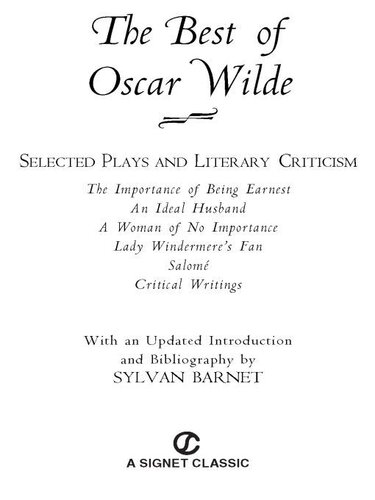
The Best of Oscar Wilde PDF - Oscar Wilde
Oscar Wilde • literature • 391 Pages
(0)
Quate
Review
Save
Share
Book Description
A Timeless Collection of Wit, Beauty, and Literary Brilliance
The Best of Oscar Wilde by Oscar Wilde brings together a captivating selection of one of the most iconic voices in English literature. This collection serves as an entry point into the dazzling world of Wilde’s imagination, where sharp wit, elegant prose, and bold social commentary come together in a uniquely unforgettable style. Known for his razor-sharp dialogue and unforgettable observations on society, Oscar Wilde remains a towering figure whose works continue to be read, quoted, and celebrated across generations.
This book is designed for readers who want to experience the essence of Wilde without navigating through his complete works. It highlights the brilliance of his storytelling, his theatrical genius, and his unmatched ability to turn language into art. Whether you are discovering Wilde for the first time or revisiting his most famous ideas, this collection offers a rich and rewarding literary experience that captures the spirit of his genius.
The World of Oscar Wilde: Wit, Aestheticism, and Rebellion
Oscar Wilde was more than a writer; he was a cultural phenomenon who reshaped how literature could reflect society. His works are deeply rooted in aestheticism, a movement that celebrates beauty, art, and sensory experience above all else. Yet beneath the elegance of his language lies a powerful critique of Victorian society, its rigid moral codes, and its obsession with appearances.
In The Best of Oscar Wilde, readers are introduced to the dual nature of his writing: on one hand, playful and humorous; on the other, deeply reflective and critical. Wilde had a rare ability to expose hypocrisy while making his audience laugh. His famous epigrams—short, witty, and often paradoxical statements—reveal truths about human behavior in a way that feels both entertaining and unsettling.
This collection reflects the breadth of Wilde’s talent, offering a glimpse into his plays, stories, and philosophical reflections. It captures the essence of his literary identity: elegant, provocative, and endlessly quotable.
A Glimpse Into His Most Celebrated Works
While this collection does not confine Wilde to a single genre, it often draws from his most celebrated contributions to literature. Readers may encounter excerpts and selections inspired by works such as The Picture of Dorian Gray, his only novel, which explores themes of vanity, moral corruption, and the pursuit of eternal youth. Through this story, Wilde challenges the boundaries between beauty and morality, asking unsettling questions about the price of desire.
His plays also form a significant part of his legacy. Comedies like The Importance of Being Earnest showcase his mastery of dialogue and satire, turning social conventions into sources of humor and critique. His theatrical works are known for their fast-paced wit, memorable characters, and clever reversals of expectation, making them timeless pieces that continue to resonate on stage and page alike.
Alongside fiction and drama, Wilde’s essays and philosophical writings reveal a more reflective side. They offer insights into art, individuality, and the role of the artist in society. Together, these selections present a well-rounded portrait of Wilde’s creative genius.
Themes That Define Wilde’s Literary Voice
One of the most compelling aspects of The Best of Oscar Wilde is the consistent presence of powerful themes that run through his work. These themes are not only historically significant but remain strikingly relevant in the modern world.
Wit and Irony are at the heart of Wilde’s writing. His ability to craft clever dialogue and paradoxical statements transforms simple conversations into intellectual performances. Beneath the humor often lies a deeper truth about human nature and social behavior.
Society and Hypocrisy is another recurring theme. Wilde frequently exposes the contradictions of upper-class Victorian society, revealing how appearances often mask moral inconsistency. His work encourages readers to question social norms and think independently about values and identity.
Beauty and Aestheticism play a central role in his philosophy. Wilde believed that art should exist for its own sake, free from moral judgment or utilitarian purpose. This idea challenges readers to appreciate beauty in all its forms and to reconsider the relationship between art and life.
Identity and Duality are also essential to his storytelling. Characters often struggle between public image and private desire, reflecting the tension between who we are and who society expects us to be. This psychological depth adds lasting complexity to his narratives.
The Reading Experience: Elegant, Entertaining, and Thought-Provoking
Reading The Best of Oscar Wilde is an experience defined by elegance and intellectual pleasure. Wilde’s language is carefully crafted, filled with rhythm, balance, and precision. Even when addressing serious themes, his writing maintains a lightness that makes it highly engaging and accessible.
The collection flows between humor and depth, often within the same passage. A witty remark may suddenly reveal a profound observation about human nature, while a comedic scene might carry subtle emotional weight. This interplay between entertainment and insight is one of the reasons Wilde’s work continues to captivate readers around the world.
For modern audiences, the language remains surprisingly fresh. His observations about society, fame, relationships, and identity feel relevant even today, making this collection not just a historical artifact but a living conversation with the present.
Who This Collection Is For
The Best of Oscar Wilde is ideal for a wide range of readers. Literature enthusiasts will appreciate the refinement of his prose and the historical significance of his ideas. Students and academic readers will find valuable insight into Victorian literature, aesthetic philosophy, and theatrical development. Meanwhile, casual readers can simply enjoy the humor, storytelling, and memorable quotes that have made Wilde one of the most frequently quoted authors in English.
It is also an excellent choice for readers interested in classic literature collections, philosophical writing, and socially reflective fiction. Those who enjoy intelligent humor, sharp dialogue, and thought-provoking narratives will find this book especially rewarding.
A Lasting Literary Legacy
Oscar Wilde’s influence extends far beyond his lifetime. His work continues to inspire writers, playwrights, and thinkers who admire his courage to challenge convention and his talent for transforming language into art. The Best of Oscar Wilde stands as a celebration of that legacy, preserving the essence of a writer who understood both the beauty and contradictions of human life.
Through wit, irony, and artistic brilliance, Wilde invites readers to look at the world differently—to question appearances, to appreciate beauty, and to embrace the complexity of thought and emotion. This collection is not just a reading experience; it is an encounter with one of literature’s most brilliant minds, preserved in words that remain as sharp and relevant today as they were in his own time.
Oscar Wilde
Oscar Wilde (1854-1900) was an Irish playwright, poet, and novelist who is widely regarded as one of the greatest writers of the Victorian era. He was born in Dublin, Ireland, and educated at Trinity College, Dublin, and Magdalen College, Oxford. Wilde was a flamboyant figure in Victorian society, known for his wit, dandyism, and homosexuality, which was then considered a crime.
Wilde's literary career began in the 1880s, when he gained popularity with his comedic plays, including "Lady Windermere's Fan," "A Woman of No Importance," and "The Importance of Being Earnest." These plays were known for their clever wordplay, social commentary, and satirical portrayal of Victorian society.
In addition to his plays, Wilde also wrote novels, including "The Picture of Dorian Gray," which tells the story of a beautiful young man who makes a Faustian pact to remain young and beautiful while his portrait ages and becomes ugly. The novel caused controversy when it was first published in 1890 because of its decadent themes and homoerotic undertones.
Despite his literary success, Wilde's personal life was tumultuous. In 1895, he was convicted of homosexual acts and sentenced to two years of hard labor. The trial and subsequent imprisonment destroyed his reputation and health, and he died in Paris in 1900, at the age of 46.
Wilde's legacy lives on through his works, which continue to be celebrated for their wit, humor, and social commentary. His writing has influenced generations of writers, and his plays continue to be performed and adapted for film and television. Today, Wilde is remembered not only as a great writer, but also as a symbol of resistance against Victorian moralism and hypocrisy.
Earn Rewards While Reading!
Every 10 pages you read and spent 30 seconds on every page, earns you 5 reward points! Keep reading to unlock achievements and exclusive benefits.
Read
Rate Now
5 Stars
4 Stars
3 Stars
2 Stars
1 Stars
The Best of Oscar Wilde Quotes
Top Rated
Latest
Quate
Be the first to leave a quote and earn 10 points
instead of 3
Other books by Oscar Wilde
Other books like The Best of Oscar Wilde
'%20/%3e%3c/svg%3e "The Missionary Position: Mother Teresa in Theory and Practice")
3615
English
Comments
Be the first to leave a comment and earn 5 points
instead of 3