

The source of the book
This book is published for the public benefit under a Creative Commons license, or with the permission of the author or publisher. If you have any objections to its publication, please contact us.
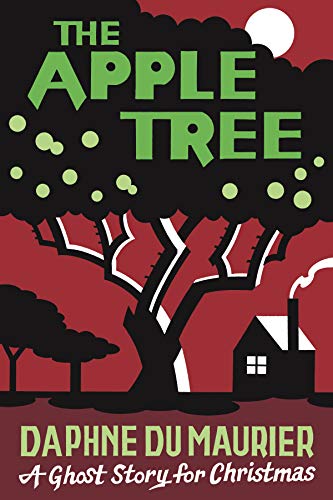
The Apple Tree PDF - Daphne du Maurier
Daphne du Maurier • Horror novels • 280 Pages
(0)
Quate
Review
Save
Share
Book Description
The Apple Tree by Daphne du Maurier is a haunting work of psychological suspense and supernatural unease, built around one of the author’s most quietly disturbing ideas: a widower, newly released from what he remembers as an unhappy marriage, begins to feel that an old apple tree in his garden has taken on the presence of his dead wife. In a story shaped by guilt, resentment, memory, and dread, du Maurier turns an ordinary domestic landscape into a place of emotional tension, where the familiar becomes threatening and the natural world seems to reflect buried human conflict.
The title is also important in du Maurier’s publishing history. The Apple Tree was the original title of the 1952 collection later widely known as The Birds and Other Stories, a collection that included “The Birds,” “Monte Verità,” “The Apple Tree,” “The Little Photographer,” “Kiss Me Again, Stranger,” and “The Old Man.” The collection was first published in the United Kingdom by Victor Gollancz, and later editions often foregrounded “The Birds” because of its fame and its connection to Alfred Hitchcock’s film adaptation.
A Disturbing Story of Marriage, Memory, and Guilt
At the center of The Apple Tree is a widower whose wife, Midge, has recently died. He does not respond to her death with uncomplicated grief. Instead, he experiences a troubling sense of release, remembering his marriage as narrow, oppressive, and emotionally draining. Daphne du Maurier immediately unsettles the reader by making this freedom feel morally uncertain. The narrator’s version of events appears controlled and reasonable at first, but the more he reflects on the past, the more the story opens into ambiguity. Was he a victim of a difficult marriage, or is his memory shaped by selfishness, cruelty, and denial?
This uncertainty gives The Apple Tree its lasting psychological power. Du Maurier does not simply present a ghost story in which the dead return to punish the living. Instead, she creates a more subtle and uncomfortable atmosphere, where haunting may come from the supernatural, from guilt, or from the mind’s refusal to escape what it has done. The apple tree in the garden becomes an image of everything the narrator wants to reject: his wife’s presence, her suffering, her persistence, and the emotional history he would prefer to cut away. As the story develops, the tree seems less like a background object and more like a silent witness.
Gothic Suspense in an Ordinary Garden
One of the most striking qualities of The Apple Tree by Daphne du Maurier is the way it transforms a familiar rural setting into a scene of Gothic dread. There are no grand castles, elaborate curses, or melodramatic apparitions. The horror grows from an orchard, a house, a widower’s thoughts, and an old tree that appears to resemble the dead woman he cannot stop remembering. This restraint is central to du Maurier’s style. She understands that fear can become more powerful when it is domestic, quiet, and almost plausible.
The apple tree itself becomes a brilliant Gothic symbol. It is rooted, weathered, stubborn, and impossible to ignore. It seems to contain the shape of memory and the force of accusation. For readers interested in classic Gothic fiction, psychological horror, or supernatural short stories, the story offers the pleasure of uncertainty: the reader is never allowed to settle comfortably into a single explanation. The tree may be a real supernatural presence, a projection of the narrator’s guilt, or a symbolic embodiment of the marriage he failed to understand. Du Maurier’s skill lies in allowing all of these possibilities to remain alive.
Daphne du Maurier’s Dark Domestic Imagination
Daphne du Maurier is best known for atmospheric works such as Rebecca, Jamaica Inn, My Cousin Rachel, and “The Birds,” but The Apple Tree shows how powerful her shorter fiction can be when focused on intimate psychological pressure. Born in London in 1907, du Maurier became one of the twentieth century’s most distinctive writers of suspense, often combining mystery, emotional intensity, and a strong sense of place.
In The Apple Tree, her attention turns to the emotional afterlife of marriage. The story explores how resentment can survive death, how memory can distort the truth, and how the domestic world can become uncanny when ordinary objects appear to take on human meaning. The narrator wants to see himself as liberated, but the garden refuses to let him forget. Every detail seems to press against his comfort: the shape of the tree, the weather, the changing seasons, and the stubborn physical presence of the natural world. This gives the story a slow, tightening suspense that feels very different from shock-driven horror.
A Story About Control and Consequence
Beneath its supernatural atmosphere, The Apple Tree is also a story about control. The widower wants to control the meaning of his marriage after his wife’s death. He wants to control the household, the garden, his memories, and his future. Yet the more he tries to arrange the world according to his own comfort, the more the tree seems to resist him. This conflict gives the story an almost moral force. The past cannot be dismissed simply because it is inconvenient, and the dead cannot be erased simply because the living wish to move on.
Du Maurier’s handling of this theme is sharp because she avoids easy judgment. The story does not ask readers merely to pity Midge or condemn her husband. Instead, it creates a more disturbing space in which both marriage and memory feel complicated. The narrator’s frustration may have roots in real unhappiness, but his lack of sympathy becomes increasingly revealing. The tree, silent and immovable, becomes a challenge to his preferred version of the truth. In this way, The Apple Tree works as both a ghost story and a study of moral unease.
Why Readers of Classic Suspense Still Value The Apple Tree
Readers searching for Daphne du Maurier short stories, classic psychological suspense, or literary horror about guilt and haunting will find The Apple Tree especially rewarding. It offers the atmospheric tension associated with du Maurier’s best work, but in a concentrated form. The story is short enough to move with precision, yet rich enough to leave a lasting impression. Its fear comes not from spectacle but from suggestion, repetition, and the gradual sense that the narrator’s world is closing in on him.
The story also appeals to readers who enjoy fiction where the boundary between reality and imagination remains uncertain. Like much of du Maurier’s writing, The Apple Tree is not interested in explaining away every mystery. Its strength lies in mood, ambiguity, and psychological pressure. The reader is invited to question the narrator’s reliability, the meaning of the tree, and the truth of the marriage that has ended but not disappeared. This makes the story memorable long after its final pages, because its haunting is emotional as much as supernatural.
A Quietly Terrifying Work from a Master of Unease
The Apple Tree stands as one of Daphne du Maurier’s most effective explorations of domestic dread. Through the simple image of a tree in a garden, she creates a story about marriage, guilt, memory, and the fear that the past may continue to live in forms we cannot control. Whether read as a supernatural tale, a psychological study, or a symbolic Gothic story, it demonstrates du Maurier’s extraordinary ability to make ordinary life feel charged with hidden danger.
For readers drawn to elegant and unsettling fiction, The Apple Tree by Daphne du Maurier offers a powerful example of literary suspense at its most restrained and disturbing. It is a story of a man who believes he has escaped the burden of the past, only to discover that what is rooted deeply may not be so easily removed.
Daphne du Maurier
Daphne du Maurier was a celebrated British novelist, playwright, and short story writer, born in 1907. She became famous for her atmospheric storytelling, psychological suspense, and gothic themes. Her most renowned novel, Rebecca, remains a classic of English literature and has inspired several film and stage adaptations. Du Maurier’s writing often explores mystery, identity, obsession, love, and fear, creating unforgettable characters and haunting settings that continue to captivate readers around the world.
Earn Rewards While Reading!
Every 10 pages you read and spent 30 seconds on every page, earns you 5 reward points! Keep reading to unlock achievements and exclusive benefits.
Read
Rate Now
5 Stars
4 Stars
3 Stars
2 Stars
1 Stars
The Apple Tree Quotes
Top Rated
Latest
Quate
Be the first to leave a quote and earn 10 points
instead of 3
'%20/%3e%3c/svg%3e "Rebecca")
Comments
Be the first to leave a comment and earn 5 points
instead of 3