

The source of the book
This book is published for the public benefit under a Creative Commons license, or with the permission of the author or publisher. If you have any objections to its publication, please contact us.
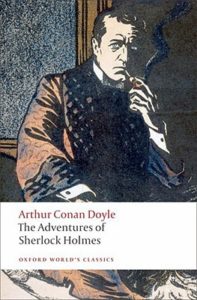
The Adventures of Sherlock Holmes 3 PDF - Arthur Conan Doyle
Arthur Conan Doyle • Crime novels and mysteries • 1,231 Pages
(0)
Quate
Review
Save
Share
Book Description
The Adventures of Sherlock Holmes by Arthur Conan Doyle is a classic English-language collection of detective stories, first published in 1892 by George Newnes, Limited in London. The stories had previously appeared in The Strand Magazine, and the volume became the first collected book of Sherlock Holmes short stories. Written by Arthur Conan Doyle, the book introduced many readers to the now-famous partnership between Sherlock Holmes, the brilliant consulting detective, and Dr. John Watson, his loyal friend, narrator, and moral counterweight.
Rather than following one continuous novel-length plot, The Adventures of Sherlock Holmes presents twelve separate mysteries. Each story begins with an unusual problem brought to Holmes at 221B Baker Street or discovered through Watson’s close association with him. Holmes investigates using observation, deduction, disguise, scientific reasoning, and a deep understanding of human behavior. Watson records the events in a warm and readable style, allowing readers to admire Holmes’s intellect while also seeing the emotional and social consequences of each case.
The collection opens with “A Scandal in Bohemia,” one of the most famous Sherlock Holmes stories. The King of Bohemia asks Holmes to retrieve a compromising photograph from Irene Adler, a clever and independent woman who has outwitted powerful men. Holmes’s investigation does not end in the simple victory he expects. Instead, Adler escapes with dignity, leaving Holmes with admiration for her intelligence. This story is important because it shows that Holmes, though extraordinarily gifted, is not unbeatable.
Other stories explore theft, blackmail, mistaken identity, family secrets, and hidden crimes. In “The Red-Headed League,” Holmes investigates a bizarre job offer that turns out to be part of a criminal scheme. In “A Case of Identity,” a young woman’s romantic disappointment hides a cruel domestic deception. “The Boscombe Valley Mystery” follows a murder accusation in which appearances mislead the police, while Holmes sees the deeper truth. “The Five Orange Pips” brings a darker atmosphere, involving intimidation and danger that even Holmes cannot fully prevent.
Several stories focus on strange clues that seem meaningless until Holmes places them in the correct pattern. “The Man with the Twisted Lip” begins with the disappearance of a respectable man and leads to an unexpected explanation involving disguise and social shame. “The Blue Carbuncle” turns a lost Christmas goose into the key to a jewel theft. “The Speckled Band,” one of the most suspenseful tales in the collection, follows a young woman who fears she will die in the same mysterious way as her sister. Holmes uncovers the danger through careful attention to architecture, motive, and physical evidence.
The later stories continue to show Conan Doyle’s skill at combining dramatic situations with logical solutions. “The Engineer’s Thumb” involves violence, counterfeiting, and a narrow escape. “The Noble Bachelor” turns a society marriage scandal into a case of hidden personal history. “The Beryl Coronet” examines trust, family honor, and sacrifice after a valuable object is damaged. The final story, “The Copper Beeches,” places a young governess in a sinister household where strange rules conceal a private crime.
The Adventures of Sherlock Holmes remains one of the most important works in detective fiction because it helped define the modern mystery story. Arthur Conan Doyle gives each case a memorable premise, then lets Holmes reveal how small details can expose large truths. Dr. Watson’s narration makes the stories approachable, balancing suspense with friendship, humor, and admiration. The book’s lasting appeal comes from its variety: some mysteries are playful, some are tragic, and some are genuinely frightening, yet all revolve around the pleasure of seeing confusion transformed into clarity. For readers searching for an introduction to Sherlock Holmes, The Adventures of Sherlock Holmes is one of the best places to begin.
Arthur Conan Doyle
Agatha Christie is one of the most influential and widely read writers in the history of detective fiction, a British author whose name has become almost synonymous with mystery, crime, suspense, and the perfectly constructed literary puzzle. Born in England in 1890, Christie developed a lifelong fascination with storytelling, human behavior, secrets, and the hidden motives that can lie beneath ordinary social life. Her fiction is famous for combining elegant simplicity with extraordinary technical control: a body is discovered, a group of suspects is gathered, motives begin to surface, and the truth remains carefully concealed until the final revelation reshapes everything the reader thought they understood. What makes Agatha Christie especially remarkable is not only the number of books she wrote, but the precision with which she transformed the detective story into a form of intellectual entertainment. Her novels invite readers to become investigators, to notice small details, to weigh testimony, to question appearances, and to discover that the most important clue is often hidden in plain sight. Christie created some of the most recognizable characters in world literature, especially Hercule Poirot and Miss Marple. Hercule Poirot, the Belgian detective with his orderly mind, careful manners, and famous reliance on psychological insight, represents the power of logic, method, and close observation. Miss Marple, by contrast, appears modest and gentle, yet her deep understanding of village life and human nature allows her to interpret crime through patterns of behavior she has seen before. Through these two figures, Christie showed that detection could be both rational and intuitive, both analytical and humane. Her most celebrated works include Murder on the Orient Express, And Then There Were None, The Murder of Roger Ackroyd, Death on the Nile, The A.B.C. Murders, and A Murder Is Announced. These books remain popular because they combine suspense with memorable settings: a snowbound train, an isolated island, a river steamer, a country house, a quiet village, or a seemingly respectable family gathering. Christie understood that a confined setting increases tension, forcing characters to reveal themselves under pressure while the reader searches for the pattern behind their lies. Her storytelling rarely depends on graphic violence; instead, it relies on atmosphere, misdirection, dialogue, motive, and timing. She also wrote for the stage, and The Mousetrap became one of the most famous long-running plays in theatre history, proving that her sense of suspense could work as powerfully before a live audience as it did on the page. Agatha Christie’s prose is clear, economical, and accessible, which partly explains her global appeal. Yet beneath that clarity is a highly disciplined narrative intelligence. She knew when to withhold information, when to plant a clue, when to allow a suspect to appear guilty, and when to overturn expectations without cheating the reader. Her work reflects the social world of twentieth-century Britain, including class, manners, domestic life, inheritance, travel, marriage, reputation, and the tensions between public respectability and private desire. For modern readers, Christie’s novels offer more than clever endings. They offer a portrait of how people hide shame, ambition, resentment, fear, and longing behind polite conversation. Her influence can be seen in countless crime novels, television series, films, and detective stories that continue to use and reinvent the classic mystery structure she perfected. For book websites, libraries, and readers searching for classic crime fiction, Agatha Christie remains an essential author. Her legacy rests on the rare combination of popularity, originality, craftsmanship, and enduring readability. Decades after her death, her stories continue to challenge, entertain, and surprise readers, confirming her place as the enduring queen of mystery fiction.
Earn Rewards While Reading!
Every 10 pages you read and spent 30 seconds on every page, earns you 5 reward points! Keep reading to unlock achievements and exclusive benefits.
Read
Rate Now
5 Stars
4 Stars
3 Stars
2 Stars
1 Stars
The Adventures of Sherlock Holmes 3 Quotes
Top Rated
Latest
Quate
Be the first to leave a quote and earn 10 points
instead of 3
Other books by Arthur Conan Doyle
Other books like The Adventures of Sherlock Holmes 3
'%20/%3e%3c/svg%3e "The Harbinger: The Ancient Mystery that Holds the Secret of America's Future")
Jonathan Cahn.
Crime novels and mysteries
(0)
3009
English
Jonathan Cahn.
Crime novels and mysteries
(0)
2675
English
Comments
Be the first to leave a comment and earn 5 points
instead of 3