

The source of the book
This book is published for the public benefit under a Creative Commons license, or with the permission of the author or publisher. If you have any objections to its publication, please contact us.
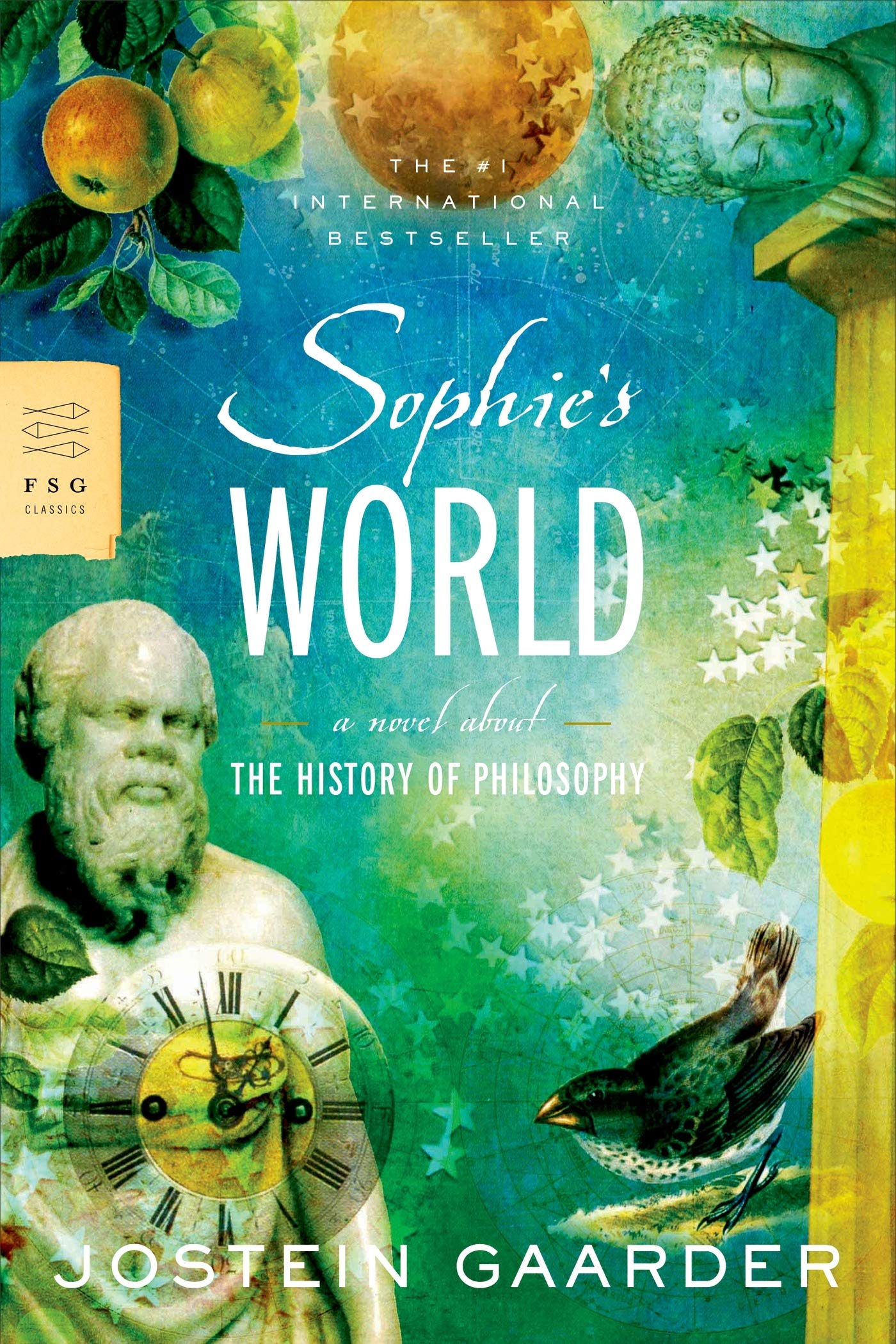
Sophie's World: A Novel about the History of Philosophy PDF - Jostein Gaarder
Jostein Gaarder • Historical novels • 258 Pages
(0)
Author
Jostein GaarderCategory
literatureSection
Number Of Downloads
164
Number Of Reads
470
File Size
1.52 MB
Views
6,571
Quate
Review
Save
Share
Book Description
"Sophie's World: A Novel about the History of Philosophy" is a book written by Norwegian author Jostein Gaarder, first published in 1991. The book has been translated into more than 60 languages worldwide and has become a bestseller.
The story revolves around a teenage girl named Sophie Amundsen, who receives mysterious letters that lead her on a journey to learn about the history of philosophy. Her journey is guided by a mysterious philosopher named Alberto Knox, who teaches her about the great philosophers throughout history, from Socrates to Nietzsche.
As Sophie learns about the history of philosophy, she discovers that her own existence is part of a larger experiment, aimed at teaching philosophy to children. The novel explores various philosophical concepts and theories, including existentialism, metaphysics, and ethics.
The book is a fascinating and entertaining read that provides valuable insights into the history of philosophy and philosophical concepts. It is also a great introduction to philosophy for those who are new to the subject. "Sophie's World" has won numerous awards and accolades, and has become a modern classic of philosophical literature.
Jostein Gaarder
Jostein Gaarder is a Norwegian author, intellectual, and former teacher whose writing has made philosophy, wonder, and moral reflection accessible to readers across generations. Born in Oslo in 1952, he grew up in an environment shaped by education and literature, and his later studies in language, religion, and philosophy helped form the distinctive voice that defines his fiction. Before gaining international recognition as a novelist, Gaarder worked as a teacher, a background that is deeply visible in his books: he writes not as someone simplifying ideas from above, but as a storyteller inviting readers into the act of questioning. His most famous work, «Sofies verden», transformed a history of philosophy into a compelling narrative of discovery, mystery, and intellectual awakening. The novel’s success rests on a rare balance: it introduces major philosophical traditions while preserving the suspense and emotional movement of fiction. Rather than presenting ideas as abstract lessons, Gaarder dramatizes them through letters, puzzles, conversations, and a young protagonist’s gradual realization that reality is more layered than it first appears. This method has become one of his literary signatures. Across works such as «Kabalmysteriet», «I et speil, i en gåte», and «Appelsinpiken», he repeatedly returns to the power of childhood curiosity, the fragility of life, and the human need to search for meaning. His characters often stand at thresholds: between childhood and adulthood, belief and doubt, life and death, the visible world and the invisible questions behind it. Gaarder’s prose is clear and approachable, yet it carries philosophical density. He is especially skilled at building stories within stories, using metafictional structures and symbolic details to remind readers that narratives shape how people understand themselves. His books often invite the reader to become a participant rather than a passive observer; the act of reading becomes an act of thinking. This quality explains why his work appeals to both young adult readers and adults who are drawn to reflective fiction. Gaarder does not write philosophy as an academic discipline locked inside institutions; he presents it as a living practice rooted in astonishment. The recurring themes of time, memory, faith, mortality, love, and responsibility give his novels emotional warmth, while his intellectual range gives them lasting educational value. Beyond literature, Gaarder is also associated with environmental concern and ethical engagement, and this awareness appears in his writing as a broader concern for the planet and for future generations. His work suggests that philosophical curiosity should lead not only to self-understanding but also to responsibility toward other people and the natural world. In the landscape of modern Norwegian literature, Gaarder occupies a highly recognizable place: he is a novelist of ideas who turned difficult questions into memorable stories without losing their seriousness. For book websites, library profiles, and author pages, Jostein Gaarder can be described as a writer who unites narrative imagination with intellectual clarity, making him one of the most widely read Norwegian authors of contemporary times. His legacy is inseparable from his ability to show that the deepest questions are not reserved for specialists; they belong to every reader willing to pause, wonder, and ask what it means to be alive.
Earn Rewards While Reading!
Every 10 pages you read and spent 30 seconds on every page, earns you 5 reward points! Keep reading to unlock achievements and exclusive benefits.
Read
Rate Now
5 Stars
4 Stars
3 Stars
2 Stars
1 Stars
Sophie's World: A Novel about the History of Philosophy Quotes
Top Rated
Latest
Quate
Be the first to leave a quote and earn 10 points
instead of 3
'%20/%3e%3c/svg%3e "The Ringmaster's Daughter")
Comments
Be the first to leave a comment and earn 5 points
instead of 3