

The source of the book
This book is published for the public benefit under a Creative Commons license, or with the permission of the author or publisher. If you have any objections to its publication, please contact us.
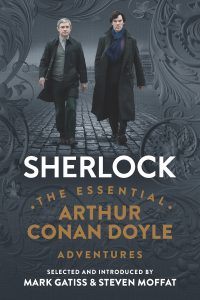
Sherlock PDF - Arthur Conan Doyle
Arthur Conan Doyle • Crime novels and mysteries • 724 Pages
(0)
Quate
Review
Save
Share
Book Description
Arthur Conan Doyle’s “Sherlock Holmes” stories introduced one of the most enduring detectives in English literature. Strictly speaking, “Sherlock” is not the title of a single original novel by Doyle; it most likely refers to Sherlock Holmes, the fictional consulting detective who first appeared in the novel “A Study in Scarlet.” That work was written by Arthur Conan Doyle and first published in 1887 by Ward Lock & Co., with its book publication following in 1888. The early Holmes short stories were later collected in “The Adventures of Sherlock Holmes,” published in 1892 by George Newnes after appearing in The Strand Magazine.
The Sherlock Holmes canon centers on the brilliant detective Sherlock Holmes and his loyal friend and narrator, Dr. John H. Watson. Doyle presents Holmes as a master of observation, deduction, chemistry, disguise, and logical reasoning. Watson, a former army doctor, becomes both Holmes’s companion and the storyteller who records their cases. Together, they investigate crimes in Victorian and Edwardian England, usually beginning from their shared rooms at 221B Baker Street in London.
In “A Study in Scarlet,” the first Holmes novel, Watson meets Holmes while searching for affordable lodgings. Their partnership begins when Watson learns that Holmes works as a “consulting detective,” assisting police and private clients when ordinary methods fail. The central case involves a mysterious murder in an empty London house. Holmes studies footprints, marks, dust, behavior, and small physical clues, showing Watson that apparently minor details can reveal a hidden chain of events. The investigation leads beyond London into a backstory of revenge, betrayal, and long-buried grievance. The plot establishes the essential formula of the Sherlock Holmes stories: a puzzling crime, Watson’s human perspective, Holmes’s sharp analysis, and a solution that seems astonishing until the detective explains the logic behind it.
“The Adventures of Sherlock Holmes” expands this world through a series of shorter cases. These stories do not form one continuous plot but instead present separate investigations that reveal different sides of Holmes’s methods and personality. In “A Scandal in Bohemia,” Holmes encounters Irene Adler, a clever and independent woman who earns his lasting respect. Other stories involve hidden identities, family secrets, blackmail, stolen property, strange jobs, suspicious inheritances, and crimes disguised as accidents or coincidences. The collection helped define the detective short story: a client arrives with a strange problem, Watson describes the mystery, Holmes identifies the overlooked clue, and the truth emerges through reason rather than luck.
Across the Sherlock Holmes stories, Doyle combines mystery, adventure, atmosphere, and character study. London is often shown as a city of fog, cabs, railway stations, newspapers, clubs, offices, and quiet rooms where danger hides beneath respectable surfaces. Holmes is not portrayed as a conventional hero. He can be cold, impatient, theatrical, and secretive, but he is also deeply committed to truth and justice. Watson balances him with warmth, loyalty, courage, and moral clarity. Their friendship gives the stories emotional weight, making the reader care not only about the solution to each crime but also about the bond between the two men.
The appeal of “Sherlock” lies in the pleasure of seeing confusion turned into clarity. Doyle’s plots often begin with events that seem impossible or absurd: a strange visitor, a coded message, a missing person, a frightening sound, or a crime with no obvious motive. Holmes teaches Watson, and the reader, to look again. A hat, a stain, a footprint, a newspaper advertisement, or a person’s manner of speech may become the key to the entire mystery. This structure made Sherlock Holmes a model for later detective fiction and helped establish many conventions still used in crime novels, television mysteries, and modern thrillers.
As a body of work, Arthur Conan Doyle’s Sherlock Holmes stories are more than simple puzzles. They explore justice, intelligence, social class, urban life, fear, greed, loyalty, and the limits of official authority. Whether read through “A Study in Scarlet,” “The Adventures of Sherlock Holmes,” or later collections, the stories remain compelling because they invite readers to participate in the act of detection. The title “Sherlock” has become shorthand for brilliant reasoning, but the original works show that Holmes’s greatness depends not only on intelligence, but also on discipline, attention, imagination, and the steady friendship of Dr. Watson.
Arthur Conan Doyle
Agatha Christie is one of the most influential and widely read writers in the history of detective fiction, a British author whose name has become almost synonymous with mystery, crime, suspense, and the perfectly constructed literary puzzle. Born in England in 1890, Christie developed a lifelong fascination with storytelling, human behavior, secrets, and the hidden motives that can lie beneath ordinary social life. Her fiction is famous for combining elegant simplicity with extraordinary technical control: a body is discovered, a group of suspects is gathered, motives begin to surface, and the truth remains carefully concealed until the final revelation reshapes everything the reader thought they understood. What makes Agatha Christie especially remarkable is not only the number of books she wrote, but the precision with which she transformed the detective story into a form of intellectual entertainment. Her novels invite readers to become investigators, to notice small details, to weigh testimony, to question appearances, and to discover that the most important clue is often hidden in plain sight. Christie created some of the most recognizable characters in world literature, especially Hercule Poirot and Miss Marple. Hercule Poirot, the Belgian detective with his orderly mind, careful manners, and famous reliance on psychological insight, represents the power of logic, method, and close observation. Miss Marple, by contrast, appears modest and gentle, yet her deep understanding of village life and human nature allows her to interpret crime through patterns of behavior she has seen before. Through these two figures, Christie showed that detection could be both rational and intuitive, both analytical and humane. Her most celebrated works include Murder on the Orient Express, And Then There Were None, The Murder of Roger Ackroyd, Death on the Nile, The A.B.C. Murders, and A Murder Is Announced. These books remain popular because they combine suspense with memorable settings: a snowbound train, an isolated island, a river steamer, a country house, a quiet village, or a seemingly respectable family gathering. Christie understood that a confined setting increases tension, forcing characters to reveal themselves under pressure while the reader searches for the pattern behind their lies. Her storytelling rarely depends on graphic violence; instead, it relies on atmosphere, misdirection, dialogue, motive, and timing. She also wrote for the stage, and The Mousetrap became one of the most famous long-running plays in theatre history, proving that her sense of suspense could work as powerfully before a live audience as it did on the page. Agatha Christie’s prose is clear, economical, and accessible, which partly explains her global appeal. Yet beneath that clarity is a highly disciplined narrative intelligence. She knew when to withhold information, when to plant a clue, when to allow a suspect to appear guilty, and when to overturn expectations without cheating the reader. Her work reflects the social world of twentieth-century Britain, including class, manners, domestic life, inheritance, travel, marriage, reputation, and the tensions between public respectability and private desire. For modern readers, Christie’s novels offer more than clever endings. They offer a portrait of how people hide shame, ambition, resentment, fear, and longing behind polite conversation. Her influence can be seen in countless crime novels, television series, films, and detective stories that continue to use and reinvent the classic mystery structure she perfected. For book websites, libraries, and readers searching for classic crime fiction, Agatha Christie remains an essential author. Her legacy rests on the rare combination of popularity, originality, craftsmanship, and enduring readability. Decades after her death, her stories continue to challenge, entertain, and surprise readers, confirming her place as the enduring queen of mystery fiction.
Earn Rewards While Reading!
Every 10 pages you read and spent 30 seconds on every page, earns you 5 reward points! Keep reading to unlock achievements and exclusive benefits.
Read
Rate Now
5 Stars
4 Stars
3 Stars
2 Stars
1 Stars
Sherlock Quotes
Top Rated
Latest
Quate
Be the first to leave a quote and earn 10 points
instead of 3
Other books by Arthur Conan Doyle
Other books like Sherlock
'%20/%3e%3c/svg%3e "The Harbinger: The Ancient Mystery that Holds the Secret of America's Future")
Jonathan Cahn.
Crime novels and mysteries
(0)
3007
English
Jonathan Cahn.
Crime novels and mysteries
(0)
2671
English
Comments
Be the first to leave a comment and earn 5 points
instead of 3