

The source of the book
This book is published for the public benefit under a Creative Commons license, or with the permission of the author or publisher. If you have any objections to its publication, please contact us.
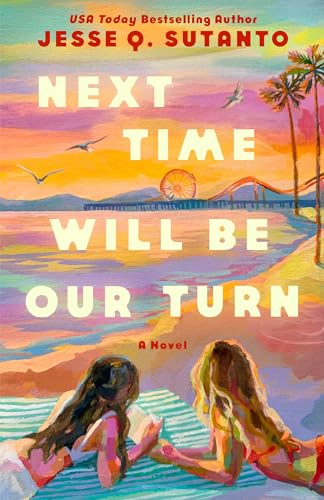
Next Time Will Be Our Turn PDF - Jesse Q. Sutanto
Jesse Q. Sutanto • romantic novels • 352 Pages
(0)
Quate
Review
Save
Share
Book Description
Next Time Will Be Our Turn by Jesse Q. Sutanto is a sweeping, tender, and emotionally rich novel about love, identity, family, memory, and the courage it takes to become fully yourself. Moving between generations and across continents, the book follows a grandmother and granddaughter whose private struggles begin to mirror each other in unexpected ways. Published by Berkley in November 2025, the novel blends women’s fiction, romance, queer coming-of-age storytelling, and multigenerational family drama into a heartfelt story about the lives people hide, the truths they finally share, and the love that can survive silence, distance, and time.
A Multigenerational Love Story About Secrets and Self-Acceptance
At the center of Next Time Will Be Our Turn is Izzy Chen, a teenager who feels trapped by the expectations of her family and the pressure to appear successful, polished, and acceptable. Her family’s annual Chinese New Year celebration is not a relaxed gathering but a display of status, achievement, and comparison, held in the high-pressure atmosphere of a Michelin-starred restaurant. Izzy already feels like the outsider, carrying private questions about identity and belonging that she has not been able to speak aloud. Then her seventy-three-year-old grandmother, Magnolia Chen, arrives with a woman on her arm and kisses her in front of the entire family, turning one family celebration into a moment of shock, scandal, and revelation.
That single act becomes the doorway into a much larger story. Seeing something of herself in Izzy’s confusion and fear, Magnolia begins to tell her granddaughter the story of her own youth. As a teenager, Magnolia was sent by her Indo-Chinese parents from Jakarta to Los Angeles for her education, where she met Ellery, an American college student who became her best friend and the love of her life. Their bond is powerful, intimate, and forbidden by the cultural and gender expectations surrounding them. Through Magnolia’s memories, the novel opens into a past shaped by longing, social pressure, family duty, and the painful question of whether love can survive in a world that refuses to make room for it.
Family, Culture, and the Weight of Expectations
One of the most compelling parts of Next Time Will Be Our Turn is the way it explores family not as a simple source of comfort, but as a complicated force that can both protect and wound. Izzy’s family gathering is filled with familiar rituals, pride, comparison, and unspoken rules. Success matters. Reputation matters. What other people think matters. In that environment, difference can feel dangerous, and honesty can feel like a threat to the fragile order everyone is trying to maintain. Jesse Q. Sutanto uses this family setting to examine how silence is passed down, how shame can become inherited, and how one person’s courage can disturb an entire family system in order to make healing possible.
Magnolia’s story gives the novel its emotional depth. Her past is not presented as a simple romance, but as a life shaped by choices made under pressure. Being sent from Jakarta to Los Angeles opens a new world for her, but it also places her between cultures, expectations, and versions of herself. She is a daughter expected to honor her family, a young woman expected to obey the rules of her community, and a person discovering a love that those rules do not allow. This tension makes the book especially meaningful for readers interested in queer historical romance, Asian family stories, Chinese Indonesian identity, and fiction about the emotional cost of living behind a carefully maintained public face.
A Queer Coming-of-Age Story Across Generations
Although Next Time Will Be Our Turn contains a love story between Magnolia and Ellery, its emotional reach extends beyond romance. It is also a story about coming of age at different stages of life. Magnolia’s youth is shaped by discovery, fear, desire, and the awareness that being true to herself may come at a cost. Izzy’s adolescence is shaped by similar questions, but in a different time, under a different set of pressures. The connection between grandmother and granddaughter gives the novel a moving intergenerational structure, showing how the struggles of one generation can echo in another even when the world has changed.
This makes the book powerful for readers who appreciate LGBTQ+ fiction, intergenerational family novels, and stories about identity told with warmth rather than distance. Sutanto does not treat queerness as a single moment of revelation. Instead, she presents it as part of a larger journey toward self-understanding, one shaped by family, culture, fear, love, and memory. Magnolia’s decision to tell Izzy the truth is not merely a confession; it is an act of care. By sharing the story she once had to carry alone, she gives her granddaughter a language for feelings that had seemed isolating and unspeakable.
Jesse Q. Sutanto’s Emotional Range
Readers who know Jesse Q. Sutanto from Dial A for Aunties or Vera Wong’s Unsolicited Advice for Murderers may come to Next Time Will Be Our Turn expecting her signature humor, warmth, family chaos, and emotionally vivid characters. Those qualities are still present, but this novel also shows a more wistful and deeply reflective side of her writing. Sutanto is a USA Today bestselling author and an award-winning writer whose official biography notes honors including an Edgar Award, a Libby Award, an Audies Award, and the Comedy Women in Print Award. Her author profile also highlights her strong connection to Indonesia, her large extended family, and her educational background at Oxford and UC Berkeley.
That background helps explain why this story feels so attentive to cultural movement, family expectation, and the emotional complexity of belonging to more than one world. Sutanto has often written about families that are loud, funny, protective, and difficult, but here the family story carries a more bittersweet tone. Next Time Will Be Our Turn is less about comic chaos and more about the private cost of silence. It asks what happens when a person has spent decades living around a truth rather than inside it, and what it means to finally choose visibility after a lifetime of compromise.
Love, Memory, and the Lives We Might Have Lived
The title Next Time Will Be Our Turn carries a quiet ache. It suggests longing, delay, hope, and the painful belief that happiness may belong to another moment, another life, or another version of the world. Magnolia’s story with Ellery is moving because it is shaped not only by love, but by timing. Their connection grows in a world where desire is watched, judged, and limited by cultural and gender norms. The novel understands that love is not always defeated by lack of feeling; sometimes it is threatened by the conditions around it, by the fear of losing family, by the need to survive, and by the belief that one must choose duty over self.
At the same time, this is not only a story of loss. It is also a story of revelation, endurance, and becoming. Magnolia’s life takes unexpected turns, but those turns eventually lead her to a place where she can speak honestly to Izzy. That act transforms the past into something useful for the future. What was once hidden becomes guidance. What was once shame becomes connection. What was once a private wound becomes a bridge between two women who need each other’s courage.
Why Readers Will Connect with This Novel
Next Time Will Be Our Turn is ideal for readers who enjoy emotionally layered novels about forbidden love, family secrets, queer identity, Asian diaspora experiences, and the bond between grandmothers and granddaughters. It offers the intimacy of a family confession, the sweep of a decades-long romance, and the tenderness of a coming-of-age story told from more than one point in life. Its appeal lies not only in what happens between Magnolia and Ellery, but in how that love story changes the way Izzy understands herself.
The book also works beautifully for readers who appreciate character-driven fiction with a strong emotional center. Instead of relying on twists alone, the novel builds its power through conversation, memory, recognition, and the slow unfolding of a life that has been shaped by both love and restraint. The relationship between Magnolia and Izzy gives the story a rare intimacy: a grandmother telling the truth not to shock, but to protect; a granddaughter listening not only to the past, but to a possible future for herself.
A Tender Novel About Choosing the Truth
Ultimately, Next Time Will Be Our Turn by Jesse Q. Sutanto is a moving novel about the courage to love honestly and the healing that can begin when one generation refuses to leave the next generation alone with its fear. Through Izzy’s uncertainty, Magnolia’s memories, and Ellery’s lasting presence in the story, the book explores what it means to claim identity, to challenge family expectations, and to believe that love matters even when the world has tried to deny it.
For readers searching for a Jesse Q. Sutanto romance, a queer multigenerational novel, a Chinese Indonesian family drama, or a heartfelt story about love across decades, Next Time Will Be Our Turn offers a compassionate and memorable reading experience. It is a book about secrets finally spoken, lives finally understood, and the possibility that even after years of silence, there may still be time to become who you were always meant to be.
Jesse Q. Sutanto
Jesse Q. Sutanto is a contemporary author known for energetic, genre-blending fiction that combines mystery, comedy, family drama, romance, and sharp social observation. She is best known for books such as Dial A for Aunties and Vera Wong’s Unsolicited Advice for Murderers, two novels that helped define her reputation as a writer who can turn chaotic family relationships, accidental crimes, cultural expectations, and emotional vulnerability into page-turning stories with warmth and wit. Her official press materials identify her as a USA Today bestselling author and note that she has won an Edgar Award, a Libby Award, an Audies Award, and the Comedy Women in Print Award. They also state that the film rights to Dial A for Aunties were bought by Netflix at auction, that she studied creative writing at the University of Oxford and English literature at UC Berkeley, and that she lives in Indonesia with her husband and two daughters.
What makes Jesse Q. Sutanto stand out is her ability to write books that feel light, fast, and funny while still carrying real emotional weight. Her stories often begin with a wildly entertaining premise: a date gone catastrophically wrong, a suspicious death in a tea shop, an over-involved family, or a heroine who is pulled into danger before she has time to process what is happening. Yet the humor in her work is rarely empty. Beneath the comic timing and escalating disasters, Sutanto writes about loneliness, ambition, family pressure, intergenerational misunderstanding, cultural belonging, and the deep human need to be loved without being completely controlled by the people who love us.
Her multicultural background is central to the richness of her fiction. Sutanto has described growing up between Jakarta and Singapore and considering both places home, and her publisher biographies also connect her life with Indonesia, Singapore, and Oxford. This sense of movement between places, languages, and expectations gives her novels a distinctive emotional texture. Her characters often carry more than one cultural code at once: they may be modern, independent, and ambitious, but they are also shaped by family duty, community reputation, food traditions, intimate languages of affection, and the comic intensity of relatives who believe love is best expressed through interference.
Sutanto’s fiction is especially appealing to readers who enjoy mysteries with heart. Vera Wong’s Unsolicited Advice for Murderers is a strong example of her gift for creating memorable central characters. Vera is nosy, forceful, funny, and deeply lonely, and the murder investigation becomes more than a puzzle; it becomes a way of gathering isolated people into an unexpected community. This blend of cozy mystery, humor, found family, and emotional healing explains why Sutanto’s books often appeal to readers who want suspense without losing warmth. The official Edgar Awards database lists Vera Wong’s Unsolicited Advice for Murderers as the 2024 winner for Best Paperback Original, while Penguin Random House also describes the book as an Edgar Award winner, Audie Award winner, and Libby Award winner.
At the same time, Sutanto is not limited to one category. She writes for adults, young adults, and middle-grade readers, moving between romantic comedy, mystery, psychological suspense, family fiction, and fantasy-inflected children’s stories. This flexibility is part of her strength. A reader may come to her through the bright chaos of Dial A for Aunties, the clever warmth of Vera Wong’s Unsolicited Advice for Murderers, the suspense of I’m Not Done with You Yet, or the younger-reader adventure of Theo Tan and the Fox Spirit, yet still recognize a consistent authorial personality: bold pacing, vivid relationships, culturally specific humor, and characters whose emotional messiness makes them more alive.
For book pages, library profiles, and reader discovery sections, Jesse Q. Sutanto can be described as an author who brings freshness to popular fiction by refusing to separate entertainment from identity. Her novels are funny without being shallow, suspenseful without becoming cold, and heartfelt without losing momentum. She writes families that meddle, protect, embarrass, and rescue; women who are flawed but determined; and mysteries that reveal not only secrets but hidden forms of care. Readers looking for contemporary mystery, Asian diaspora fiction, comedic crime novels, warm suspense, or character-driven popular fiction will find in her work a lively and highly readable voice with a distinctive place in modern storytelling
Earn Rewards While Reading!
Every 10 pages you read and spent 30 seconds on every page, earns you 5 reward points! Keep reading to unlock achievements and exclusive benefits.
Read
Rate Now
5 Stars
4 Stars
3 Stars
2 Stars
1 Stars
Next Time Will Be Our Turn Quotes
Top Rated
Latest
Quate
Be the first to leave a quote and earn 10 points
instead of 3
Other books by Jesse Q. Sutanto
![Vera Wong's Guide to Snooping [On a Dead Man]](data:image/svg+xml,%3csvg%20xmlns='http://www.w3.org/2000/svg'%20class='w-[200px]%20h-[400px]%20rounded'%20viewBox='0%200%20200%20400'%20preserveAspectRatio='none'%3e%3cdefs%3e%3clinearGradient%20id='shimmer'%20x1='0'%20y1='0'%20x2='100%25'%20y2='0'%3e%3cstop%20offset='0%25'%20stop-color='%23f3f4f6'%20/%3e%3cstop%20offset='50%25'%20stop-color='%23e5e7eb'%20/%3e%3cstop%20offset='100%25'%20stop-color='%23f3f4f6'%20/%3e%3canimateTransform%20attributeName='gradientTransform'%20type='translate'%20from='-1%200'%20to='1%200'%20dur='1.5s'%20repeatCount='indefinite'%20/%3e%3c/linearGradient%3e%3c/defs%3e%3crect%20x='0'%20y='0'%20width='100%25'%20height='100%25'%20rx='20'%20ry='20'%20fill='url(%23shimmer)'%20/%3e%3c/svg%3e "Vera Wong's Guide to Snooping [On a Dead Man]")
84
English
Comments
Be the first to leave a comment and earn 5 points
instead of 3