

The source of the book
This book is published for the public benefit under a Creative Commons license, or with the permission of the author or publisher. If you have any objections to its publication, please contact us.
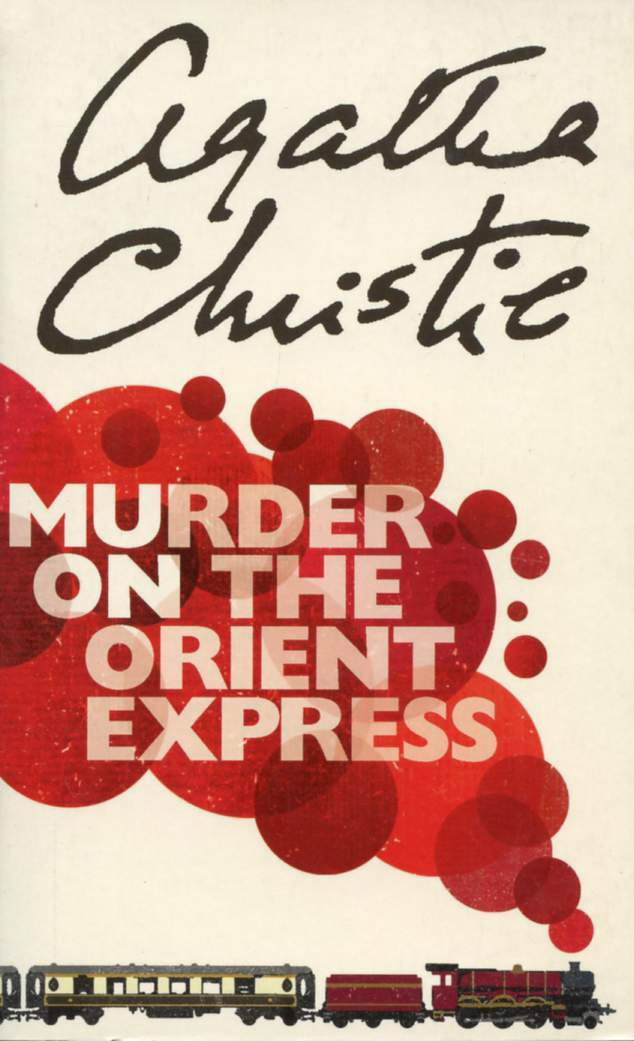
Murder on the Orient Express PDF - Agatha Christie
Agatha Christie • Crime novels and mysteries • 304 Pages
(0)
Quate
Review
Save
Share
Book Description
Murder on the Orient Express by Agatha Christie: A Classic Detective Mystery of Suspense, Secrets, and Brilliant Deduction
Murder on the Orient Express by Agatha Christie is one of the most celebrated works of classic crime fiction, a masterfully constructed detective novel that brings together elegance, tension, and intellectual puzzle-solving in a single unforgettable story. Featuring the legendary Belgian detective Hercule Poirot, the novel places readers aboard the luxurious Orient Express, where a journey through Europe becomes the setting for a mysterious and carefully plotted murder. With its confined setting, memorable cast of suspects, and atmosphere of suspicion, the book remains one of the finest examples of the golden age detective novel and a landmark title for readers who enjoy clever mysteries, psychological tension, and stories built around hidden motives.
At the center of the novel is a situation that seems both glamorous and dangerous. Poirot boards the famous train expecting a journey marked by comfort, conversation, and the rhythm of travel across snow-covered Europe. Instead, the train becomes stranded, and one of the passengers is found dead in his compartment. With no easy escape, no obvious explanation, and every traveler carrying secrets of their own, Poirot must examine the evidence, question the passengers, and separate truth from performance. The result is a tightly controlled mystery that keeps readers engaged through deduction, atmosphere, and the steady uncovering of concealed identities and buried histories.
A Timeless Hercule Poirot Mystery
One of the great strengths of Murder on the Orient Express is the presence of Hercule Poirot at his most observant and methodical. Christie uses Poirot not as a figure of physical action, but as a detective of the mind: precise, patient, curious, and deeply attentive to human behavior. His famous “little grey cells” are central to the reading experience, as he studies contradictions, gestures, conversations, and details that others overlook. For readers searching for a Hercule Poirot mystery, this novel offers one of the clearest examples of why the character has remained so beloved across generations.
Poirot’s investigation is especially compelling because the case does not depend only on footprints, weapons, or visible clues. It depends on personality, memory, emotion, and motive. Every passenger on the train becomes part of a larger puzzle, and every statement may contain both truth and misdirection. Christie gives the reader enough information to think alongside Poirot, yet she arranges the story with such skill that the full pattern remains elusive until the proper moment. This balance between fairness and surprise is one of the reasons the novel is often considered among Agatha Christie’s most accomplished mysteries.
The Power of a Closed Setting
The Orient Express itself is more than a background; it is one of the novel’s most important elements. The train creates a classic locked-room mystery atmosphere, even though the story unfolds across compartments, corridors, dining spaces, and sleeping cars rather than a single sealed room. Once the train is stopped by snow, the passengers are isolated from the outside world, and the murderer appears to be among them. This restricted setting gives the novel its intense sense of pressure, because the danger is not distant or abstract. It is close, polite, and possibly sitting at the same table.
Christie’s use of the train also adds elegance and movement to the story. The Orient Express suggests luxury, international travel, class distinction, and the meeting of different cultures, yet beneath that polished surface lies fear, guilt, and deception. The contrast between refined manners and violent crime creates a distinctive mood that makes the novel both stylish and unsettling. Readers who enjoy atmospheric mystery novels will find the setting especially memorable, because every carriage and conversation contributes to the feeling that something is being hidden in plain sight.
A Cast of Suspects Full of Secrets
A major appeal of Murder on the Orient Express is its varied group of passengers. Christie gathers people from different nationalities, social backgrounds, professions, and temperaments, then places them in a situation where every detail matters. Each character seems to have a role, a story, and a reason to be guarded. Some appear calm, others nervous; some seem respectable, others suspicious; but in Christie’s world, appearances rarely provide the whole truth. The pleasure of the novel comes from watching how these people reveal themselves under pressure, and how Poirot gradually discovers the connections beneath their carefully maintained surfaces.
This structure makes the book ideal for readers who enjoy mysteries driven by interrogation, motive, and character psychology. The suspense does not rely on constant action, but on the growing sense that every person may be performing a version of themselves. Christie understands how to make ordinary statements feel important and how to turn small inconsistencies into major clues. As the investigation progresses, the reader becomes increasingly aware that the solution will require more than identifying who had the opportunity. It will require understanding why the crime happened and what moral meaning lies behind it.
Themes of Justice, Guilt, and Moral Complexity
Although Murder on the Orient Express is famous as a brilliant detective puzzle, it also raises deeper questions about justice, punishment, responsibility, and the limits of the law. Christie’s mystery is not simply about finding a murderer; it is about confronting the emotional weight of crime and the different ways people respond to wrongdoing. Without revealing the ending, the novel invites readers to think about whether justice is always simple, whether truth is always enough, and how personal grief can shape moral choices.
This moral complexity gives the book lasting power. Many detective stories end once the facts are explained, but this novel leaves readers thinking about the meaning of the solution as much as the mechanics of it. Christie’s careful control of tone allows the book to remain entertaining and readable while still touching on serious questions. For fans of classic murder mysteries, this combination of intellectual puzzle and ethical tension makes the novel especially rewarding.
Why Murder on the Orient Express Still Captivates Readers
Decades after its publication, Murder on the Orient Express continues to attract new readers because it delivers so many of the pleasures associated with classic detective fiction. It has a distinctive setting, a brilliant detective, a limited group of suspects, hidden motives, elegant misdirection, and a solution that has become one of the most discussed in mystery literature. The novel is carefully paced, moving from the discovery of the crime to interviews, evidence, contradictions, and final deduction with remarkable clarity. Even readers who already know that the book is famous can still enjoy the craftsmanship behind its structure.
The writing is accessible yet refined, making the novel suitable for both longtime mystery fans and readers beginning their journey into Agatha Christie’s work. It does not require prior knowledge of Poirot’s other cases, so it can be read as a standalone detective novel. At the same time, it offers everything that makes Christie’s fiction so enduring: sharp observation, controlled suspense, clean plotting, and a deep understanding of how people hide, protect, confess, and deceive.
A Must-Read Classic for Mystery and Crime Fiction Fans
Murder on the Orient Express by Agatha Christie is an essential read for anyone interested in detective fiction, crime novels, locked-room mysteries, classic literature, or suspenseful psychological puzzles. It is a book that turns a train journey into a stage for suspicion and transforms a murder investigation into a study of memory, motive, and justice. With Hercule Poirot guiding the reader through a maze of clues and contradictions, the novel offers a reading experience that is elegant, tense, and intellectually satisfying.
For readers looking for a mystery that combines atmosphere with precision, and entertainment with deeper moral questions, Murder on the Orient Express remains one of Agatha Christie’s finest achievements. It is a novel that rewards attention, invites speculation, and demonstrates why Christie is still known as the Queen of Crime. Whether read for its famous plot, its unforgettable setting, or its masterful use of suspense, this classic Poirot mystery continues to stand as one of the defining works of the genre.
Agatha Christie
Agatha Christie is one of the most influential authors in the history of detective fiction, a writer whose name has become almost synonymous with mystery, crime novels, elegant suspense, and the classic art of the carefully constructed puzzle. Born in England and later celebrated around the world, she built a literary career that transformed popular crime writing into a refined form of storytelling based on logic, psychology, timing, and narrative misdirection. Her novels and short stories are admired not only because they entertain, but also because they invite the reader to think, observe, compare clues, and question assumptions. Christie understood that the most effective mystery is not simply a question of who committed the crime, but a study of why people hide, lie, fear exposure, protect secrets, and behave differently under pressure. This combination of intellectual challenge and human insight made her work enduringly popular with readers of many cultures and generations.
Christie is best known for creating two of the most recognizable fictional detectives in world literature: Hercule Poirot and Miss Marple. Hercule Poirot, the meticulous Belgian detective, relies on order, method, and what he famously regards as the power of the mind. He is precise, observant, and often theatrical, yet beneath his distinctive manners lies a sharp understanding of motive and deception. Miss Marple, by contrast, appears gentle, quiet, and rooted in village life, but her understanding of human nature is formidable. She recognizes patterns of jealousy, greed, vanity, resentment, and fear because she has seen similar behavior in ordinary social life. Through these two figures, Christie explored different paths to truth: analytical reasoning on one hand and social observation on the other. Their lasting appeal shows how deeply she understood that detection is not only about evidence, but also about character.
Among Christie’s most famous works are Murder on the Orient Express, And Then There Were None, Death on the Nile, The Murder of Roger Ackroyd, The ABC Murders, and The Mysterious Affair at Styles. Each of these books demonstrates a different aspect of her craft. Murder on the Orient Express uses the enclosed space of a train to create tension, suspicion, and a memorable moral dilemma. And Then There Were None presents isolation, guilt, and fear with extraordinary control, turning a remote setting into a psychological trap. Death on the Nile combines travel, romance, jealousy, and murder in a way that shows Christie’s talent for atmosphere as well as structure. The Murder of Roger Ackroyd is often praised for its bold narrative method and its impact on the conventions of detective fiction. These works continue to attract new readers because they are not merely historical curiosities; they still function as gripping stories with strong pacing, memorable reveals, and carefully planted clues.
Agatha Christie’s style is often described as clear, economical, and highly readable, yet that apparent simplicity hides remarkable technical skill. She rarely wastes a detail. A casual remark, a small object, a shift in tone, or a minor inconsistency may later become essential to the solution. Her plots often depend on the reader looking in the wrong direction, but she usually plays fair by making the truth available before the final explanation. This fairness is one reason her books remain satisfying: the ending feels surprising, but not arbitrary. Christie also had a gift for creating social settings that appear orderly while concealing emotional violence. Country houses, trains, archaeological sites, hotels, boats, and quiet villages become stages on which hidden rivalries and buried histories emerge. Her knowledge of poisons, travel, domestic routines, and social manners helped her create mysteries that feel both theatrical and plausible.
The legacy of Agatha Christie extends far beyond the printed page. Her novels have been translated widely, adapted for stage, film, radio, and television, and continuously reintroduced to new audiences. Her play The Mousetrap became one of the most famous long-running theatrical works in the world, reinforcing her reputation as a master of suspense in dramatic form as well as prose. For book websites, libraries, and readers searching for classic mystery novels, Agatha Christie remains a central author because her work defines many of the expectations associated with detective fiction: the closed circle of suspects, the hidden motive, the unexpected witness, the misleading clue, the final gathering, and the brilliant explanation. Yet her importance is not limited to formula. She gave the mystery genre emotional texture, moral complexity, and a sense of elegant design. Agatha Christie continues to stand as a landmark figure in world literature, a writer whose stories prove that a well-made mystery can be both popular entertainment and a lasting work of narrative intelligence.
Earn Rewards While Reading!
Every 10 pages you read and spent 30 seconds on every page, earns you 5 reward points! Keep reading to unlock achievements and exclusive benefits.
Read
Rate Now
5 Stars
4 Stars
3 Stars
2 Stars
1 Stars
Murder on the Orient Express Quotes
Top Rated
Latest
Quate
Be the first to leave a quote and earn 10 points
instead of 3
Other books by Agatha Christie
'%20/%3e%3c/svg%3e "Murder on the Orient Express: A Hercule Poirot Mystery")
Agatha Christie.
Crime novels and mysteries
(0)
4570
English
Other books like Murder on the Orient Express
Jonathan Cahn.
Crime novels and mysteries
(0)
3022
English
Jonathan Cahn.
Crime novels and mysteries
(0)
2682
English
Comments
Be the first to leave a comment and earn 5 points
instead of 3