

The source of the book
This book is published for the public benefit under a Creative Commons license, or with the permission of the author or publisher. If you have any objections to its publication, please contact us.
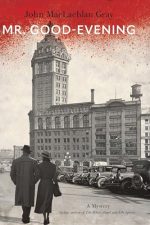
Mr. Good-Evening PDF - John Gray
John Gray • Philosophical fiction • 352 Pages
(0)
Quate
Review
Save
Share
Book Description
Mr. Good-Evening by John Gray: A Sharp Historical Mystery Set in 1920s Vancouver
Mr. Good-Evening by John Gray, published under the author’s full name John MacLachlan Gray, is a witty and atmospheric historical mystery novel that brings readers into the damp, restless, politically tangled world of 1920s Vancouver. Blending crime fiction, noir humor, social observation, and period detail, the novel follows a murder case that appears simple on the surface but soon opens into a wider story of corruption, celebrity, journalism, class tension, and public hysteria. It is part of Gray’s Raincoast Noir sequence and stands as a compelling choice for readers who enjoy literary crime novels with a strong sense of place, sharp dialogue, and a mystery rooted in both character and history. (Douglas & McIntyre)
A Murder Case That Refuses to Stay Closed
At the heart of Mr. Good-Evening is the case of a young woman branded by the press as the “Fatal Flapper.” Miss Dora Decker is accused of a shocking murder, and the police are eager to treat the matter as solved. Yet the more the details are examined, the less certain the case becomes. What begins as an apparently open-and-shut crime turns into a layered investigation involving ambition, money, public image, and the machinery of sensational news. Gray uses this premise to create a classic whodunit atmosphere while also questioning how quickly institutions, newspapers, and the public can turn suspicion into certainty.
The novel’s mystery is driven not only by the question of who committed the crime, but also by the social world surrounding it. Vancouver in the late 1920s is shown as a city of wealth and desperation, jazz and liquor, police pressure and political shadows. Inspector Calvin Hook moves through this landscape with skepticism and persistence, piecing together clues that connect the murder to figures and forces far beyond one office or one suspect. The result is a historical detective story that rewards readers who enjoy investigations built on atmosphere, motive, contradiction, and moral ambiguity.
Ed McCurdy, Radio Celebrity, and the Age of Public Voice
One of the novel’s most distinctive elements is Ed McCurdy, a former muckraking journalist who has become known on the air as Mr. Good-Evening, a radio news personality at a moment when radio is changing how people receive information. His move from print journalism to broadcast fame gives the book a rich connection to questions about media, celebrity, credibility, and fear. As McCurdy’s public voice grows more recognizable, he becomes both admired and resented, a man whose fame may place him in danger rather than protect him.
Through McCurdy, John Gray explores the early modern media world with intelligence and humor. The novel captures a time when newspapers still shaped public opinion, radio was gaining emotional power, and a single phrase or headline could transform a private tragedy into an international spectacle. Readers interested in mysteries about journalism, media influence, and public scandal will find this aspect of the novel especially engaging, because Gray connects the crime plot to a broader portrait of how stories are created, controlled, and consumed.
Raincoast Noir with Wit, History, and Dark Comedy
Mr. Good-Evening is often described in relation to Gray’s larger Raincoast Noir world, following earlier Vancouver-set mysteries such as The White Angel and Vile Spirits. While readers familiar with those books will appreciate the continuity of setting and tone, this novel can also be approached as a standalone historical mystery. Its appeal lies in the way it combines noir ingredients—murder, corruption, dangerous glamour, police work, nightlife, and moral compromise—with a distinctly Canadian historical setting and a dry, theatrical wit. (The British Columbia Review)
The book is not a bleak mystery in the narrow sense. It is dark, but also lively; cynical, but often funny; historically grounded, but never heavy-handed. Gray’s background as a playwright, composer, and storyteller shows in the novel’s rhythm, dialogue, and sense of scene. Conversations carry energy, characters often reveal themselves through tone as much as action, and the city itself feels like a stage full of hidden entrances, overheard remarks, and dangerous performances. This makes Mr. Good-Evening a strong match for readers who want a literary mystery with personality rather than a formulaic thriller.
A Vivid Portrait of 1920s Vancouver
The setting is one of the book’s great strengths. Gray’s Vancouver is wet, boozy, divided, ambitious, and morally unstable. The city is full of flappers, stockbrokers, police officers, reporters, spiritual opportunists, underworld connections, and public figures moving through a period of social change. The late 1920s atmosphere gives the novel its texture: jazz-age style, financial speculation, social prejudice, gender expectations, and the nervous energy of a world approaching economic disaster.
This historical backdrop deepens the mystery without overwhelming it. Readers are invited into a city where glamour and grime exist side by side, where wealth can hide criminal behavior, and where public respectability may be only another kind of costume. The presence of real historical names and references, including figures such as Winston Churchill and Al Capone, adds another layer of intrigue, giving the novel a playful but pointed relationship with history. Gray does not simply decorate the mystery with period details; he uses the period to shape the motives, dangers, and illusions that drive the story. (barnesandnoble.com)
For Readers Who Enjoy Smart Historical Crime Fiction
Mr. Good-Evening will appeal to readers searching for a historical mystery, Canadian noir, 1920s crime novel, or literary detective fiction with humor and intelligence. It is especially well suited to those who enjoy mysteries where the investigation is tied to social atmosphere, where the city matters as much as the crime, and where characters are memorable because they are flawed, witty, and shaped by their time. Fans of period mysteries, newspaper-era crime stories, and novels about the early age of radio will find much to enjoy in Gray’s blend of suspense and cultural detail.
The novel also offers value for readers who prefer mystery fiction with more than a puzzle at its center. Beneath the murder investigation is a sharp look at public judgment, institutional convenience, class power, media spectacle, and the distance between truth and the story people want to believe. Gray’s tone allows these themes to emerge naturally through character, setting, and plot, keeping the reading experience entertaining while giving the novel substance.
A Stylish Mystery with a Distinctive Voice
In Mr. Good-Evening, John Gray delivers a polished, witty, and immersive mystery that captures the tension of a city and a culture in transition. The novel combines the pleasures of a well-made detective story with the richness of historical fiction, offering readers a world of dangerous headlines, uncertain witnesses, theatrical personalities, and secrets hidden beneath the noise of public scandal. Its blend of noir atmosphere, historical curiosity, and sharp social comedy makes it a memorable addition to modern Canadian crime writing.
For anyone looking for a mystery that is clever, atmospheric, and full of period flavor, Mr. Good-Evening is a rewarding read. It invites readers into a Vancouver of rain-slick streets, radio voices, political shadows, and unresolved questions, then keeps them there with style, wit, and a case that refuses to be as simple as everyone first believed.
John Gray
John Gray is an American author, relationship counselor, and public speaker best known for the influential relationship book Men Are from Mars, Women Are from Venus. His work has become closely associated with popular psychology, communication advice, emotional understanding, and practical guidance for couples seeking healthier and more compassionate relationships. Gray’s writing style is accessible, direct, and highly practical, which helped his books reach a wide audience beyond academic readers and professional therapists. Rather than presenting relationships as abstract theories, he explains everyday emotional conflicts through familiar situations: one partner wants to talk while the other withdraws, one person offers advice when the other wants empathy, or both partners feel unloved because they express care in different ways. This ability to turn common misunderstandings into simple, memorable frameworks is one of the main reasons John Gray became a recognizable name in self-help and relationship literature.
John Gray gained international fame after the publication of Men Are from Mars, Women Are from Venus in 1992. The book uses the metaphor of men and women coming from different planets to describe how partners may interpret love, stress, intimacy, silence, and support in different ways. Its central message is not that relationships are doomed by difference, but that difference can be understood, respected, and managed through better communication. Gray argues that many conflicts arise not from lack of affection, but from mismatched expectations. One partner may think support means giving solutions, while the other may need listening and emotional validation. One may need private time to recover from stress, while the other may interpret distance as rejection. By naming these patterns in plain language, Gray gave readers a vocabulary for discussing emotional needs without turning every disagreement into blame.
Beyond his most famous title, John Gray has written many books that expand the Mars and Venus approach into dating, marriage, intimacy, parenting, health, and personal growth. Works such as Mars and Venus in the Bedroom, Mars and Venus on a Date, and Children Are from Heaven show his interest in applying relationship principles across different stages of life. His books often emphasize patience, appreciation, emotional timing, and the importance of understanding how people respond to stress. He encourages readers to notice recurring patterns in conversation, to avoid assuming bad intentions, and to communicate needs in a way that invites cooperation rather than defensiveness. These themes made his books especially useful for readers looking for relationship advice that feels concrete rather than abstract.
The global popularity of John Gray’s writing reflects the universal appeal of his subject matter. Love, conflict, attraction, disappointment, and reconciliation are experiences shared across cultures, even when customs and family expectations differ. His books have been translated into numerous languages and have reached readers in many countries, making him one of the most commercially successful relationship authors of the modern era. At the same time, his work has also attracted criticism from readers and scholars who believe that some of his descriptions of gender differences can be too broad or simplified. This debate is part of his wider cultural impact: Gray’s ideas became so familiar that they shaped conversations about relationships far beyond the pages of his books. Whether readers fully agree with his framework or approach it critically, John Gray remains an important figure in the history of self-help writing, known for bringing relationship communication into mainstream discussion and for encouraging couples to replace accusation with curiosity, patience, and mutual understanding.
Earn Rewards While Reading!
Every 10 pages you read and spent 30 seconds on every page, earns you 5 reward points! Keep reading to unlock achievements and exclusive benefits.
Read
Rate Now
5 Stars
4 Stars
3 Stars
2 Stars
1 Stars
Mr. Good-Evening Quotes
Top Rated
Latest
Quate
Be the first to leave a quote and earn 10 points
instead of 3
Other books by John Gray
'%20/%3e%3c/svg%3e "Mars and Venus in the Bedroom : A Guide to Lasting Romance and Passion")
John Gray.
Human Development
(0)
4800
English
Other books like Mr. Good-Evening
1657
English
Comments
Be the first to leave a comment and earn 5 points
instead of 3