

The source of the book
This book is published for the public benefit under a Creative Commons license, or with the permission of the author or publisher. If you have any objections to its publication, please contact us.
Mastering Value Investing PDF - Benjamin Graham
Benjamin Graham • Financial management • 737 Pages
(0)
Quate
Review
Save
Share
Book Description
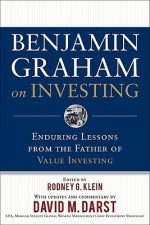
Benjamin Graham on Investing: Enduring Lessons from the Father of Value Investing is a nonfiction investment book by Benjamin Graham and Rodney G. Klein, published by McGraw Hill in 2009. McGraw Hill lists it as a first edition, published on June 25, 2009, with ISBN 9780071621427. WorldCat also identifies the work as an English-language 2009 McGraw-Hill publication and includes David M. Darst among its contributors.
The book is not a novel, so it does not have a fictional plot. Instead, Benjamin Graham on Investing presents a carefully selected collection of Graham’s early investment articles, many of which were originally written for The Magazine of Wall Street during the years between World War I and the Great Depression. These writings show the early development of ideas that later became central to value investing, security analysis, and disciplined long-term portfolio thinking. The book is especially useful for readers who want to understand Benjamin Graham before Security Analysis and The Intelligent Investor became his best-known works.
Benjamin Graham is closely associated with value investing and security analysis. The Ivey Business School’s Ben Graham Collection describes him as the “Father of Security Analysis” and notes his long connection with Columbia, his early publication of Security Analysis with David Dodd, and the later reputation of The Intelligent Investor as a major value-investing text.In this context, Benjamin Graham on Investing works like an archive of Graham’s intellectual beginnings. It allows readers to see how he examined bonds, railroad securities, industrial companies, preferred stocks, book value, hidden assets, dividends, and market mispricing before his mature theories were fully organized into book-length form.
The content of the book follows Graham’s practical method: look beyond market excitement, study the facts, compare price with underlying value, and avoid confusing speculation with investment. Many of the articles focus on specific securities or industries from the early twentieth century, but their deeper purpose is broader. Graham teaches readers how to ask whether a company’s assets, earnings, capital structure, and market price make sense together. He is less interested in fashionable predictions than in evidence, balance sheets, safety, and rational judgment.
A major theme of Benjamin Graham on Investing is that markets often misprice securities. Graham’s articles repeatedly show how careful analysis can reveal overlooked value in bonds, preferred stocks, or common shares. He examines financial statements, corporate reorganizations, cash positions, tax issues, and stock dividends with a skeptical eye. Rather than encouraging quick profits, the book presents investing as a disciplined craft that requires patience, arithmetic, and emotional restraint.
Another important part of the book is its historical setting. Graham was writing during a period of war, inflation, government intervention, railroad uncertainty, and approaching economic instability. McGraw Hill’s overview notes that Graham began writing these articles as markets moved through severe fluctuations and as economic pressures shaped investor behavior. Because of this, the book gives modern readers a valuable view of how investment principles were tested in difficult conditions. Its examples are old, but the analytical habits behind them remain relevant to anyone studying value investing, financial history, or security analysis.
Overall, Benjamin Graham on Investing is best described as a sourcebook of early Benjamin Graham investment thought. It is not as introductory as The Intelligent Investor, and it may feel more technical because many chapters are built around historical securities and company-specific cases. However, for serious readers, investors, finance students, and anyone interested in the roots of value investing, the book offers a clear picture of how Graham’s method developed. It summarizes a lasting lesson: intelligent investing begins with facts, valuation, caution, and the refusal to follow the crowd blindly.
Benjamin Graham
Benjamin Graham is one of the most influential financial authors of the twentieth century and is widely regarded as the intellectual father of value investing. Born in London in 1894 and raised in the United States, Graham developed a way of thinking about money, markets, and business ownership that continues to shape professional investment practice and personal finance education. His importance as an author comes not only from the success of his investment career, but from his ability to turn practical market experience into a disciplined philosophy that ordinary readers, analysts, fund managers, and students could understand and apply. Graham’s most famous works, Security Analysis, written with David Dodd, and The Intelligent Investor, established a rigorous framework for studying securities, estimating business value, and protecting capital against speculation, emotional decision-making, and excessive optimism. Instead of treating stocks as pieces of paper to be traded according to rumors or market excitement, Graham taught readers to see each share as a fractional ownership interest in a real business. This shift in perspective is central to his literary and intellectual legacy. His writing repeatedly returns to the distinction between price and value: price is what the market quotes today, while value must be studied through assets, earnings, dividends, debt, management quality, and long-term earning power. One of Graham’s most enduring ideas is the margin of safety, a principle that encourages investors to buy only when a security appears to be priced significantly below a conservative estimate of its worth. This concept reflects both analytical humility and practical wisdom, because Graham understood that even careful investors can make mistakes and that the future rarely unfolds exactly as expected. He also introduced readers to the memorable image of the market as an emotional business partner whose changing quotations should be used rather than obeyed. Through this metaphor, Graham gave investors a language for resisting panic, excitement, and herd behavior. As a professor at Columbia, he influenced generations of students, including Warren Buffett, who later became one of the best-known advocates of Graham’s principles. Yet Graham’s appeal reaches far beyond one famous student. His books remain valuable because they combine technical analysis with moral seriousness. He respected evidence, patience, caution, and independence of mind. He warned against confusing investment with speculation, and he insisted that successful investing requires character as much as intelligence. His prose is measured, logical, and practical, avoiding sensational promises and emphasizing procedures that can be repeated. Readers encounter an author who values clarity over glamour and sound judgment over fashionable opinion. The continuing relevance of Benjamin Graham lies in the fact that financial markets change faster than human nature. New technologies, new products, and new trading platforms may alter the surface of investing, but fear, greed, impatience, and overconfidence remain familiar forces. Graham’s work helps readers recognize those forces and build habits that reduce their power. For anyone interested in long-term investing, financial literacy, business valuation, or the history of modern investment thought, Benjamin Graham remains an essential author whose books provide both a practical education and a durable philosophy of rational decision-making.
Earn Rewards While Reading!
Every 10 pages you read and spent 30 seconds on every page, earns you 5 reward points! Keep reading to unlock achievements and exclusive benefits.
Read
Rate Now
5 Stars
4 Stars
3 Stars
2 Stars
1 Stars
Mastering Value Investing Quotes
Top Rated
Latest
Quate
Be the first to leave a quote and earn 10 points
instead of 3
Other books by Benjamin Graham
Other books like Mastering Value Investing
'%20/%3e%3c/svg%3e "Learn to Earn: A Beginner's Guide to the Basics of Investing")
13997
English
Comments
Be the first to leave a comment and earn 5 points
instead of 3