

The source of the book
This book is published for the public benefit under a Creative Commons license, or with the permission of the author or publisher. If you have any objections to its publication, please contact us.
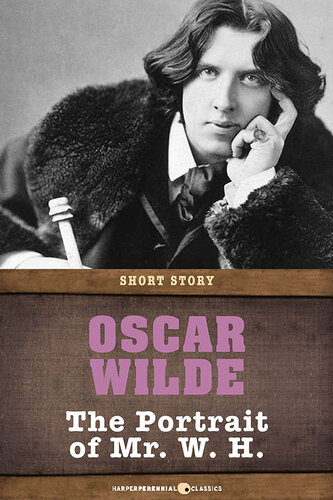
Lord Arthur Savile’s Crime, The Portrait of Mr. W.H PDF - Oscar Wilde
Oscar Wilde • short stories • 88 Pages
(0)
Quate
Review
Save
Share
Book Description
Oscar Wilde’s Lord Arthur Savile’s Crime and The Portrait of Mr. W.H bring together two of the author’s most intriguing explorations of irony, obsession, wit, and the seductive power of ideas. This pairing showcases Wilde at his most playful yet intellectually provocative, blending sharp social satire with literary mystery and philosophical inquiry. Written in his unmistakable elegant prose, these works reflect Wilde’s ability to entertain while simultaneously questioning morality, art, identity, and the nature of truth.
In Lord Arthur Savile’s Crime, Wilde crafts a darkly humorous story about destiny, superstition, and the absurd lengths to which a person might go when confronted with a supposed prophecy. Meanwhile, The Portrait of Mr. W.H unfolds as a literary detective story, built around a theory about the identity of Shakespeare’s mysterious dedicatee, “W.H.” Together, they present a compelling portrait of Wilde’s thematic range—moving from satirical fiction to intellectual literary investigation, all infused with his signature paradoxes and refined wit.
A Master of Wit, Irony, and Literary Intelligence
Oscar Wilde is celebrated as one of the most influential writers of the late 19th century, known for his sharp dialogue, aesthetic philosophy, and ability to expose the contradictions of Victorian society. In these two works, Wilde demonstrates different facets of his literary genius.
Lord Arthur Savile’s Crime is structured as a comedic moral fable, where fate and free will collide in absurd and unexpected ways. The protagonist, Lord Arthur, is told by a palm reader that he is destined to commit a murder. Rather than dismissing the prophecy, he becomes determined to fulfill it before marrying the woman he loves. The result is a series of increasingly ridiculous attempts that parody the seriousness with which society treats superstition and moral obligation.
On the other hand, The Portrait of Mr. W.H shifts tone entirely, becoming a fictional essay or philosophical investigation. It follows a narrator obsessed with solving the mystery of Shakespeare’s sonnets and the identity of the enigmatic Mr. W.H. Through layers of interpretation, persuasion, and scholarly debate, Wilde explores how desire shapes interpretation and how easily ideas can become beautiful yet unprovable obsessions.
Together, these works highlight Wilde’s fascination with appearance versus reality, intellectual vanity, and the ways humans construct meaning from uncertainty.
Lord Arthur Savile’s Crime: Fate, Humor, and Moral Absurdity
At its core, Lord Arthur Savile’s Crime is a satire of Victorian moral seriousness and the human tendency to treat irrational beliefs with extreme gravity. Wilde transforms a seemingly dark premise—a predicted murder—into a comedic journey that exposes the ridiculousness of overthinking destiny.
Arthur’s reaction to the prophecy is not fear alone but obligation. He believes morality requires him to “complete” the crime before moving forward with his life. This twisted logic drives the narrative, leading to elaborate schemes that continually fail in humorous and unexpected ways. Wilde uses these events to mock the rigidity of social expectations and the absurd lengths people go to in order to preserve appearances.
The story also reflects Wilde’s broader philosophical interests. It raises questions about whether people are governed by fate or choice, and whether morality is inherent or socially constructed. The tone remains light and ironic, yet beneath it lies a critique of how society confuses anxiety with responsibility.
Readers are drawn to this story for its clever pacing, comedic tension, and the way it transforms a potentially dark subject into an elegant satire of human behavior.
The Portrait of Mr. W.H: The Mystery of Interpretation
The Portrait of Mr. W.H is one of Wilde’s most intellectually layered works. Presented as a narrative essay, it explores a theory that the mysterious “W.H.” mentioned in Shakespeare’s sonnets was a young actor named Willie Hughes. The narrator becomes deeply invested in proving this idea, building arguments, gathering interpretations, and attempting to convince others of its validity.
However, Wilde intentionally blurs the line between scholarship and imagination. The more convincing the theory becomes, the more unstable its foundation appears. This creates a powerful meditation on the nature of literary interpretation: is meaning discovered, or created?
The story reflects Wilde’s belief that art is not fixed but fluid, shaped by readers’ desires and perspectives. It also explores themes of aesthetic devotion, intellectual obsession, and the seductive power of ideas that may be beautiful precisely because they cannot be proven.
Unlike Lord Arthur Savile’s Crime, which relies on external action and comedic events, The Portrait of Mr. W.H unfolds through conversation, persuasion, and intellectual speculation, making it a deeply reflective reading experience.
Themes That Define Wilde’s Literary Vision
Across both works, several key themes emerge that define Wilde’s enduring appeal:
1. Irony and Satire
Wilde uses irony not just for humor but as a tool to question social norms and intellectual assumptions. His characters often act in ways that contradict logic, revealing the absurdity of rigid belief systems.
2. Obsession and Interpretation
Both stories explore how ideas can take hold of the mind. Whether it is Arthur’s fixation on prophecy or the narrator’s devotion to a Shakespearean theory, Wilde shows how obsession can distort reality.
3. Appearance vs Reality
A central theme in Wilde’s writing, this tension appears in both narratives. Characters misunderstand situations, misinterpret signs, and construct false certainties based on limited knowledge.
4. Art, Beauty, and Meaning
Especially in The Portrait of Mr. W.H, Wilde examines how beauty and meaning are not fixed truths but interpretations shaped by desire and imagination.
Reading Experience and Literary Style
Readers encountering these works will immediately recognize Wilde’s elegant prose style, characterized by wit, clarity, and rhetorical brilliance. His dialogue is refined and often paradoxical, inviting readers to question what is being said beneath the surface.
Lord Arthur Savile’s Crime offers a more straightforward narrative structure, making it accessible and engaging for readers who enjoy satirical fiction and dark comedy. In contrast, The Portrait of Mr. W.H requires a more reflective reading approach, rewarding those who appreciate literary analysis, philosophical questioning, and layered storytelling.
Together, they create a balanced reading experience that moves between entertainment and intellectual engagement.
Who These Works Are For
This combined edition is ideal for readers who enjoy:
- Classic English literature with intellectual depth
- Satirical fiction that critiques society and morality
- Literary mysteries and interpretive storytelling
- Oscar Wilde’s distinctive wit and philosophical humor
- Short but impactful narratives that encourage reflection
Students, literature enthusiasts, and readers interested in Victorian literature will find these works particularly enriching. They also appeal to anyone curious about the relationship between storytelling, meaning, and interpretation.
A Timeless Expression of Wilde’s Genius
Lord Arthur Savile’s Crime and The Portrait of Mr. W.H remain powerful examples of Oscar Wilde’s literary artistry. One transforms destiny into comedy, while the other transforms literary theory into narrative mystery. Together, they reveal a writer fascinated by contradiction, beauty, and the unpredictable nature of human thought.
These works continue to resonate because they do not offer simple answers. Instead, they invite readers to question certainty, enjoy ambiguity, and appreciate the elegance of ideas that refuse to settle into fixed meaning. In typical Wilde fashion, they are as intellectually stimulating as they are entertaining, making them enduring classics of English literature.
Oscar Wilde
Oscar Wilde (1854-1900) was an Irish playwright, poet, and novelist who is widely regarded as one of the greatest writers of the Victorian era. He was born in Dublin, Ireland, and educated at Trinity College, Dublin, and Magdalen College, Oxford. Wilde was a flamboyant figure in Victorian society, known for his wit, dandyism, and homosexuality, which was then considered a crime.
Wilde's literary career began in the 1880s, when he gained popularity with his comedic plays, including "Lady Windermere's Fan," "A Woman of No Importance," and "The Importance of Being Earnest." These plays were known for their clever wordplay, social commentary, and satirical portrayal of Victorian society.
In addition to his plays, Wilde also wrote novels, including "The Picture of Dorian Gray," which tells the story of a beautiful young man who makes a Faustian pact to remain young and beautiful while his portrait ages and becomes ugly. The novel caused controversy when it was first published in 1890 because of its decadent themes and homoerotic undertones.
Despite his literary success, Wilde's personal life was tumultuous. In 1895, he was convicted of homosexual acts and sentenced to two years of hard labor. The trial and subsequent imprisonment destroyed his reputation and health, and he died in Paris in 1900, at the age of 46.
Wilde's legacy lives on through his works, which continue to be celebrated for their wit, humor, and social commentary. His writing has influenced generations of writers, and his plays continue to be performed and adapted for film and television. Today, Wilde is remembered not only as a great writer, but also as a symbol of resistance against Victorian moralism and hypocrisy.
Earn Rewards While Reading!
Every 10 pages you read and spent 30 seconds on every page, earns you 5 reward points! Keep reading to unlock achievements and exclusive benefits.
Read
Rate Now
5 Stars
4 Stars
3 Stars
2 Stars
1 Stars
Lord Arthur Savile’s Crime, The Portrait of Mr. W.H Quotes
Top Rated
Latest
Quate
Be the first to leave a quote and earn 10 points
instead of 3
'%20/%3e%3c/svg%3e "A Florentine Tragedy")
Comments
Be the first to leave a comment and earn 5 points
instead of 3