

The source of the book
This book is published for the public benefit under a Creative Commons license, or with the permission of the author or publisher. If you have any objections to its publication, please contact us.
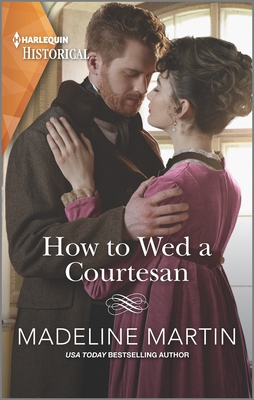
How to Wed a Courtesan PDF - Madeline Martin
Madeline Martin • romantic novels • 288 Pages
(0)
Quate
Review
Save
Share
Book Description
How to Wed a Courtesan by Madeline Martin is an emotionally rich Regency historical romance about love interrupted, reputations remade, and the difficult path from scandal to trust. Set within the elegant yet unforgiving world of ballrooms, titles, social judgment, and rigid expectations, the novel follows Evander, Earl of Westix, as he returns from the continent intending to claim the woman he once loved—only to discover that Lottie, the innocent vicar’s daughter from his past, has become known in society as a courtesan. The premise immediately places the story at the intersection of longing, shock, survival, and class-bound scandal, creating a romance shaped not only by desire but by the painful consequences of absence, misunderstanding, and social condemnation. (Madeline Martin)
A Historical Romance Built Around Survival and Social Judgment
At the heart of How to Wed a Courtesan is a heroine whose identity cannot be reduced to the label society gives her. Lottie is introduced as a woman who has endured more than polite society is willing to understand, and her strength comes from the life she has had to build in the wake of abandonment, hardship, and limited choices. In the world of Regency romance, where a woman’s reputation can determine her entire future, Lottie’s position gives the novel a sharper emotional edge. She is not merely a romantic figure waiting to be rescued; she is resourceful, guarded, intelligent, and deeply aware of what it costs to survive in a society that is quick to shame women and slow to protect them.
Evander’s return forces both characters to confront the distance between who they were and who they have become. As an earl, he belongs to the world of inheritance, titles, and public respectability, while Lottie stands outside the safe boundaries of acceptable society. Their reunion is therefore not a simple rekindling of old affection. It is a complicated meeting between memory and reality, between youthful love and adult consequence, and between a man who must learn to see beyond scandal and a woman who must decide whether trust is worth the risk. This emotional tension gives the book its appeal for readers searching for second chance Regency romance, historical romance with a courtesan heroine, and stories where love must be earned through understanding rather than assumed through passion alone.
The Appeal of Evander and Lottie’s Second Chance
The relationship between Evander and Lottie carries the familiar pleasure of a second chance love story, but Madeline Martin frames that romance with enough emotional conflict to make the reunion feel layered and meaningful. Evander returns with expectations shaped by the past, but the woman he finds is not the untouched memory he carried with him. Lottie, in turn, cannot simply accept his attention as proof of devotion. For her, love has become entangled with vulnerability, self-protection, and the fear of once again being judged or left behind.
This dynamic gives the novel a strong emotional pull. Readers who enjoy reunion romance, wounded heroine romance, and aristocrat-and-commoner love stories will find a narrative that explores how attraction can survive time, but trust must be rebuilt slowly. Evander’s challenge is not only to desire Lottie but to respect the woman she has become. Lottie’s challenge is not only to resist society’s judgment but to decide whether she can allow someone from her past into the guarded life she has created. The romance gains depth because both characters must move beyond appearances, assumptions, and the stories others have told about them.
Regency Ballrooms, Scandal, and the Journey from Bedroom to Ballroom
The contrast between private desire and public acceptance is one of the most compelling elements of How to Wed a Courtesan. The phrase “from bedroom to ballroom” captures the novel’s central social challenge: Lottie must be seen not as a hidden pleasure or a whispered scandal, but as a woman worthy of dignity, love, and a place in society. In a traditional Regency historical romance, ballrooms often symbolize courtship, status, and public approval. Here, they also become a test of courage, because public recognition matters in a world where gossip can be as powerful as law.
Madeline Martin uses this setting to explore the emotional cost of reputation. The novel’s society is glamorous on the surface, filled with titles and rituals, but beneath that elegance lies a harsh system of judgment. Lottie’s past makes her vulnerable to insult, exclusion, and suspicion, while Evander’s position gives him the power either to shield her or to fail her again. This creates a romance where social stakes and emotional stakes are closely linked. The question is not only whether Evander and Lottie still love each other, but whether love can withstand the pressure of rank, scandal, pride, and public scrutiny.
Why Readers of Historical Romance Will Be Drawn to This Book
How to Wed a Courtesan is especially appealing for readers who enjoy historical romance with emotional intensity, resilient heroines, and heroes who must prove themselves through action. The novel fits naturally within the world of Mills & Boon Historical and Harlequin Historical romance, offering the familiar pleasures of aristocratic settings, restrained longing, social obstacles, and passionate reconciliation while also centering a heroine whose strength comes from survival rather than innocence. Publisher and retailer listings identify the book as part of The London School for Ladies series, with How to Wed a Courtesan appearing as the third book in that Regency romance sequence. (Google Play)
Readers searching for Madeline Martin Regency romance books will also recognize the author’s interest in women navigating difficult historical worlds. Martin is known for writing both historical fiction and historical romance, and her broader author profile highlights her reputation as a bestselling writer whose work has reached international readerships. (Madeline Martin) In this novel, that historical sensibility is directed toward a more intimate romantic conflict: one woman’s fight to be seen clearly and one man’s need to understand that love requires more than longing, regret, or noble intention.
Themes of Trust, Dignity, and Emotional Redemption
The strongest themes in How to Wed a Courtesan are trust, dignity, resilience, and emotional redemption. Lottie’s story invites readers to think about how easily society defines a woman by rumor, circumstance, or survival, and how difficult it can be to reclaim one’s own story after being judged. Her journey is not simply about entering society as a wife; it is about being recognized as a complete person with pain, intelligence, desire, and worth. That makes the romance more satisfying for readers who want a heroine with emotional substance and a love story that acknowledges the damage caused by social hypocrisy.
Evander’s role is equally important because the novel asks whether a man shaped by privilege can truly understand the woman he once loved after life has changed her. His attraction to Lottie may be immediate, but the deeper romance depends on whether he can move beyond shock and wounded expectation. In that sense, How to Wed a Courtesan offers more than a story of scandalous attraction. It becomes a romance about learning to love someone as they are, not as memory preserved them, and about recognizing that forgiveness cannot be demanded simply because love once existed.
A Compelling Choice for Fans of Emotional Regency Romance
For readers who enjoy Regency romance novels with a balance of passion, social tension, and heartfelt character development, How to Wed a Courtesan by Madeline Martin offers a story built on one of the genre’s most enduring questions: can love survive the years, the damage of circumstance, and the cruelty of public judgment? Its appeal lies in the contrast between glittering society and private pain, between the elegance of the ballroom and the vulnerability of two people trying to bridge the space between past and present.
This is a strong choice for fans of second chance historical romance, courtesan heroine romance, aristocratic romance, and emotionally driven love stories where reputation is not the end of a woman’s story. With Lottie’s resilience and Evander’s difficult path toward understanding, the novel delivers a romance that is tender, dramatic, and grounded in the hope that dignity and love can still be reclaimed after loss, scandal, and separation.
Madeline Martin
Madeline Martin is an American author of historical fiction and historical romance whose work is widely recognized for its emotional warmth, careful historical atmosphere, and strong focus on women who discover courage through books, friendship, resistance, and personal reinvention. She is best known to many contemporary readers for novels that place literature itself at the center of the story, including The Last Bookshop in London, The Librarian Spy, The Keeper of Hidden Books, The Booklover’s Library, and The Secret Book Society. Across these works, Martin repeatedly returns to the idea that books can become shelter, weapon, map, memory, and quiet rebellion. Her heroines often live in times when the world around them is unstable or restrictive: wartime London under bombardment, occupied Europe under censorship and danger, communities where women’s choices are controlled, or societies in which reading can become an act of independence. Rather than treating history as a decorative backdrop, Martin uses historical settings to ask intimate questions about identity, loyalty, fear, love, moral choice, and the endurance of hope. Her fiction is especially appealing to readers of book-club fiction, women’s historical fiction, World War Two novels, library-centered stories, and emotionally rich narratives about ordinary people facing extraordinary pressure. In The Last Bookshop in London, she portrays a young woman whose work in a bookshop becomes a lifeline during the Blitz, showing how stories can sustain a community when daily life is shadowed by loss. In The Librarian Spy, she connects librarianship, intelligence work, and resistance, emphasizing the power of information and the courage of women whose contributions to history are often quiet but essential. In The Keeper of Hidden Books, she explores banned literature, occupied Poland, and the danger of preserving truth when regimes try to control what people read and remember. The Booklover’s Library highlights themes of motherhood, work, dignity, and the solace of reading, while The Secret Book Society moves into Victorian London to examine forbidden reading, female friendship, secrecy, and the desire for freedom in a world that polices women’s voices. Martin’s earlier and continuing work in historical romance also shapes her storytelling. Her romance novels often include high emotional stakes, vivid settings, bold heroines, and relationships built through conflict, trust, and transformation. That background gives her historical fiction a strong sense of character chemistry and emotional momentum without weakening its larger interest in history and social conditions. Martin grew up in a military family and spent much of her childhood in Germany, an experience that helped deepen her fascination with the past, travel, place, and the ways history lives inside personal memory. She has also spoken about writing for many years before becoming a full-time author, after a long career in corporate life, which adds to the persistence and discipline visible in her publishing journey. Her books have reached an international audience and have been translated into many languages, making her a notable voice for readers who enjoy accessible but thoughtful historical storytelling. Martin’s style is clear, immersive, and compassionate. She favors heroines who may begin uncertain, frightened, or socially constrained but who gradually learn to act with conviction. She writes danger and grief with seriousness, yet her novels usually carry an undercurrent of hope: the belief that reading can preserve humanity, that friendship can change the course of a life, and that women’s stories deserve to be remembered. For author pages, bookstore descriptions, and reader-focused websites, Madeline Martin can be described as a bestselling historical novelist whose work celebrates the courage of women, the resilience of communities, and the enduring power of books in the darkest chapters of history.
Earn Rewards While Reading!
Every 10 pages you read and spent 30 seconds on every page, earns you 5 reward points! Keep reading to unlock achievements and exclusive benefits.
Read
Rate Now
5 Stars
4 Stars
3 Stars
2 Stars
1 Stars
How to Wed a Courtesan Quotes
Top Rated
Latest
Quate
Be the first to leave a quote and earn 10 points
instead of 3
Other books by Madeline Martin
'%20/%3e%3c/svg%3e "The Keeper of Hidden Books")
Madeline Martin.
Historical novels
(0)
88
English
Comments
Be the first to leave a comment and earn 5 points
instead of 3