

The source of the book
This book is published for the public benefit under a Creative Commons license, or with the permission of the author or publisher. If you have any objections to its publication, please contact us.
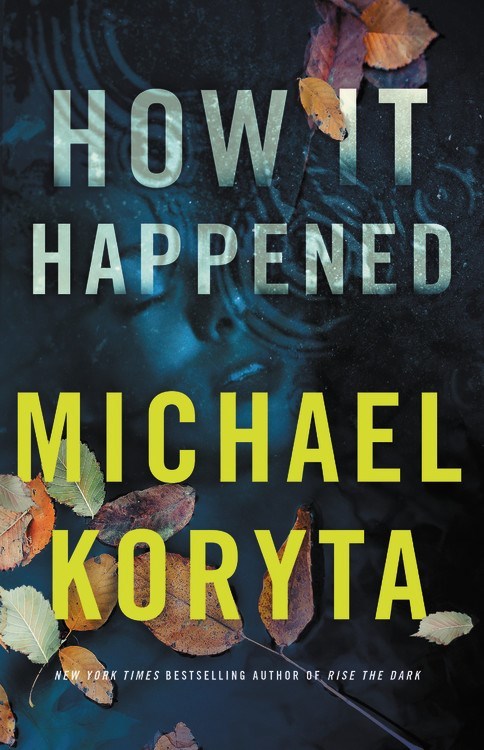
How It Happened PDF - Michael Koryta
Michael Koryta • Crime novels and mysteries • 360 Pages
(0)
Quate
Review
Save
Share
Book Description
How It Happened by Michael Koryta is a gripping standalone crime thriller about confession, doubt, obsession, memory, and the dangerous distance between what a person believes and what can actually be proved. Set against the uneasy atmosphere of rural Maine, the novel follows Rob Barrett, an FBI investigator and interrogation specialist whose professional instinct tells him that a troubled young woman has finally revealed the truth about a brutal double murder. But when the evidence turns against him, Barrett is forced to confront not only a case that refuses to make sense, but also the personal history that makes this investigation impossible for him to abandon. The publisher presents the novel as a mystery and suspense thriller centered on Barrett’s ability to distinguish a true confession from a false one, a skill that becomes the very thing most fiercely tested by the case. (Hachette Book Group)
A Dark Murder Mystery Built Around a Confession
The story begins with Kimberly Crepeaux, a young woman known in her rural Maine community for addiction, instability, petty crime, and unreliable testimony. When Kimberly confesses to her role in the murders of Jackie Pelletier and Ian Kelly, many people have every reason not to believe her. Jackie is the daughter of a respected local family, Ian is her boyfriend, and the crime carries the kind of emotional weight that can tear a small town open. Kimberly’s reputation makes her easy to dismiss, yet Rob Barrett hears something in her confession that feels authentic. To him, the rhythm of her account, the fear beneath it, and the details she offers suggest more than a lie told for attention. They suggest the truth.
That belief becomes the engine of How It Happened. Barrett stakes his name, his judgment, and his career on Kimberly’s story, only for the case to collapse when the bodies are discovered far from where she claimed they would be, with evidence that points in a different direction. The official explanation seems ready to move forward without him, but Barrett cannot let it go. For him, the question is no longer simply whether Kimberly lied. It is why her confession felt true, why the facts do not align, and why the people of Port Hope seem so eager for the case to settle into a convenient shape. The result is a psychological murder mystery where the suspense comes not only from finding the killer, but from determining whether truth can survive when every piece of evidence appears to contradict it. (Hachette Book Group)
Rob Barrett and the Cost of Being Certain
Rob Barrett is one of the novel’s strongest elements because he is not a detached investigator moving cleanly through a case. He has history in Port Hope, Maine, a town connected to his childhood summers and to memories that are not entirely at rest. His return to this place is professional on the surface, but deeply personal underneath. The case awakens old emotional pressure, including childhood wounds that complicate his judgment and make his obsession feel both dangerous and understandable. Publishers Weekly describes the novel as a powerful look at an investigator’s obsessive attempt to close a case that reawakens childhood demons, which captures the emotional force driving Barrett’s choices. (PublishersWeekly.com)
Barrett’s gift is interrogation, but How It Happened turns that gift into a source of conflict. He is trained to read people, to identify hesitation, evasion, performance, and truth. Yet the novel asks whether instinct is enough when physical evidence disagrees. Barrett believes Kimberly, but belief is not proof. He sees a pattern, but the world demands facts. This tension gives the book a sharp procedural edge while keeping it emotionally charged. Barrett is not chasing a case because he wants to be right in a simple professional sense. He is chasing it because being wrong would mean something darker: that his confidence in people, in memory, and in his own mind may be less reliable than he believed.
Small-Town Secrets and Rural American Suspense
Michael Koryta uses the setting of Port Hope, Maine to create an atmosphere of beauty, pressure, and hidden violence. The town is not merely a backdrop for the crime; it is part of the mystery. In a small community, reputation can be a kind of armor, and social standing can shape what people are willing to believe. Kimberly is easy to discredit because her life has already marked her as unreliable. Others are easier to trust because they appear successful, useful, respectable, or deeply rooted in local identity. Koryta builds suspense from that imbalance, showing how class, addiction, memory, grief, and public image can influence the search for justice.
The novel’s rural landscape gives the story a darker emotional texture. Roads, water, old family ties, local businesses, and private histories all become part of the investigation. This is not a thriller driven only by high-speed action or forensic revelation. It is a story where place holds memory, where people know more than they say, and where the past can sit quietly in the background until a murder forces it into the open. Readers who enjoy rural crime fiction, small-town thrillers, and mysteries where setting shapes every character’s choices will find this one especially compelling.
A Crime Novel About Evidence, Truth, and Reputation
One of the most compelling ideas in How It Happened is the difference between the truth and the version of events that can survive public scrutiny. Kimberly’s confession may be vivid, but her life makes her vulnerable to disbelief. Barrett may be skilled, but his certainty makes him vulnerable to humiliation. The local community may want answers, but it may also prefer answers that protect its own sense of order. Koryta uses these tensions to create a story where every character’s reputation becomes part of the evidence.
This gives the novel a strong psychological suspense dimension. The reader is not simply waiting for a final reveal; the reader is watching confidence break down. Who is lying? Who is mistaken? Who is protecting someone? Who benefits from doubt? The structure keeps pressure on Barrett while gradually widening the emotional scope of the case. Jackie and Ian’s murders are not treated as abstract plot points. They represent grief, family devastation, and a moral wound that the town cannot close until the real story is known.
Michael Koryta’s Skill as a Thriller Writer
Michael Koryta is known for crime and suspense fiction that blends atmosphere, character, and momentum. His publisher identifies him as a New York Times bestselling author whose work has been translated into more than twenty languages, and also notes his background as a former private investigator and newspaper reporter. Those experiences matter in How It Happened, because the novel carries both the procedural confidence of an investigation story and the narrative patience of a writer interested in people as much as evidence. (Hachette Book Group)
In this book, Koryta writes with control and restraint. The plot is twisty, but it does not feel mechanical. The investigation moves through interviews, memories, contradictions, and emotional pressure rather than relying only on sudden shocks. The result is a murder mystery that feels both tense and grounded. It has the pace of a page-turner, but also the depth of a character study about a man whose need to solve the case may be tied to wounds he has never fully understood.
Why Readers Will Be Drawn to How It Happened
How It Happened is ideal for readers who enjoy standalone crime novels, FBI thrillers, interrogation-driven mysteries, and suspense stories built around unreliable confessions and buried secrets. It will appeal to fans of mysteries where the official answer is not necessarily the true answer, and where the investigator must risk reputation, career, and emotional stability to pursue what others have chosen to close.
The novel’s strength lies in the way it combines a brutal double murder with larger questions about trust. Can a person with a history of lies still tell the truth? Can a trained investigator mistake emotional conviction for evidence? Can a town protect itself by deciding which lives matter and which voices can be ignored? These questions give How It Happened its lasting force. It is not just a story about solving a crime; it is a story about how truth is recognized, rejected, buried, and finally forced back into the light.
A Tense and Memorable Standalone Thriller
In How It Happened, Michael Koryta delivers a dark, absorbing, and emotionally sharp thriller about a confession that should have solved everything but instead makes the mystery more dangerous. With Rob Barrett at its center, the novel explores obsession, doubt, grief, and the painful cost of pursuing an answer that almost no one else wants to hear. Its rural Maine setting, morally complicated characters, and carefully layered mystery make it a powerful choice for readers looking for a suspense novel that is atmospheric, intelligent, and deeply human.
Michael Koryta
Michael Koryta is an American author known for crime fiction, suspense, psychological thrillers, supernatural mystery, and atmospheric novels in which danger is inseparable from place. His fiction appeals to readers who want more than a fast plot; it offers moral pressure, emotional tension, haunted landscapes, and characters who are often trying to survive both an external threat and something unresolved within themselves. His official biography describes him as a bestselling author whose work has been translated into more than twenty languages and has won or been nominated for major crime and thriller honors, including the Los Angeles Times Book Prize, the Edgar Award, the Shamus Award, the Barry Award, the Quill Award, the International Thriller Writers Award, and the Gold Dagger.
Before becoming a full-time novelist, Michael Koryta worked as a private investigator, a newspaper reporter, and a teacher at the Indiana University School of Journalism. That background matters because his novels often carry the texture of investigation: careful observation, suspicion, professional procedure, hidden motives, and the slow uncovering of buried truth. His first novel, Tonight I Said Goodbye, was accepted for publication when he was only twenty years old and was nominated for the Edgar Award; he had written his first two published novels before graduating from college. This unusually early beginning gave his career a strong sense of momentum, but his staying power comes from craft rather than novelty.
Koryta’s books move across several related forms of suspense. His Lincoln Perry novels draw from the private-investigator tradition, while his standalone works often blend crime with psychological dread, wilderness survival, family history, and sometimes a shadow of the supernatural. Important titles include Tonight I Said Goodbye, Envy the Night, So Cold the River, The Cypress House, The Ridge, The Prophet, Those Who Wish Me Dead, How It Happened, If She Wakes, Never Far Away, and An Honest Man. Envy the Night is a key work in his career, winning the 2008 Los Angeles Times Book Prize for mystery and thriller fiction.
One of Koryta’s strongest gifts is his use of setting. In his fiction, mountains, forests, lakes, isolated roads, decaying hotels, small towns, and coastal communities are not passive backgrounds. They shape the danger, reveal character, and often seem to hold memory. Those Who Wish Me Dead is a clear example: the novel follows a fourteen-year-old witness to murder who is hidden under a false identity in a wilderness survival program, only to find that the attempt to disappear has placed him inside another kind of nightmare. The story’s wilderness is both refuge and threat, and that duality is central to Koryta’s appeal.
Koryta has also written for film and television, with screenwriting work connected to Fox, Universal, and Amazon Studios. His official biography notes that Those Who Wish Me Dead was adapted into a major motion picture starring Angelina Jolie, Nicholas Hoult, Tyler Perry, Jon Bernthal, and Aidan Gillen, directed by Taylor Sheridan, while So Cold the River was also adapted into a film. These adaptations make sense because his novels are highly visual, but their power is not merely cinematic. They are built from atmosphere, pressure, character psychology, and the steady tightening of consequences.
He also writes under the pen name Scott Carson, a name associated especially with supernatural suspense. The publisher page for Scott Carson identifies it as the pseudonym of Michael Koryta and notes his background as a private investigator and reporter, his translation into more than twenty languages, and his connection to major motion-picture adaptations. This alternate name allows him to lean more openly into eerie, speculative, and uncanny elements while preserving the same strengths that define his work as Koryta: suspense, atmosphere, emotional stakes, and the feeling that the past is never fully dead.
For readers who enjoy intelligent thrillers, modern noir, wilderness suspense, private-investigator fiction, and supernatural mystery, Michael Koryta offers a rich and varied body of work. His novels are tense and readable, but they are also patient with grief, guilt, loyalty, memory, and place. He understands that suspense is not only about what will happen next; it is also about what has already happened and why it still matters. That combination makes him a powerful contemporary voice for readers who want crime fiction with atmosphere, emotional depth, and a lingering sense of unease.
Earn Rewards While Reading!
Every 10 pages you read and spent 30 seconds on every page, earns you 5 reward points! Keep reading to unlock achievements and exclusive benefits.
Read
Rate Now
5 Stars
4 Stars
3 Stars
2 Stars
1 Stars
How It Happened Quotes
Top Rated
Latest
Quate
Be the first to leave a quote and earn 10 points
instead of 3
Other books by Michael Koryta
Other books like How It Happened
'%20/%3e%3c/svg%3e "The Harbinger: The Ancient Mystery that Holds the Secret of America's Future")
Jonathan Cahn.
Crime novels and mysteries
(0)
3009
English
Jonathan Cahn.
Crime novels and mysteries
(0)
2676
English
Comments
Be the first to leave a comment and earn 5 points
instead of 3