

The source of the book
This book is published for the public benefit under a Creative Commons license, or with the permission of the author or publisher. If you have any objections to its publication, please contact us.
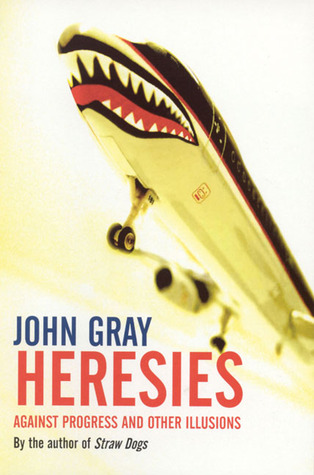
Heresies: Against Progress and Other Illusions PDF - John Gray
John Gray • Philosophy • 185 Pages
(0)
Quate
Review
Save
Share
Book Description
Heresies: Against Progress and Other Illusions by John Gray
Heresies: Against Progress and Other Illusions by John Gray is a sharp, unsettling, and intellectually provocative work of contemporary philosophy that challenges one of the modern world’s most comforting assumptions: the belief that history naturally moves toward improvement. Published by Granta Books in 2004, the book gathers Gray’s reflections on politics, ethics, technology, liberalism, human nature, and the modern faith in progress, continuing the skeptical line of thought that made Straw Dogs such a distinctive and controversial work. (Google Books)
A Powerful Critique of the Myth of Progress
At the heart of Heresies is Gray’s argument that modern societies often treat progress not simply as a practical hope, but as a kind of secular religion. Scientific knowledge can advance, technologies can become more powerful, and material conditions can change dramatically; yet Gray questions whether these developments make human beings wiser, freer, more peaceful, or morally better. His target is not science itself, but the illusion that scientific and technological progress automatically produces ethical and political progress.
This makes the book especially valuable for readers interested in political philosophy, modern thought, critiques of liberalism, anti-utopian philosophy, and the history of ideas. Gray writes against the optimism that often shapes public debate, asking whether human beings repeatedly mistake change for improvement and innovation for wisdom. His essays invite readers to reconsider familiar assumptions about democracy, capitalism, freedom, environmental crisis, technological power, and the future of civilization.
John Gray’s Heretical View of Modern Life
John Gray is known for questioning the humanist belief that humanity can remake itself through reason, politics, and technology. In Heresies, that skepticism is directed toward some of the central illusions of contemporary culture. The book examines the self-confidence of liberal societies, the promises of technological progress, and the idea that modern political systems can finally escape the conflicts and limitations that have shaped human history.
Rather than offering easy answers, Gray presents a deeply skeptical vision of human affairs. He suggests that many modern ideologies, even when they appear secular and rational, preserve older religious patterns of hope: redemption, final liberation, a perfected future, or a world cleansed of conflict. For readers searching for books against progress, John Gray philosophy books, or critiques of modern liberal optimism, Heresies offers a concentrated and memorable entry point into one of the most distinctive voices in contemporary political thought.
Themes of Technology, Politics, and Human Nature
A major theme of Heresies: Against Progress and Other Illusions is the gap between human power and human wisdom. Gray is especially concerned with the modern tendency to believe that new tools will solve old problems. Technology may expand what societies can do, but it does not remove human rivalry, fear, self-deception, or the desire for domination. This gives the book a lasting relevance in an age shaped by artificial intelligence, environmental anxiety, biotechnology, surveillance, and political polarization.
Gray’s reflections also speak to readers interested in human nature and philosophy. He resists sentimental views of humanity as naturally rational, morally progressive, or destined for enlightenment. Instead, he treats human beings as complicated animals whose political dreams often exceed their capacities. This does not make the book merely pessimistic; it makes it bracing. Gray’s work is valuable because it forces readers to ask whether hope becomes dangerous when it refuses to recognize limits.
A Reading Experience That Is Sharp, Dense, and Uncompromising
The style of Heresies is direct, elegant, and often aphoristic. Gray writes with the confidence of a thinker willing to disturb consensus, and the book’s title is well chosen: these essays are “heresies” against the dominant beliefs of the educated modern world. Readers should not expect a neutral survey or a simple introduction to political theory. This is a book of argument, challenge, and intellectual provocation.
Because the book is composed as a collection of reflections, it can be read both as a sustained critique and as a series of concentrated essays. Each section contributes to Gray’s broader case against the comforting idea that modernity has solved the deepest problems of politics and ethics. The result is a work that rewards slow reading, disagreement, rereading, and debate. Even readers who resist Gray’s conclusions may find that his questions remain difficult to dismiss.
Who Should Read Heresies?
Heresies by John Gray is ideal for readers who enjoy serious nonfiction that challenges fashionable assumptions. It will appeal to those interested in philosophy, political theory, social criticism, modern civilization, secular belief, environmental thought, and critiques of utopian thinking. It is also a strong choice for readers who have already encountered Straw Dogs and want to explore how Gray applies his anti-humanist and anti-progressive arguments to contemporary politics and culture.
The book is especially suited to readers who are skeptical of easy optimism. Anyone questioning whether technological change truly makes societies better, whether liberal democracies are as stable as they imagine, or whether modern political ideals carry hidden myths will find Heresies rich with unsettling insight. It is not written to reassure; it is written to expose illusions.
Why Heresies Still Matters
The continuing relevance of Heresies: Against Progress and Other Illusions lies in its refusal to accept the moral confidence of the present age. Gray’s central concern is that modern people often believe they have escaped myth while living inside new myths of their own. Progress, in this book, is not dismissed as meaningless; rather, it is carefully separated from the inflated belief that history has a built-in direction toward improvement.
This distinction gives the book its enduring force. Gray allows for scientific and practical advances, but he questions the broader story that humanity is becoming morally wiser through history. In doing so, he places himself against some of the most powerful narratives of modern culture. Heresies is therefore not just a critique of progress; it is a critique of the need to believe in progress.
A Provocative Work of Contemporary Philosophy
Heresies is a demanding, lucid, and memorable book for readers who want philosophy that speaks directly to modern political and social life. John Gray’s arguments are unsentimental, sometimes uncomfortable, and often controversial, but they are also deeply useful for anyone trying to think beyond inherited optimism. The book asks readers to look again at the ideas that shape modern confidence: progress, reason, freedom, technology, liberalism, and the future.
For those seeking a serious and challenging John Gray book, Heresies: Against Progress and Other Illusions offers a compact but powerful exploration of the illusions that sustain modern life. It is a book for readers who value intellectual honesty over comfort, difficult questions over easy solutions, and philosophical clarity over fashionable certainty.
John Gray
John Gray is an American author, relationship counselor, and public speaker best known for the influential relationship book Men Are from Mars, Women Are from Venus. His work has become closely associated with popular psychology, communication advice, emotional understanding, and practical guidance for couples seeking healthier and more compassionate relationships. Gray’s writing style is accessible, direct, and highly practical, which helped his books reach a wide audience beyond academic readers and professional therapists. Rather than presenting relationships as abstract theories, he explains everyday emotional conflicts through familiar situations: one partner wants to talk while the other withdraws, one person offers advice when the other wants empathy, or both partners feel unloved because they express care in different ways. This ability to turn common misunderstandings into simple, memorable frameworks is one of the main reasons John Gray became a recognizable name in self-help and relationship literature.
John Gray gained international fame after the publication of Men Are from Mars, Women Are from Venus in 1992. The book uses the metaphor of men and women coming from different planets to describe how partners may interpret love, stress, intimacy, silence, and support in different ways. Its central message is not that relationships are doomed by difference, but that difference can be understood, respected, and managed through better communication. Gray argues that many conflicts arise not from lack of affection, but from mismatched expectations. One partner may think support means giving solutions, while the other may need listening and emotional validation. One may need private time to recover from stress, while the other may interpret distance as rejection. By naming these patterns in plain language, Gray gave readers a vocabulary for discussing emotional needs without turning every disagreement into blame.
Beyond his most famous title, John Gray has written many books that expand the Mars and Venus approach into dating, marriage, intimacy, parenting, health, and personal growth. Works such as Mars and Venus in the Bedroom, Mars and Venus on a Date, and Children Are from Heaven show his interest in applying relationship principles across different stages of life. His books often emphasize patience, appreciation, emotional timing, and the importance of understanding how people respond to stress. He encourages readers to notice recurring patterns in conversation, to avoid assuming bad intentions, and to communicate needs in a way that invites cooperation rather than defensiveness. These themes made his books especially useful for readers looking for relationship advice that feels concrete rather than abstract.
The global popularity of John Gray’s writing reflects the universal appeal of his subject matter. Love, conflict, attraction, disappointment, and reconciliation are experiences shared across cultures, even when customs and family expectations differ. His books have been translated into numerous languages and have reached readers in many countries, making him one of the most commercially successful relationship authors of the modern era. At the same time, his work has also attracted criticism from readers and scholars who believe that some of his descriptions of gender differences can be too broad or simplified. This debate is part of his wider cultural impact: Gray’s ideas became so familiar that they shaped conversations about relationships far beyond the pages of his books. Whether readers fully agree with his framework or approach it critically, John Gray remains an important figure in the history of self-help writing, known for bringing relationship communication into mainstream discussion and for encouraging couples to replace accusation with curiosity, patience, and mutual understanding.
Earn Rewards While Reading!
Every 10 pages you read and spent 30 seconds on every page, earns you 5 reward points! Keep reading to unlock achievements and exclusive benefits.
Read
Rate Now
5 Stars
4 Stars
3 Stars
2 Stars
1 Stars
Heresies: Against Progress and Other Illusions Quotes
Top Rated
Latest
Quate
Be the first to leave a quote and earn 10 points
instead of 3
Other books by John Gray
'%20/%3e%3c/svg%3e "Mars and Venus in the Bedroom : A Guide to Lasting Romance and Passion")
John Gray.
Human Development
(0)
4800
English
Other books like Heresies: Against Progress and Other Illusions
Eric Fromm.
Philosophy
(0)
2288
English
Comments
Be the first to leave a comment and earn 5 points
instead of 3