

The source of the book
This book is published for the public benefit under a Creative Commons license, or with the permission of the author or publisher. If you have any objections to its publication, please contact us.
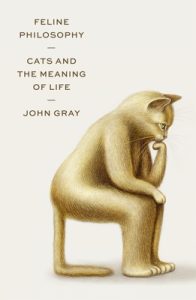
Feline Philosophy: Cats and the Meaning of Life PDF - John Gray
John Gray • psychology • 140 Pages
(0)
Quate
Review
Save
Share
Book Description
Feline Philosophy: Cats and the Meaning of Life by John Gray
Feline Philosophy: Cats and the Meaning of Life is a sharp, elegant, and unusually playful work of popular philosophy by John Gray, the British thinker best known for challenging modern assumptions about progress, humanism, reason, and the stories people tell themselves in order to feel secure. In this compact nonfiction book, Gray turns his attention to cats, not as cute decorative companions, but as living examples of a different way of being: alert, independent, sensuous, unsentimental, and largely free from the anxious self-questioning that defines so much of human life. The book’s publisher presents it as a meditation on what cats reveal about love, attachment, mortality, morality, and the self. (Macmillan Publishers)
At the heart of Feline Philosophy: Cats and the Meaning of Life is a provocative reversal of ordinary human confidence. People usually assume that philosophy exists because human beings are wiser, deeper, and more self-aware than other animals. Gray asks whether that self-awareness may also be a burden. Cats, in his view, do not need theories in order to live. They do not build systems of meaning to protect themselves from uncertainty, and they do not spend their days trying to justify their existence. They eat, sleep, hunt, play, observe, withdraw, return, and adapt. Through this contrast, Gray creates a thoughtful and often witty philosophy book about cats that is really a book about human restlessness.
A Philosophical Meditation on Cats, Humans, and the Search for Meaning
Rather than offering a sentimental celebration of pets, John Gray uses cats to question some of the deepest habits of human thought. Why do people search so desperately for meaning? Why do they turn suffering into moral lessons, create ideologies of progress, or imagine that reason can solve every difficulty of existence? Gray’s answer is not simple despair; it is a call for humility. Cats remind us that life may not need to be forced into a grand narrative in order to be worth living. The meaning of life, the book suggests, may not be something to discover like a hidden object. It may be closer to an experience of presence, attention, pleasure, adaptation, and freedom from unnecessary illusion.
This makes Feline Philosophy especially appealing to readers interested in existential philosophy, animal philosophy, the meaning of life, and the strange emotional bond between humans and cats. Gray moves through literary, historical, and philosophical references while keeping the central image clear: the cat as a creature that does not need to ask how to live in order to live fully. The book includes reflections connected to figures and stories such as Montaigne’s cat, Colette’s Saha, and the wartime cat Mèo, using them to explore how feline life unsettles human assumptions about intelligence, love, fear, memory, and happiness. (Macmillan Publishers)
John Gray’s Distinctive View of the Human Condition
Readers familiar with John Gray books such as Straw Dogs will recognize the deeper pattern behind this smaller, more playful work. Gray has long been skeptical of the belief that human beings can escape nature through reason, politics, technology, or moral theory. In Feline Philosophy: Cats and the Meaning of Life, that skepticism takes a gentler and more intimate form. The cat becomes a counter-image to the human tendency to overthink, dominate, explain, and improve everything. Where humans often live in imagined futures or revised memories, cats seem rooted in the immediate world.
The result is a book that feels light on the surface but serious underneath. Gray writes with irony, clarity, and philosophical bite, but he does not bury the reader in academic language. His approach makes the book accessible to general readers who want a thoughtful nonfiction title, while still offering enough intellectual substance for readers of philosophy. It is a work for people who enjoy asking large questions without expecting neat, comforting answers. The tone is reflective rather than instructional, skeptical rather than motivational, and humane precisely because it refuses to flatter human beings too much.
What Cats Can Teach Us About Living
One of the most memorable ideas in Feline Philosophy is that cats may embody a kind of wisdom humans can admire but never fully possess. They do not seek moral perfection, historical purpose, or psychological self-improvement. They are not trying to become better versions of themselves. For Gray, this is not a weakness. It is part of their freedom. Cats show a way of existing that is alert to danger, open to enjoyment, and capable of attachment without becoming trapped in the endless search for explanations.
This does not mean the book tells readers to abandon thought or imitate animals literally. Gray is clear that humans cannot become cats. Instead, cats become a philosophical mirror. Through them, readers are invited to notice how much of human unhappiness comes from trying to impose meaning where there may be none, from demanding that suffering must have a purpose, or from believing that life can be mastered by a theory. As a book about cats and the meaning of life, it offers an unusual kind of comfort: not the promise that everything happens for a reason, but the possibility that life can still be vivid, beautiful, and bearable without such promises.
A Book for Cat Lovers, Philosophy Readers, and Reflective Minds
Feline Philosophy: Cats and the Meaning of Life is a strong choice for readers who love cats but want something more thoughtful than a conventional pet book. It is also ideal for readers who enjoy literary nonfiction, short philosophical essays, and books that combine wit with serious reflection. Cat lovers will appreciate Gray’s attention to feline independence, mystery, and grace, while philosophy readers will recognize his larger argument against human exceptionalism and intellectual arrogance.
The book will also appeal to readers searching for accessible writing about mortality, happiness, self-consciousness, attachment, and how to live. It does not offer a self-help program, and it does not turn cats into simple symbols of peace or cuteness. Instead, it respects their strangeness. Cats remain partly unknowable, and that unknowability is central to the book’s charm. Gray’s reflections suggest that living beside another creature does not require complete understanding. Sometimes attention, coexistence, and affection are enough.
The Reading Experience: Witty, Brief, and Thought-Provoking
Part of the appeal of Feline Philosophy lies in its balance of brevity and depth. This is not a long academic treatise; it is a concise meditation that can be read quickly but thought about slowly. Reviewers have described the book in different ways, with some emphasizing its wit, some its philosophical seriousness, and others its challenge to familiar moral and humanist assumptions. Publishers Weekly identified it as a nonfiction work that ranges across questions such as morality, death, and the afterlife, while also noting its unconventional feline-centered premise. (PublishersWeekly.com)
The reading experience is best understood as contemplative rather than argumentative in a strict academic sense. Gray moves from cats to philosophers, from anecdotes to metaphysical questions, from humor to melancholy. His style invites readers to pause over familiar assumptions: that consciousness is always good, that meaning must be found, that progress is guaranteed, that human beings are uniquely fitted to understand the world. By placing cats at the center of these questions, he gives the book a fresh and memorable shape.
Why Feline Philosophy Remains a Memorable Book
Feline Philosophy: Cats and the Meaning of Life stands out because it treats cats neither as jokes nor as moral mascots. Gray takes them seriously without making them human. He sees in them a form of life that exposes the oddity of our own: our need to explain, our fear of chance, our hunger for purpose, and our difficulty simply inhabiting the present. The book’s power comes from this quiet challenge. It asks whether the search for meaning may sometimes prevent us from experiencing life itself.
For readers looking for a John Gray philosophy book, a reflective nonfiction book about cats, or a thoughtful exploration of cats and the meaning of life, this work offers a distinctive blend of intelligence, irony, and emotional restraint. It is philosophical without being remote, affectionate without being sentimental, and skeptical without being empty. In the end, Feline Philosophy does not claim that cats can solve the human condition. Its deeper suggestion is more subtle: by watching cats closely, humans may learn to loosen their grip on some of the illusions that make life heavier than it needs to be.
John Gray
John Gray is an American author, relationship counselor, and public speaker best known for the influential relationship book Men Are from Mars, Women Are from Venus. His work has become closely associated with popular psychology, communication advice, emotional understanding, and practical guidance for couples seeking healthier and more compassionate relationships. Gray’s writing style is accessible, direct, and highly practical, which helped his books reach a wide audience beyond academic readers and professional therapists. Rather than presenting relationships as abstract theories, he explains everyday emotional conflicts through familiar situations: one partner wants to talk while the other withdraws, one person offers advice when the other wants empathy, or both partners feel unloved because they express care in different ways. This ability to turn common misunderstandings into simple, memorable frameworks is one of the main reasons John Gray became a recognizable name in self-help and relationship literature.
John Gray gained international fame after the publication of Men Are from Mars, Women Are from Venus in 1992. The book uses the metaphor of men and women coming from different planets to describe how partners may interpret love, stress, intimacy, silence, and support in different ways. Its central message is not that relationships are doomed by difference, but that difference can be understood, respected, and managed through better communication. Gray argues that many conflicts arise not from lack of affection, but from mismatched expectations. One partner may think support means giving solutions, while the other may need listening and emotional validation. One may need private time to recover from stress, while the other may interpret distance as rejection. By naming these patterns in plain language, Gray gave readers a vocabulary for discussing emotional needs without turning every disagreement into blame.
Beyond his most famous title, John Gray has written many books that expand the Mars and Venus approach into dating, marriage, intimacy, parenting, health, and personal growth. Works such as Mars and Venus in the Bedroom, Mars and Venus on a Date, and Children Are from Heaven show his interest in applying relationship principles across different stages of life. His books often emphasize patience, appreciation, emotional timing, and the importance of understanding how people respond to stress. He encourages readers to notice recurring patterns in conversation, to avoid assuming bad intentions, and to communicate needs in a way that invites cooperation rather than defensiveness. These themes made his books especially useful for readers looking for relationship advice that feels concrete rather than abstract.
The global popularity of John Gray’s writing reflects the universal appeal of his subject matter. Love, conflict, attraction, disappointment, and reconciliation are experiences shared across cultures, even when customs and family expectations differ. His books have been translated into numerous languages and have reached readers in many countries, making him one of the most commercially successful relationship authors of the modern era. At the same time, his work has also attracted criticism from readers and scholars who believe that some of his descriptions of gender differences can be too broad or simplified. This debate is part of his wider cultural impact: Gray’s ideas became so familiar that they shaped conversations about relationships far beyond the pages of his books. Whether readers fully agree with his framework or approach it critically, John Gray remains an important figure in the history of self-help writing, known for bringing relationship communication into mainstream discussion and for encouraging couples to replace accusation with curiosity, patience, and mutual understanding.
Earn Rewards While Reading!
Every 10 pages you read and spent 30 seconds on every page, earns you 5 reward points! Keep reading to unlock achievements and exclusive benefits.
Read
Rate Now
5 Stars
4 Stars
3 Stars
2 Stars
1 Stars
Feline Philosophy: Cats and the Meaning of Life Quotes
Top Rated
Latest
Quate
Be the first to leave a quote and earn 10 points
instead of 3
Other books by John Gray
'%20/%3e%3c/svg%3e "Mars and Venus in the Bedroom : A Guide to Lasting Romance and Passion")
John Gray.
Human Development
(0)
4800
English
Comments
Be the first to leave a comment and earn 5 points
instead of 3