

The source of the book
This book is published for the public benefit under a Creative Commons license, or with the permission of the author or publisher. If you have any objections to its publication, please contact us.
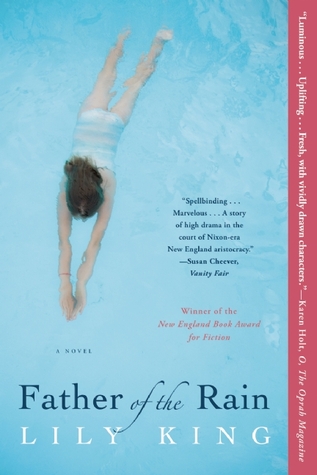
Father of the Rain PDF - Lily King
Lily King • romantic novels • 305 Pages
(0)
Quate
Review
Save
Share
Book Description
Father of the Rain by Lily King is a deeply moving work of literary fiction that explores one of the most emotionally difficult bonds in family life: the relationship between a daughter and a father who is charismatic, wounded, destructive, and impossible to stop loving. Set across decades, the novel follows Daley Amory as she grows from childhood into adulthood while trying to understand the powerful hold her father has over her heart, her choices, and her sense of self. With psychological depth and quiet intensity, Lily King creates a story about addiction, privilege, memory, forgiveness, and the painful question of how much loyalty a child owes to a parent.
At the center of the novel is Daley’s father, a man whose charm can fill a room and whose behavior can just as quickly damage everyone around him. He is funny, magnetic, unpredictable, and deeply troubled, and his alcoholism shapes the emotional atmosphere of Daley’s childhood. King does not present him as a simple villain or a sentimental figure in need of rescue. Instead, she captures the confusing reality of loving someone who can be affectionate and cruel, fascinating and frightening, generous and selfish. This complexity gives Father of the Rain its emotional force, making it a compelling choice for readers interested in family drama, father-daughter relationships, novels about addiction, and literary novels about childhood and memory.
A Literary Family Drama About Love, Damage, and Emotional Inheritance
Lily King’s novel is especially powerful because it understands that family love is rarely clean or simple. Daley’s devotion to her father is not logical, and that is exactly what makes it feel true. As a child, she wants his attention, his approval, and the version of him that appears in moments of tenderness. As she grows older, she becomes more aware of the cost of that devotion, yet awareness does not free her easily from the emotional patterns formed in childhood. The novel traces the long shadow of a parent’s instability and shows how early love can become a form of responsibility that follows a person into adult life.
The story also examines the emotional inheritance passed from parent to child. Daley must confront not only her father’s drinking and volatility but also the ways his presence has shaped her understanding of love, loyalty, shame, and self-protection. Her struggle is not simply whether to stay close to him or walk away. It is whether she can build a life of her own without denying the part of herself that still longs for him. This makes Father of the Rain a rich and layered novel for readers who appreciate stories about complicated families, emotional survival, and the quiet work of becoming independent from the people who formed us.
The Reading Experience: Intimate, Insightful, and Emotionally Honest
The reading experience of Father of the Rain is intimate and absorbing. Lily King writes with a clear eye for human contradiction, allowing readers to feel both the beauty and the danger of Daley’s attachment to her father. The novel moves through family scenes, social settings, private disappointments, and moments of painful recognition with a style that is elegant without feeling distant. King’s prose is emotionally precise, making the reader understand how a child can recognize harm and still crave closeness, how an adult can know better and still return, and how love can remain powerful even after trust has been broken many times.
This is not a novel built on dramatic twists or easy resolutions. Its strength lies in emotional truth. King pays attention to gestures, conversations, silences, and the small humiliations that accumulate inside a family shaped by addiction. The result is a psychological family novel that feels both specific and widely relatable. Readers who have experienced difficult family bonds may recognize the mixture of anger, tenderness, guilt, and hope that Daley carries. Readers coming to the book for its literary craft will find a carefully shaped narrative that explores character with depth and restraint.
A Novel About Alcoholism Without Simplifying the People It Affects
One of the most important aspects of Father of the Rain is its portrayal of alcoholism and its effect on family life. Lily King shows how addiction does not damage only the person who drinks; it alters the entire emotional structure of a household. It teaches children to watch moods, manage tension, excuse behavior, and hope for change. Through Daley’s perspective, the reader sees how a parent’s addiction can become both a private wound and a family secret, something everyone knows and yet no one fully knows how to name.
The novel’s treatment of alcoholism is powerful because it avoids easy judgment. Daley’s father is responsible for his actions, but he is also portrayed as a whole person rather than a symbol. His intelligence, humor, and charm are part of the reason his damage is so difficult for Daley to escape. King understands that destructive people can also be beloved, and that this contradiction is often what makes family pain so enduring. For readers looking for books about alcoholic parents, addiction in families, adult children of alcoholics, or emotionally complex parent-child relationships, this novel offers a nuanced and compassionate exploration.
Daley Amory and the Search for a Self Beyond the Father
Daley is the emotional center of the novel, and her journey gives Father of the Rain its lasting resonance. Her story is not only about surviving a troubled father; it is about learning to see herself outside the role of daughter, rescuer, witness, and caretaker. Her father’s neediness and unpredictability pull her back again and again, but the novel also follows her attempts to imagine a life shaped by her own desires rather than his crises. This tension between attachment and independence is one of the book’s most compelling elements.
As Daley grows, the reader sees how childhood loyalty can become an adult burden. She must decide what compassion means when it threatens to consume her, what forgiveness means when the harm continues, and what love means when it cannot fix the person receiving it. These questions give the novel its moral depth. Father of the Rain does not offer simple answers, but it does honor the difficulty of the questions. It is a thoughtful choice for readers who value character-driven fiction, emotional realism, and stories about the long process of reclaiming one’s life.
Lily King’s Gift for Character, Setting, and Psychological Detail
Lily King is known for her ability to create emotionally intelligent fiction, and Father of the Rain demonstrates her talent for rendering complicated inner lives. She writes family relationships with sensitivity, but also with sharpness. The novel’s social world—marked by class, manners, old assumptions, and private dysfunction—adds another layer to the story. Beneath the surface of comfort and respectability, King reveals a household shaped by instability, denial, and the pressure to maintain appearances.
This contrast between outer privilege and inner chaos gives the novel much of its atmosphere. The world surrounding Daley’s father can excuse or disguise his behavior, allowing charm to cover cruelty and social ease to mask emotional damage. King’s attention to this environment makes the book more than a private family story; it becomes a portrait of how culture, class, and silence can protect destructive patterns. For readers interested in American literary fiction, New England family novels, domestic drama, and psychologically realistic fiction, the novel offers a richly observed and emotionally layered experience.
Who Should Read Father of the Rain?
Father of the Rain is ideal for readers who enjoy serious, character-driven novels about family bonds and emotional complexity. It will appeal to fans of literary fiction that explores memory, addiction, parental influence, and the complicated ties that remain even after disappointment. Readers who are drawn to novels about daughters and difficult fathers, books about family dysfunction, or stories that examine the cost of loving someone self-destructive will find this book especially meaningful.
The novel is also a strong choice for book clubs because it raises questions that invite discussion. How do we measure responsibility within a family? When does loyalty become self-erasure? Can a parent be both loving and harmful? What does it mean to forgive someone who may never fully change? These themes give Father of the Rain by Lily King a lasting emotional impact and make it a book that readers may continue thinking about after finishing the final page.
A Haunting and Compassionate Portrait of Family Love
Father of the Rain is a beautifully crafted novel about the bonds that shape us most deeply and the pain of loving someone who cannot be depended upon. Through Daley Amory’s relationship with her father, Lily King captures the fierce pull of childhood attachment, the confusion of family loyalty, and the difficult path toward emotional freedom. The novel is tender without being sentimental, painful without being hopeless, and wise in its understanding of how love can survive even when it cannot save.
For readers seeking a powerful literary novel about fathers and daughters, a moving story of addiction and family, or a thoughtful exploration of how the past continues to shape adult life, Father of the Rain by Lily King offers a rich, unforgettable reading experience. It is a novel about damage, devotion, and the long search for clarity inside the most complicated form of love: the love we feel for the people who made us, wounded us, and remain part of us.
Lily King
Lily King is an acclaimed American novelist and short-story writer whose fiction has become widely admired for its emotional intelligence, elegant realism, and searching portraits of ambition, love, grief, family, and artistic life. She is best known as the author of the novels The Pleasing Hour, The English Teacher, Father of the Rain, Euphoria, Writers & Lovers, and Heart the Lover, as well as the story collection Five Tuesdays in Winter. Across these books, King has developed a distinctive literary voice: intimate without being narrow, psychologically precise without losing narrative momentum, and deeply attentive to the ways people are shaped by desire, memory, work, loss, and the fragile hope of reinvention. Raised in Massachusetts, she studied English literature at the University of North Carolina at Chapel Hill and later earned an M.A. in creative writing from Syracuse University. Before becoming a major name in contemporary literary fiction, she worked as a high-school English teacher in Valencia, Spain, and held bookstore, restaurant, and teaching jobs while writing the novel that would become The Pleasing Hour. That debut introduced many of the qualities that continue to define her work: finely observed social settings, young women negotiating unfamiliar emotional landscapes, and a style that is both graceful and sharply alert to vulnerability. The Pleasing Hour won the Barnes & Noble Discover Award, received recognition from The New York Times, and helped establish King as a writer of serious promise. She followed it with The English Teacher and Father of the Rain, novels that explored family conflict, secrecy, dependency, and the complex inheritance of childhood. Her breakthrough came with Euphoria, a historically inflected novel inspired by the world of anthropology and loosely connected to the life and intellectual atmosphere surrounding Margaret Mead. Set in the 1930s and driven by a charged triangle of intellect, rivalry, and attraction, Euphoria won the Kirkus Prize for Fiction and the New England Book Award and was a finalist for the National Book Critics Circle Award. King’s reputation expanded further with Writers & Lovers, a novel about Casey Peabody, a grieving and financially strained aspiring writer who waits tables while trying to finish her manuscript and choose a future that can contain both art and love. The book resonated strongly with readers because it treated creative labor not as glamour but as endurance, uncertainty, and faith. Five Tuesdays in Winter displayed King’s gifts in short fiction, while Heart the Lover continued her long engagement with romance, memory, intellectual intimacy, and the emotional consequences of youth carried into later life. King’s work has received major honors, including the Whiting Award, the Maine Book Award, the New England Book Award, and the Kirkus Prize, and has been recognized by prize lists such as the Story Prize, PEN/Faulkner Award, National Book Critics Circle Award, Joyce Carol Oates Prize, and Women’s Prize for Fiction. She lives in Portland, Maine, and remains a significant figure for readers seeking literary novels about women artists, emotional resilience, family inheritance, and the complicated negotiations between independence, att
Earn Rewards While Reading!
Every 10 pages you read and spent 30 seconds on every page, earns you 5 reward points! Keep reading to unlock achievements and exclusive benefits.
Read
Rate Now
5 Stars
4 Stars
3 Stars
2 Stars
1 Stars
Father of the Rain Quotes
Top Rated
Latest
Quate
Be the first to leave a quote and earn 10 points
instead of 3
'%20/%3e%3c/svg%3e "Heart the Lover")
Comments
Be the first to leave a comment and earn 5 points
instead of 3