

The source of the book
This book is published for the public benefit under a Creative Commons license, or with the permission of the author or publisher. If you have any objections to its publication, please contact us.
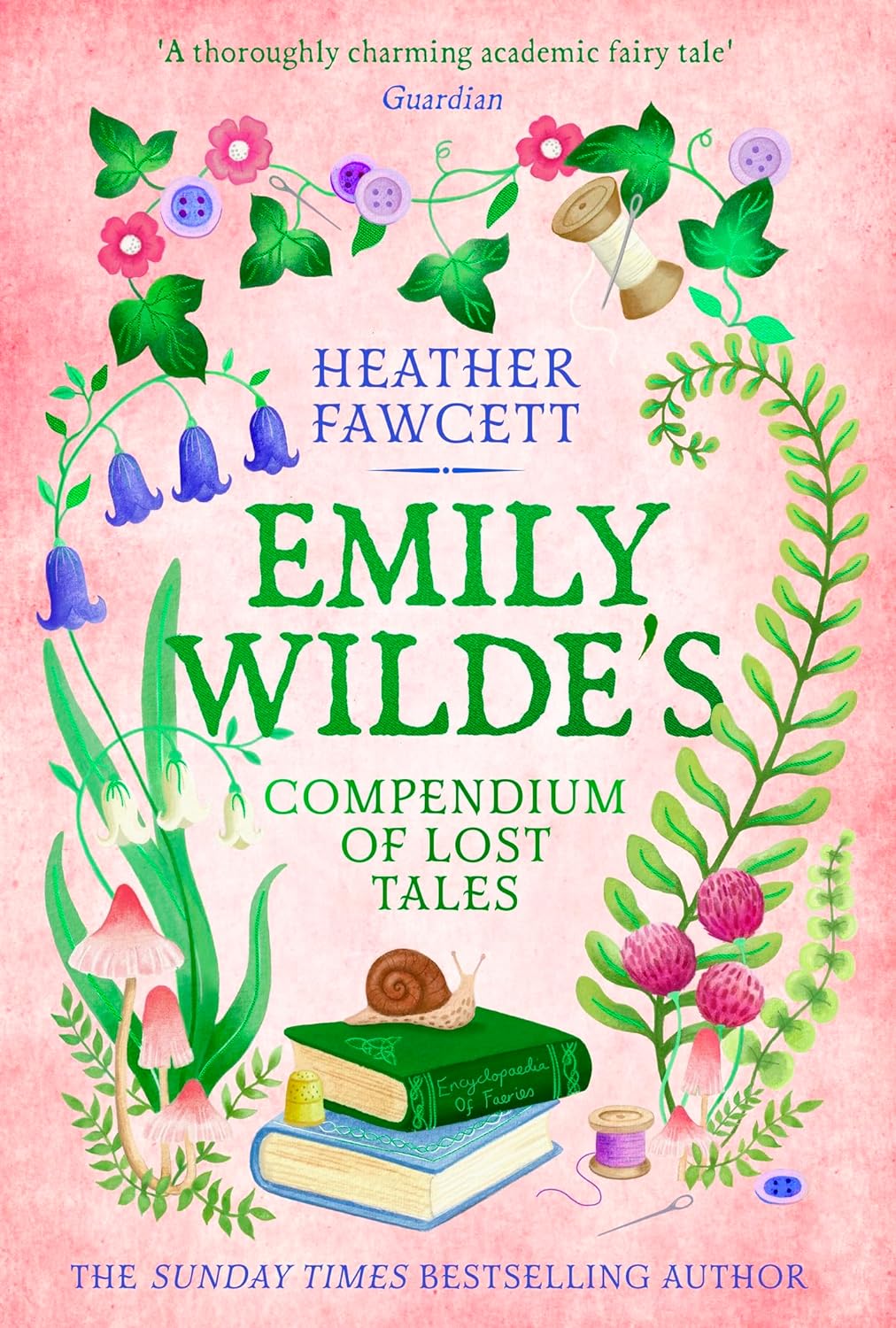
Emily Wilde's Compendium of Lost Tales PDF - Heather Fawcett
Heather Fawcett • romantic novels • 324 Pages
(0)
Quate
Review
Save
Share
Book Description
Emily Wilde’s Compendium of Lost Tales by Heather Fawcett is an enchanting fantasy novel for readers who love cozy fantasy, faerie folklore, magical academia, slow-burn romance, and stories where books, scholarship, and myth are as dangerous as swords or spells. As the third book in the beloved Emily Wilde series, this novel continues the journey of Emily Wilde, a brilliant and prickly scholar of the Folk, and Wendell Bambleby, her charming, unpredictable former academic rival and fiancé. Published by Del Rey, the book follows Emily into one of her most perilous fields of study yet: the inner workings of a faerie realm where stories hold power, politics can be deadly, and becoming queen may be far more complicated than any academic expedition.
A Rich Fantasy Novel Rooted in Folklore and Academic Curiosity
At the heart of Emily Wilde’s Compendium of Lost Tales is the irresistible idea that folklore is not merely something to be recorded from a safe distance. In Emily Wilde’s world, tales are alive, dangerous, and deeply entangled with the rules of Faerie. Emily has built her reputation as a dryadologist, a scholar devoted to the study of faeries, their customs, their realms, and their strange logic. Her great strength has always been her ability to observe what others overlook: a pattern in an old tale, a hidden law beneath a magical bargain, or a clue buried in a creature’s behavior. In this installment, that scholarly skill becomes more than an academic gift; it becomes a matter of survival.
The novel blends the pleasure of a field journal, the atmosphere of a fairy tale, and the emotional pull of character-driven fantasy. Readers who enjoyed the earlier books for their footnoted charm, clever worldbuilding, and wintry, bookish mood will find the same distinctive voice here, now expanded into a more politically charged and mythically layered setting. Emily’s perspective remains one of the series’ greatest pleasures: sharp, analytical, socially awkward, and often unintentionally funny, she approaches impossible magical situations with the seriousness of a researcher and the stubbornness of someone who refuses to be impressed by danger simply because it is dramatic.
Emily Wilde, Wendell Bambleby, and the Difficult Art of Belonging
One of the central appeals of Heather Fawcett’s Emily Wilde series is the relationship between Emily and Wendell. Their dynamic is full of contrast: Emily is methodical, guarded, and devoted to knowledge, while Wendell is dazzling, mercurial, and far more comfortable with charm than with honesty. In Emily Wilde’s Compendium of Lost Tales, their connection deepens as the story moves into Wendell’s long-lost kingdom and the dangerous intrigues surrounding his claim. The romance remains woven naturally into the fantasy adventure, giving the book emotional warmth without overwhelming its larger themes of identity, responsibility, and power.
Emily’s new role forces her to confront a question that is both magical and deeply human: what does it mean to belong somewhere when one has always felt out of place? In the mortal world, Emily has often found it easier to understand books than people. In Faerie, however, even her scholarship cannot protect her from every uncertainty. The realm may offer treasures that fascinate her mind, but it also demands performance, loyalty, courage, and political instinct. Her challenge is not simply to survive Faerie, but to understand whether her unusual strengths can become the very qualities that make her capable of leadership.
A Beautifully Strange World of Faerie Politics and Lost Tales
Faerie in this novel is not a soft or harmless place. It is beautiful, treacherous, old, and ruled by customs that do not always match human morality. Emily Wilde’s Compendium of Lost Tales makes excellent use of that tension, presenting a realm where wonder and threat exist side by side. The result is a fantasy world that feels magical without becoming weightless. There are scholarly treasures, ancient mysteries, dangerous bargains, curses, hidden motives, and the unsettling sense that stories themselves may shape reality.
The title’s emphasis on lost tales is especially fitting because the novel understands folklore as a living force. Tales are not decorative background details; they become clues, weapons, maps, warnings, and keys. Emily’s lifelong obsession with faerie stories gives her an unusual advantage, but it also places her in danger, because knowing a story does not always mean controlling it. Readers interested in fairy tale retellings, mythic fantasy, fae fantasy books, and folklore-inspired fiction will appreciate how Fawcett uses old storytelling patterns while still giving the novel its own fresh personality.
Magical Academia with Cozy Fantasy Warmth and Sharp Teeth
Although the Emily Wilde books are often loved by readers of cozy fantasy, this series has always carried a darker fairy-tale edge. The atmosphere can be charming, witty, and intimate, but the Folk are never reduced to cute magical companions. They are strange, perilous, and governed by rules that demand attention. That balance is part of what makes Emily Wilde’s Compendium of Lost Tales so satisfying: it offers comfort through voice, setting, romance, and character, while still preserving the danger and mystery that make faerie stories compelling.
The book’s academic texture also sets it apart from many fantasy novels. Emily does not solve problems simply by being chosen, powerful, or fearless. She solves them by reading carefully, observing behavior, comparing evidence, and trusting the importance of stories. This makes the novel especially appealing to readers who enjoy intelligent protagonists, research-driven plots, magical libraries, field notes, folklore studies, and fantasy that treats knowledge as a form of courage. The adventure may involve curses and royal intrigue, but its deepest magic often lies in interpretation.
A Rewarding Read for Fans of Character-Driven Fantasy
Emily Wilde’s Compendium of Lost Tales is ideal for readers who want fantasy with emotional intimacy as well as imaginative scope. The novel offers a satisfying mixture of adventure, romance, mystery, humor, and atmosphere, but its strongest pull comes from character. Emily’s growth across the series gives this installment a sense of earned depth. She remains recognizably herself—reserved, brilliant, occasionally difficult, and fiercely devoted to her work—but the circumstances around her ask for a more vulnerable and expansive version of that self.
Wendell, too, brings both sparkle and complication to the story. His charm is never merely ornamental; it reflects his faerie nature, his history, and the burdens of returning to a world that is both his inheritance and his danger. Together, Emily and Wendell create the kind of romantic pairing that appeals to readers who enjoy banter, contrast, loyalty, and affection built through shared peril rather than instant simplicity. Their relationship gives the book warmth, while the surrounding plot keeps the stakes alive.
Why Readers Search for Emily Wilde’s Compendium of Lost Tales
Readers looking for Emily Wilde’s Compendium of Lost Tales by Heather Fawcett are often searching for a fantasy novel that combines the pleasures of an enchanted setting with the intelligence of literary folklore. This book speaks to fans of romantic fantasy, light academia, cozy fantasy with faeries, historical-feeling fantasy worlds, and books about scholars in magical realms. It also appeals to readers who enjoy fantasy heroines who are not effortlessly sociable or conventionally heroic, but who become compelling because of their precision, persistence, and unusual way of seeing the world.
The novel’s appeal is also strengthened by its tone. Fawcett’s writing creates a world that feels elegant, whimsical, dangerous, and emotionally sincere without becoming overly sentimental. The humor is dry rather than loud, the romance is tender without losing its edge, and the fantasy elements are imaginative without abandoning internal logic. For readers who enjoy books that feel like discovered journals, annotated fairy tales, or academic records of impossible journeys, this installment offers a particularly rich reading experience.
An Enchanting Fantasy for Lovers of Faerie Lore and Bookish Adventure
Emily Wilde’s Compendium of Lost Tales is a beautifully atmospheric fantasy novel about scholarship, love, power, and the stories that shape entire worlds. Heather Fawcett brings together the charm of magical academia, the danger of old faerie lore, and the emotional satisfaction of a heroine learning how to carry responsibility without losing herself. It is a book for readers who want their fantasy to be intelligent, romantic, strange, and full of wonder, with enough darkness to remind them that true fairy tales have always had teeth.
For anyone drawn to Heather Fawcett books, the Emily Wilde series, or fantasy novels where myth and research meet, this volume offers a compelling continuation of Emily’s journey. It invites readers into a realm where every tale may conceal a truth, every bargain may hide a trap, and every act of understanding may become an act of courage. Through Emily’s eyes, Faerie becomes not only a place of magic, but a world of stories waiting to be studied, survived, and finally understood.
Heather Fawcett
Heather Fawcett is a Canadian fantasy author whose work spans adult fiction, young adult novels, and middle grade books, earning her a strong reputation among readers who enjoy folklore-rich storytelling, clever heroines, atmospheric settings, and magical adventures with emotional warmth. She is best known for the Emily Wilde series, especially Emily Wilde’s Encyclopaedia of Faeries, a bestselling fantasy novel that introduced readers to Emily Wilde, a brilliant but socially awkward Cambridge scholar who studies faeries with academic seriousness and personal intensity. In that novel, Emily travels to a remote northern village to complete her encyclopaedia of faerie lore, only to encounter dark magic, dangerous Folk, unexpected friendship, and the increasingly complicated presence of her charming academic rival, Wendell Bambleby. The series continues with Emily Wilde’s Map of the Otherlands and Emily Wilde’s Compendium of Lost Tales, expanding a world where field research, folklore, romance, maps, hidden realms, and faerie politics blend into a distinctive form of cozy yet adventurous fantasy. Fawcett’s work is particularly appealing because it combines the pleasures of old-world fairy tales with modern character work: her protagonists are often intelligent, curious, stubborn, emotionally guarded, and drawn toward mystery even when mystery threatens to upend everything they thought they understood. Beyond the Emily Wilde novels, she has written a range of books for younger readers, including the Even the Darkest Stars series, Ember and the Ice Dragons, The Grace of Wild Things, The Language of Ghosts, A Galaxy of Whales, and The Islands of Elsewhere. Her adult novel Agnes Aubert’s Mystical Cat Shelter further shows her gift for cozy fantasy, pairing magic, cats, slow-burn romance, and a 1920s Montreal setting with the story of a practical heroine whose orderly life is disrupted by a chaotic dark magician and a shelter full of animals in need. Fawcett has a master’s degree in English literature and a bachelor’s degree in archaeology, and those areas of study help explain the texture of her fiction: she writes with affection for archives, legends, ruins, field notes, buried histories, and the idea that stories are artifacts capable of changing the present. Born in Vancouver and living on Vancouver Island, she also brings a vivid sense of landscape into her books, whether she is writing about mountains, cold villages, sea air, forests, or dreamlike otherworlds. Her style is elegant, humorous, and immersive, often balancing dry wit with moments of tenderness and danger. She is especially skilled at writing heroines who are capable and intelligent without being emotionally invulnerable, and romances that develop through banter, trust, irritation, admiration, and shared peril rather than instant sentiment. Heather Fawcett’s books have been translated into many languages and nominated for major genre awards, reflecting her wide appeal across adult, teen, and children’s fantasy audiences. For readers searching for fantasy books with faeries, dragons, folklore, scholarly adventure, cozy magic, and quietly powerful romance, Heather Fawcett has become one of the most distinctive voices in contemporary fantasy fiction.
Earn Rewards While Reading!
Every 10 pages you read and spent 30 seconds on every page, earns you 5 reward points! Keep reading to unlock achievements and exclusive benefits.
Read
Rate Now
5 Stars
4 Stars
3 Stars
2 Stars
1 Stars
Emily Wilde's Compendium of Lost Tales Quotes
Top Rated
Latest
Quate
Be the first to leave a quote and earn 10 points
instead of 3
Other books by Heather Fawcett
'%20/%3e%3c/svg%3e "Emily Wilde's Encyclopaedia of Faeries")
Heather Fawcett.
romantic novels ,
Historical novels ,
paranormal
(0)
3
English
Heather Fawcett.
romantic novels ,
Historical novels ,
Fantasy novels
(0)
3
English
Heather Fawcett.
romantic novels ,
Historical novels ,
Fantasy novels
(0)
3
English
Comments
Be the first to leave a comment and earn 5 points
instead of 3