

The source of the book
This book is published for the public benefit under a Creative Commons license, or with the permission of the author or publisher. If you have any objections to its publication, please contact us.
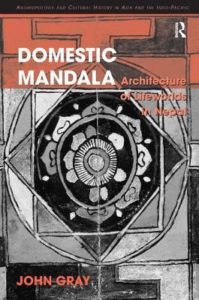
Domestic Mandala: Architecture of Lifeworlds in Nepal PDF - John Gray
John Gray • Horror novels • 243 Pages
(0)
Quate
Review
Save
Share
Book Description
Domestic Mandala: Architecture of Lifeworlds in Nepal by John Gray
Domestic Mandala: Architecture of Lifeworlds in Nepal by John Gray is a thoughtful and richly detailed study of how architecture, ritual, daily life, and cosmology come together inside the domestic world of Nepal. Rather than treating the house simply as a physical structure, Gray explores it as a meaningful social and sacred space: a place where people live, cook, marry, worship, organize relationships, mark purity and impurity, and understand their position within a larger cosmic order. Centered on the domestic architecture and everyday practices of high-caste Chhetris in Kholagaun, Nepal, the book offers an anthropological reading of the home as a mandala, a spatial form that can be understood as both a map of the cosmos and a practical setting for lived experience. (Routledge)
A Study of Home, Space, and Sacred Order
At the heart of Domestic Mandala is a powerful idea: domestic space is not passive. The house is not merely a backdrop for family life, nor is architecture only a matter of materials, rooms, walls, and orientation. In Gray’s analysis, the Chhetri house becomes an active form through which people encounter and reproduce cultural knowledge. The arrangement of the house, the positioning of activities, the organization of movement, and the rituals associated with construction and marriage all help create a domestic world in which social life and sacred meaning are closely intertwined.
This makes the book especially valuable for readers interested in anthropology of architecture, Nepalese culture, Hindu domestic ritual, material culture, and the study of how built environments shape human experience. Gray’s approach shows how architecture can be read not only as design, but also as practice, memory, ritual, and embodied knowledge. The home becomes a place where cosmology is not just believed or represented, but lived through repeated action.
The Chhetri House as a Domestic Mandala
The title’s key concept, the domestic mandala, gives the book its central interpretive frame. A mandala is often associated with sacred diagrams, cosmic order, and symbolic arrangement. Gray applies this concept to the Chhetri house, showing how the orientation, layout, and everyday use of domestic space can generate a meaningful relationship between household life and the wider universe. The house and its compound are examined as ordered spaces, where direction, center, boundary, inclusion, exclusion, purity, and ritual significance all matter. (Routledge)
This focus allows Domestic Mandala: Architecture of Lifeworlds in Nepal to move beyond a simple description of traditional houses. Gray is interested in how spatial order becomes experiential order. The reader is invited to see how domestic architecture can guide movement, shape relationships, frame gendered and ritual roles, and reveal the deeper tensions of life as a householder. In this sense, the book is not only about buildings in Nepal; it is also about how people make worlds through the spaces they inhabit.
Architecture, Ritual, and Everyday Practice
One of the book’s strengths is its attention to both the ordinary and the sacred. Gray does not separate daily activities from ritual meaning. Cooking, dwelling, entering, leaving, building, arranging, and performing rites are all part of the same domestic field. The house is formed materially through construction, ritually through consecration and auspicious timing, and socially through the practices of those who live within it. This gives the study a layered quality: the reader sees the house as design, as sacred form, as social environment, and as a living structure of meaning.
The book also explores how domestic rituals contribute to the creation and appropriation of space. Construction rituals help bring the house into being as an auspicious dwelling, while marriage rituals reveal how household space is tied to kinship, continuity, and transformation. These themes make the work particularly relevant for readers studying ritual studies, South Asian anthropology, domestic religion, vernacular architecture, and the relationship between religious ideas and everyday life.
A Rich Contribution to Nepal Studies and Social Anthropology
For students and researchers of Nepal, Domestic Mandala provides a focused ethnographic account of Chhetri domestic life in Kholagaun. Its value lies in the way it connects specific cultural practices to broader theoretical questions. How does architecture organize experience? How do people learn cosmology through movement and routine? How can a house become both a physical dwelling and a revelatory structure? These questions give the book significance beyond its immediate ethnographic setting.
Scholarly reviews have recognized the book as an important contribution to the study of domestic architecture and lived space, especially because it brings together ethnographic detail with theoretical reflection on perception, practice, and the built environment. Review discussions emphasize Gray’s analysis of the house as a space that not only represents cosmology but also helps produce and reveal it through embodied domestic activity. (Wiley Online Library)
Reading Experience and Academic Value
Although Domestic Mandala: Architecture of Lifeworlds in Nepal is an academic work, its subject has a broad appeal for readers who want to understand how homes carry cultural meaning. The book is suitable for advanced students, scholars, architects, anthropologists, historians of religion, and readers interested in Himalayan societies. It will be especially useful for those exploring Nepalese domestic architecture, Chhetri culture, Hindu spatial symbolism, household ritual, and the anthropology of space.
Gray’s writing invites careful reading because the book works on several levels at once. It describes a particular community and its houses, but it also asks larger questions about dwelling, sacred order, and the relationship between material form and human understanding. Readers interested in theory will find connections to practice, phenomenology, embodiment, and material culture, while readers focused on Nepal will find a detailed account of how domestic life is organized through space and ritual.
Why Domestic Mandala Matters
The lasting importance of Domestic Mandala lies in its insistence that the home is a profound cultural form. In many studies, architecture is treated as either a technical subject or a symbolic object. Gray’s work shows that domestic architecture is also a lived process. A house is built, entered, used, purified, transformed, and remembered. Its meaning emerges not only from what it looks like, but from what people do within it and how those actions connect the household to wider moral and cosmic orders.
For readers searching for a serious and insightful book on architecture in Nepal, lifeworlds in anthropology, or the cultural meaning of domestic space, John Gray’s study offers a distinctive perspective. It reveals the Chhetri house as a place where social relations, ritual obligations, spatial design, and cosmological knowledge meet. Through this careful ethnography, the domestic world becomes visible as something far more complex than shelter: it becomes a mandala of lived experience, a structured environment where everyday life and sacred understanding continuously shape one another.
John Gray
John Gray is an American author, relationship counselor, and public speaker best known for the influential relationship book Men Are from Mars, Women Are from Venus. His work has become closely associated with popular psychology, communication advice, emotional understanding, and practical guidance for couples seeking healthier and more compassionate relationships. Gray’s writing style is accessible, direct, and highly practical, which helped his books reach a wide audience beyond academic readers and professional therapists. Rather than presenting relationships as abstract theories, he explains everyday emotional conflicts through familiar situations: one partner wants to talk while the other withdraws, one person offers advice when the other wants empathy, or both partners feel unloved because they express care in different ways. This ability to turn common misunderstandings into simple, memorable frameworks is one of the main reasons John Gray became a recognizable name in self-help and relationship literature.
John Gray gained international fame after the publication of Men Are from Mars, Women Are from Venus in 1992. The book uses the metaphor of men and women coming from different planets to describe how partners may interpret love, stress, intimacy, silence, and support in different ways. Its central message is not that relationships are doomed by difference, but that difference can be understood, respected, and managed through better communication. Gray argues that many conflicts arise not from lack of affection, but from mismatched expectations. One partner may think support means giving solutions, while the other may need listening and emotional validation. One may need private time to recover from stress, while the other may interpret distance as rejection. By naming these patterns in plain language, Gray gave readers a vocabulary for discussing emotional needs without turning every disagreement into blame.
Beyond his most famous title, John Gray has written many books that expand the Mars and Venus approach into dating, marriage, intimacy, parenting, health, and personal growth. Works such as Mars and Venus in the Bedroom, Mars and Venus on a Date, and Children Are from Heaven show his interest in applying relationship principles across different stages of life. His books often emphasize patience, appreciation, emotional timing, and the importance of understanding how people respond to stress. He encourages readers to notice recurring patterns in conversation, to avoid assuming bad intentions, and to communicate needs in a way that invites cooperation rather than defensiveness. These themes made his books especially useful for readers looking for relationship advice that feels concrete rather than abstract.
The global popularity of John Gray’s writing reflects the universal appeal of his subject matter. Love, conflict, attraction, disappointment, and reconciliation are experiences shared across cultures, even when customs and family expectations differ. His books have been translated into numerous languages and have reached readers in many countries, making him one of the most commercially successful relationship authors of the modern era. At the same time, his work has also attracted criticism from readers and scholars who believe that some of his descriptions of gender differences can be too broad or simplified. This debate is part of his wider cultural impact: Gray’s ideas became so familiar that they shaped conversations about relationships far beyond the pages of his books. Whether readers fully agree with his framework or approach it critically, John Gray remains an important figure in the history of self-help writing, known for bringing relationship communication into mainstream discussion and for encouraging couples to replace accusation with curiosity, patience, and mutual understanding.
Earn Rewards While Reading!
Every 10 pages you read and spent 30 seconds on every page, earns you 5 reward points! Keep reading to unlock achievements and exclusive benefits.
Read
Rate Now
5 Stars
4 Stars
3 Stars
2 Stars
1 Stars
Domestic Mandala: Architecture of Lifeworlds in Nepal Quotes
Top Rated
Latest
Quate
Be the first to leave a quote and earn 10 points
instead of 3
Other books by John Gray
'%20/%3e%3c/svg%3e "Mars and Venus in the Bedroom : A Guide to Lasting Romance and Passion")
John Gray.
Human Development
(0)
4800
English
Comments
Be the first to leave a comment and earn 5 points
instead of 3