

The source of the book
This book is published for the public benefit under a Creative Commons license, or with the permission of the author or publisher. If you have any objections to its publication, please contact us.
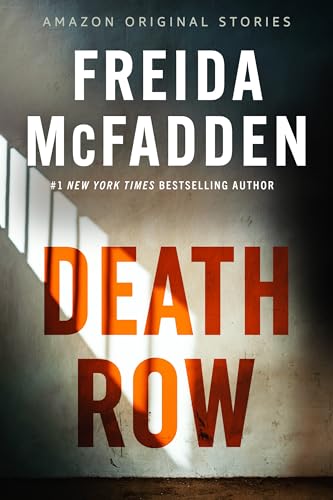
Death Row PDF - Freida McFadden
Freida McFadden • short stories • 74 Pages
(0)
Author
Freida McFaddenCategory
literatureSection
Number Of Downloads
1
Number Of Reads
81
File Size
1.40 MB
Views
108
Quate
Review
Save
Share
Book Description
Death Row by Freida McFadden is a tense, fast-paced psychological thriller short story built around one terrifying question: what happens when a woman condemned for murder begins to believe the man she supposedly killed may still be alive? Published as Book 1 of the Alibis Collection, this compact suspense story brings together the author’s trademark ingredients: a shocking premise, a trapped protagonist, a ticking clock, and a mystery that turns certainty into doubt. The book was published by Amazon Original Stories on June 1, 2025, and is available in ebook and audiobook formats.
At the center of the story is Talia Kemper, a woman sitting on death row after being convicted of murdering her husband. From the beginning, her situation feels deeply unsettling because her conviction does not rest on the kind of simple certainty readers might expect. Talia insists she is innocent, and the case around her seems filled with troubling questions: she had an alibi, no clear motive, and a voice that no one has been willing to believe. As the date of her execution moves closer, the story creates immediate pressure, placing the reader inside a nightmare where time is running out and truth may arrive too late.
A Psychological Thriller Built on Doubt, Fear, and Urgency
The strength of Death Row lies in the way it turns a legal sentence into a psychological prison. Talia is not simply waiting for a verdict; she is waiting for death, surrounded by a system that has already decided who she is and what she has done. This gives the story an intense emotional charge. Readers are pulled into her fear, frustration, and desperation as she continues to claim innocence in a world that has stopped listening. The suspense does not come only from whether she can escape execution, but from whether reality itself is as stable as it appears.
The central twist begins when Talia sees a man in the visiting area whom she believes she recognizes as her husband. If she is right, then the man she was convicted of killing may not be dead. That single moment changes the shape of the story completely. What first appears to be a prison thriller becomes a mystery about identity, truth, memory, and credibility. The question is no longer only whether Talia committed a crime, but whether anyone will believe her before it is too late. This makes the book especially appealing for readers who enjoy psychological suspense, domestic thriller fiction, legal tension, and stories where one impossible detail forces the entire plot to shift.
Freida McFadden’s Signature Suspense in a Short Read
Freida McFadden is widely known for psychological thrillers that move quickly, rely on sharp hooks, and keep readers questioning the people and events in front of them. Her official biography describes her as a bestselling author of psychological thrillers and medical humor novels, with works translated into more than forty-five languages. She has also received major recognition in the thriller genre, including the International Thriller Writers Award for Best Paperback Original and the Goodreads Choice Award for Best Thriller.
In Death Row, McFadden’s style is especially effective because the short format leaves no room for unnecessary delay. Every scene must deepen the pressure. Every piece of information must either raise suspicion or complicate the reader’s understanding of Talia’s situation. The result is a story designed to be read or listened to in one sitting, which matches the concept of the Alibis Collection, a group of short stories about lies, truth, deception, and what people can get away with.
McFadden’s writing often works by taking an ordinary fear and making it extreme. In Death Row, the fear is not only death, but disbelief. Talia’s greatest obstacle is not simply the prison, the law, or the clock; it is the terrifying possibility that the truth can exist and still fail to save her. This theme gives the story a strong emotional hook. Many thrillers ask who is lying, but this story also asks what happens when telling the truth is not enough.
Themes of Innocence, Alibi, and the Fragility of Truth
As the title suggests, Death Row is shaped by confinement, judgment, and finality. Yet the deeper tension comes from uncertainty. Talia’s alibi should matter. Her lack of motive should matter. Her repeated claims of innocence should matter. But in the world of the story, none of these details has been enough to change her fate. This creates a dark and gripping reading experience, especially for fans of stories about wrongful conviction, unreliable evidence, hidden motives, and the frightening gap between legal certainty and actual truth.
The book also fits naturally within the broader appeal of domestic psychological thrillers. Although the setting includes prison and the legal system, the emotional center of the story is a marriage and a death that may not be what they seem. McFadden uses the intimate bond between husband and wife as the foundation for a larger mystery. The result is a thriller that feels both personal and high-stakes: the truth about one relationship may determine whether a woman lives or dies.
Because Death Row is a short story, it is particularly suited to readers who want a complete thriller experience without committing to a full-length novel. It offers the core pleasures readers expect from Freida McFadden: a bold setup, a vulnerable narrator, rapid escalation, and the sense that every assumption may be dangerous. The audiobook edition, narrated by Lauryn Allman, is listed as unabridged with a runtime of 1 hour and 44 minutes, making it a strong choice for readers who enjoy compact suspense in audio form.
Who Should Read Death Row?
Death Row is an ideal choice for readers who enjoy short psychological thrillers, mystery stories with twists, suspenseful legal premises, and fiction centered on secrets, deception, and desperate last chances. It will especially appeal to fans of Freida McFadden’s quick pacing and twist-driven storytelling, as well as readers looking for a thriller that can be finished in a single sitting. The story’s premise is simple enough to grasp immediately, but powerful enough to create constant tension: a woman is about to die for murdering a man who may still be alive.
This book also suits readers who are drawn to stories about characters no one believes. Talia’s situation creates a strong emotional connection because her fear is not abstract. She is facing the ultimate consequence while trying to convince others that the truth has been missed. That sense of urgency gives the story its momentum and makes the reader want to know how far she can go, what can still be uncovered, and whether the truth can arrive before the clock runs out.
A Sharp and Gripping Short Thriller
Death Row by Freida McFadden delivers a concentrated dose of suspense, mystery, and psychological tension. It uses the pressure of an approaching execution to explore doubt, credibility, guilt, and the dangerous power of a story that everyone believes except the person at its center. As part of the Alibis Collection, it stands as a compact thriller about truth and deception, designed for readers who want a fast, unsettling, and twist-filled reading experience. For anyone searching for a short Freida McFadden book with a dramatic premise and immediate suspense, Death Row offers a gripping entry point into the author’s world of secrets, fear, and unexpected revelations.
Freida McFadden
Freida McFadden is an American author best known for psychological thrillers, domestic suspense, mystery fiction, and fast-paced novels built around secrets, deception, and startling twists. She writes under the name Freida McFadden, while her real name, Sara Cohen, became public after years of reader curiosity about the identity behind the bestselling pen name. Her background is unusually distinctive because she is not only a novelist but also a physician who specializes in brain injury and brain disorders, a professional experience that gives many of her stories a sharp awareness of fear, memory, perception, and the fragile line between trust and suspicion. Her official biography and publisher profiles describe her as a number one bestselling author whose books have appeared on major bestseller lists, won the International Thriller Writers Award for Best Paperback Original and the Goodreads Choice Award for Best Thriller, and have been translated into more than forty languages.
What makes Freida McFadden especially recognizable is her ability to turn ordinary places into sources of dread. Her novels often begin with situations that feel familiar: a new job, a marriage, a locked room, a suburban home, a patient, a colleague, a neighbor, or a person trying to start over. From that accessible beginning, she gradually reveals layers of manipulation, hidden motives, buried trauma, and moral uncertainty. This approach has made her a favorite among readers who enjoy psychological suspense, twisty thrillers, domestic secrets, unreliable narrators, and stories where every chapter raises a new question. Her books are not usually slow literary mysteries; they are designed to pull the reader forward, making each page feel connected to a larger secret waiting to be exposed.
Among her most widely known works are The Housemaid, The Housemaid’s Secret, The Housemaid Is Watching, Never Lie, The Locked Door, The Inmate, Ward D, The Coworker, The Teacher, The Boyfriend, The Tenant, and The Intruder. The Housemaid became a defining title in her career because it introduced many readers to her signature blend of claustrophobic setting, social tension, domestic unease, and dramatic reversal. The success of that novel helped establish her as a major name in contemporary commercial thriller fiction, especially among readers who want accessible storytelling, short chapters, fast escalation, and endings that force them to reconsider what they believed about the characters.
McFadden’s style is direct, energetic, and intensely readable. She tends to favor clear sentences, quick scenes, and narrative momentum over dense description. This gives her books a strong page-turning quality and makes them especially appealing to readers who want suspense that begins quickly and keeps moving. At the same time, her stories often explore deeper anxieties: the fear of not being believed, the danger of trusting the wrong person, the pressure of secrets inside families, the social masks people wear, and the psychological consequences of being trapped in a situation with no obvious escape. Her medical background adds another layer to this tension, particularly in books involving hospitals, memory, mental instability, or the unsettling uncertainty of whether a character can trust their own mind.
A key part of her appeal is her understanding of reader expectation. Freida McFadden knows that fans of psychological thrillers want surprise, but they also want emotional stakes. Her plots often work because the suspense is tied to recognizable human fears: losing a home, losing a child, being framed, being watched, being lied to, or discovering that the person closest to you is not who they appeared to be. She writes stories that can be enjoyed for entertainment, but they also tap into the discomfort of modern life, where safety, identity, and truth can all feel unstable. This balance between entertainment and unease has helped her books spread widely through book clubs, online recommendations, audiobook platforms, and reader communities.
In the larger landscape of contemporary thrillers, Freida McFadden stands out as an author who combines professional discipline, medical insight, and a precise instinct for suspense. Her novels are popular because they are easy to enter, difficult to put down, and structured around the pleasure of discovery. She gives readers the feeling that every detail might matter, every character might be hiding something, and every calm scene might be preparing the next shock. For anyone looking for modern psychological thrillers with domestic tension, fast pacing, readable prose, and memorable twists, Freida McFadden has become one of the most important and widely read names in the genre.
Earn Rewards While Reading!
Every 10 pages you read and spent 30 seconds on every page, earns you 5 reward points! Keep reading to unlock achievements and exclusive benefits.
Read
Rate Now
5 Stars
4 Stars
3 Stars
2 Stars
1 Stars
Death Row Quotes
Top Rated
Latest
Quate
Be the first to leave a quote and earn 10 points
instead of 3
'%20/%3e%3c/svg%3e "The Housemaid")
Comments
Be the first to leave a comment and earn 5 points
instead of 3