

The source of the book
This book is published for the public benefit under a Creative Commons license, or with the permission of the author or publisher. If you have any objections to its publication, please contact us.
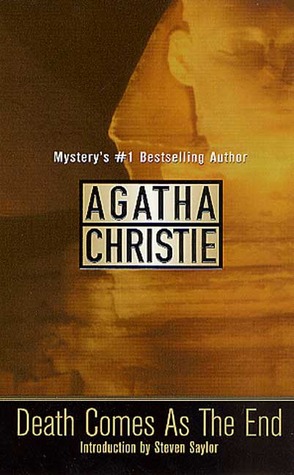
Death Comes as the End PDF - Agatha Christie
Agatha Christie • Crime novels and mysteries • 230 Pages
(0)
Quate
Review
Save
Share
Book Description
Death Comes as the End by Agatha Christie: A Unique Historical Mystery of Murder, Family Secrets, and Ancient Egypt
Death Comes as the End by Agatha Christie is one of the most unusual and fascinating novels in Christie’s body of work. Unlike her famous Hercule Poirot and Miss Marple mysteries, this book is a standalone detective story set not in twentieth-century England, but in ancient Egypt. Combining classic Christie plotting with a historical setting, the novel offers readers a distinctive blend of murder mystery, family drama, psychological suspense, and carefully hidden motives. For fans of classic crime fiction, historical mysteries, and Agatha Christie novels that explore a different side of her imagination, Death Comes as the End is a memorable and atmospheric reading experience.
The story is set in an Egyptian household thousands of years in the past, where Renisenb, a young widow, returns to her family home after the death of her husband. At first, the home appears familiar, filled with relatives, servants, routines, and old relationships. Yet Renisenb gradually realizes that the household is not as peaceful as memory made it seem. Beneath the surface are rivalries, resentments, jealousy, greed, and emotional wounds that have been waiting to emerge. When death enters the family circle, what once seemed like a private domestic world becomes a place of fear and suspicion.
A Standalone Agatha Christie Mystery with a Historical Setting
One of the most striking qualities of Death Comes as the End is its setting in ancient Egypt. Agatha Christie moves away from drawing rooms, country houses, trains, villages, and modern police investigations, choosing instead a world of temples, estates, family duty, inheritance, servants, and ancient social customs. This historical background gives the novel a special atmosphere while still preserving the essential pleasures of a Christie mystery: a limited circle of suspects, hidden motives, shifting suspicion, and a carefully constructed solution.
The ancient Egyptian setting is not simply decoration. It shapes the way characters live, speak, fear, obey, and judge one another. The household structure, the importance of property, the authority of the father, and the tensions between wives, children, servants, and dependents all become part of the mystery. Readers who enjoy historical crime novels will find this aspect especially appealing, because the book combines the suspense of a murder investigation with the feeling of entering a distant civilization.
A Family Mystery Filled with Suspicion
At the heart of Death Comes as the End is a family under pressure. Christie was always skilled at showing how murder can grow from ordinary human emotions, and this novel uses that talent in a particularly intense way. The family home may seem secure from the outside, but inside it is filled with competition, resentment, fear, and unspoken anger. Each character has a role in the household, yet each may also have a private desire or grievance.
This makes the novel a strong example of a family secrets mystery. The danger does not come from an unknown stranger entering the story from outside. It comes from within the domestic circle itself. The people closest to one another may also be the people with the strongest motives. Christie uses this enclosed world to create tension, showing how suspicion can poison every relationship once murder becomes possible. A glance, a word, a silence, or a small act of defiance may suddenly seem important.
Renisenb and the Awakening of Suspicion
Renisenb is an important central figure because she returns to her family home with memories of childhood comfort, only to discover that the place has changed—or perhaps that she had never fully understood it before. Through her eyes, the reader experiences the gradual darkening of the household atmosphere. What begins as recognition slowly becomes unease. She must learn to see the people around her not only as family members, but as individuals capable of secrecy, selfishness, cruelty, or fear.
This emotional perspective gives the novel more than a simple puzzle structure. Renisenb’s journey is also one of growing awareness. She begins to understand that home is not always safe, that affection may be mixed with resentment, and that people can hide dangerous truths behind familiar faces. Her position makes the mystery feel intimate and personal. The reader is not merely watching an investigation; the reader is watching a woman’s understanding of her own world change under the pressure of violence.
Murder, Jealousy, and Hidden Motives
Like many of Agatha Christie’s best mysteries, Death Comes as the End is driven by motive. The novel explores jealousy, inheritance, authority, desire, family loyalty, and emotional dependence. The arrival of a disruptive figure into the household intensifies existing tensions, exposing weaknesses that were already present. Christie shows how a family can appear stable only because certain truths have been suppressed, and how quickly that stability can collapse when one person threatens the balance.
The mystery is especially effective because the motives feel human rather than artificial. People want security, love, money, respect, freedom, and power. Some want to protect their position; others want to escape humiliation or control. Christie understands that murder often begins long before the act itself, in thoughts, resentments, and private calculations. This psychological depth makes the novel appealing to readers who enjoy classic detective fiction with strong character drama.
Ancient Egypt as a World of Beauty and Danger
The atmosphere of Death Comes as the End is one of its strongest features. Christie creates a world that feels beautiful, distant, and dangerous at the same time. The setting includes the rhythms of daily life, the presence of religion and ritual, the importance of social order, and the closeness of household relationships. Yet behind this historical texture lies a very familiar Christie theme: evil can exist anywhere, in any period, because human nature does not change.
This is one of the reasons the novel remains distinctive. Although the setting is ancient, the emotions are recognizable. Greed, jealousy, pride, fear, and resentment belong to no single time or place. Christie uses the past to show the timeless nature of crime. The result is a mystery that feels both unusual and familiar: unusual in its historical world, familiar in its sharp observation of people and their secrets.
A Different Side of Agatha Christie’s Talent
Death Comes as the End is valuable for readers who want to explore Agatha Christie beyond her most famous detectives. There is no Poirot to organize the investigation with his little grey cells, and no Miss Marple to compare the crime to village life. Instead, Christie builds suspense through atmosphere, character, and the slow tightening of fear inside one household. The absence of a familiar detective gives the novel a different rhythm and makes the reader feel more directly trapped within the family’s uncertainty.
This standalone structure also shows Christie’s confidence as a storyteller. She does not rely on a recurring detective to carry the book. Instead, she creates a complete world with its own customs, conflicts, and emotional pressures. The mystery unfolds from within that world, making the crimes feel connected to the household’s structure and tensions. For readers interested in Agatha Christie standalone novels, this book is one of her most original experiments.
Christie’s Misdirection in a Historical Form
Although the setting is different, Death Comes as the End still contains Christie’s familiar mastery of misdirection. She presents characters who seem suspicious for one reason, sympathetic for another, or harmless until a new detail changes the reader’s view. The enclosed household creates a strong field of suspicion, and Christie carefully shifts attention from one possibility to another. As in her best work, the truth depends on seeing not only who had opportunity, but who had the right motive and emotional capacity.
The historical setting adds another layer to the puzzle because the reader must pay attention to customs, relationships, and household roles that may differ from modern expectations. Yet the mystery remains clear and readable. Christie uses the unfamiliar background to enrich the story, not to confuse it. The result is a detective novel that rewards careful reading while remaining accessible and suspenseful.
Why Readers Enjoy Death Comes as the End
Death Comes as the End remains appealing because it offers something rare within Agatha Christie’s work: a classic murder mystery set in the ancient world. It is ideal for readers who enjoy historical fiction, classic crime novels, family murder mysteries, and stories where psychological tension matters as much as clues. The novel has the structure of a Christie puzzle, but the atmosphere of a historical drama, making it stand apart from her more familiar English village and country-house mysteries.
The book is also a strong choice for readers who want a self-contained story. Since it does not belong to the Poirot or Miss Marple series, it can be read independently without any prior knowledge of Christie’s other novels. At the same time, longtime Christie fans will recognize her distinctive strengths: hidden motives, controlled suspense, sharp character observation, and a final explanation that brings order to fear and confusion.
A Memorable Historical Mystery from the Queen of Crime
Death Comes as the End by Agatha Christie is a unique and atmospheric mystery that transports Christie’s classic crime formula into the world of ancient Egypt. Through the story of Renisenb and her troubled family, the novel explores murder, jealousy, inheritance, emotional control, and the dangers hidden inside a household that appears familiar but is filled with secrets. It is a book about the past, but also about timeless human motives and the darkness that can grow behind closed doors.
For anyone searching for an Agatha Christie historical mystery, a standalone classic crime novel, or a murder mystery with a powerful family atmosphere, Death Comes as the End is an excellent choice. It shows Christie experimenting boldly with setting while preserving the intelligence and suspense that made her one of the most important writers in detective fiction. Dark, unusual, and carefully plotted, it remains one of her most distinctive works and a rewarding read for lovers of classic mystery and historical crime.
Agatha Christie
Agatha Christie is one of the most influential authors in the history of detective fiction, a writer whose name has become almost synonymous with mystery, crime novels, elegant suspense, and the classic art of the carefully constructed puzzle. Born in England and later celebrated around the world, she built a literary career that transformed popular crime writing into a refined form of storytelling based on logic, psychology, timing, and narrative misdirection. Her novels and short stories are admired not only because they entertain, but also because they invite the reader to think, observe, compare clues, and question assumptions. Christie understood that the most effective mystery is not simply a question of who committed the crime, but a study of why people hide, lie, fear exposure, protect secrets, and behave differently under pressure. This combination of intellectual challenge and human insight made her work enduringly popular with readers of many cultures and generations.
Christie is best known for creating two of the most recognizable fictional detectives in world literature: Hercule Poirot and Miss Marple. Hercule Poirot, the meticulous Belgian detective, relies on order, method, and what he famously regards as the power of the mind. He is precise, observant, and often theatrical, yet beneath his distinctive manners lies a sharp understanding of motive and deception. Miss Marple, by contrast, appears gentle, quiet, and rooted in village life, but her understanding of human nature is formidable. She recognizes patterns of jealousy, greed, vanity, resentment, and fear because she has seen similar behavior in ordinary social life. Through these two figures, Christie explored different paths to truth: analytical reasoning on one hand and social observation on the other. Their lasting appeal shows how deeply she understood that detection is not only about evidence, but also about character.
Among Christie’s most famous works are Murder on the Orient Express, And Then There Were None, Death on the Nile, The Murder of Roger Ackroyd, The ABC Murders, and The Mysterious Affair at Styles. Each of these books demonstrates a different aspect of her craft. Murder on the Orient Express uses the enclosed space of a train to create tension, suspicion, and a memorable moral dilemma. And Then There Were None presents isolation, guilt, and fear with extraordinary control, turning a remote setting into a psychological trap. Death on the Nile combines travel, romance, jealousy, and murder in a way that shows Christie’s talent for atmosphere as well as structure. The Murder of Roger Ackroyd is often praised for its bold narrative method and its impact on the conventions of detective fiction. These works continue to attract new readers because they are not merely historical curiosities; they still function as gripping stories with strong pacing, memorable reveals, and carefully planted clues.
Agatha Christie’s style is often described as clear, economical, and highly readable, yet that apparent simplicity hides remarkable technical skill. She rarely wastes a detail. A casual remark, a small object, a shift in tone, or a minor inconsistency may later become essential to the solution. Her plots often depend on the reader looking in the wrong direction, but she usually plays fair by making the truth available before the final explanation. This fairness is one reason her books remain satisfying: the ending feels surprising, but not arbitrary. Christie also had a gift for creating social settings that appear orderly while concealing emotional violence. Country houses, trains, archaeological sites, hotels, boats, and quiet villages become stages on which hidden rivalries and buried histories emerge. Her knowledge of poisons, travel, domestic routines, and social manners helped her create mysteries that feel both theatrical and plausible.
The legacy of Agatha Christie extends far beyond the printed page. Her novels have been translated widely, adapted for stage, film, radio, and television, and continuously reintroduced to new audiences. Her play The Mousetrap became one of the most famous long-running theatrical works in the world, reinforcing her reputation as a master of suspense in dramatic form as well as prose. For book websites, libraries, and readers searching for classic mystery novels, Agatha Christie remains a central author because her work defines many of the expectations associated with detective fiction: the closed circle of suspects, the hidden motive, the unexpected witness, the misleading clue, the final gathering, and the brilliant explanation. Yet her importance is not limited to formula. She gave the mystery genre emotional texture, moral complexity, and a sense of elegant design. Agatha Christie continues to stand as a landmark figure in world literature, a writer whose stories prove that a well-made mystery can be both popular entertainment and a lasting work of narrative intelligence.
Earn Rewards While Reading!
Every 10 pages you read and spent 30 seconds on every page, earns you 5 reward points! Keep reading to unlock achievements and exclusive benefits.
Read
Rate Now
5 Stars
4 Stars
3 Stars
2 Stars
1 Stars
Death Comes as the End Quotes
Top Rated
Latest
Quate
Be the first to leave a quote and earn 10 points
instead of 3
Other books by Agatha Christie
'%20/%3e%3c/svg%3e "Murder on the Orient Express: A Hercule Poirot Mystery")
Agatha Christie.
Crime novels and mysteries
(0)
4570
English
Other books like Death Comes as the End
Jonathan Cahn.
Crime novels and mysteries
(0)
3022
English
Jonathan Cahn.
Crime novels and mysteries
(0)
2682
English
Comments
Be the first to leave a comment and earn 5 points
instead of 3