

The source of the book
This book is published for the public benefit under a Creative Commons license, or with the permission of the author or publisher. If you have any objections to its publication, please contact us.
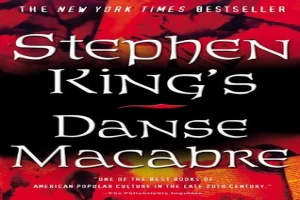
Danse Macabre PDF - Stephen King
Stephen King • Horror novels • 363 Pages
(0)
Author
Stephen KingCategory
literatureSection
Number Of Downloads
103
Number Of Reads
115
File Size
3.11 MB
Views
2,410
Quate
Review
Save
Share
Book Description
Stephen King’s Danse Macabre is a nonfiction book first published in 1981 by Everest House. Written by Stephen King, one of the most influential modern horror authors, the book is both a personal essay and a wide-ranging study of horror across literature, film, radio, television, and comics. Rather than presenting a novel-style plot, Danse Macabre explores how horror works, why audiences seek fear, and how popular nightmares often reflect the social anxieties of their time. King’s official site lists the book as a 1981 nonfiction study of the horror genre, and the first edition publisher is identified as Everest House.
In Danse Macabre, Stephen King examines horror not as a minor entertainment form, but as a serious part of popular culture. The book focuses especially on the period from the 1950s through the 1970s, the era that shaped King as a reader, viewer, and writer. He discusses the monsters, fears, and storytelling patterns that made horror powerful during those decades. The title itself suggests a “dance of death,” and King uses that idea to move through different examples of fear: haunted houses, vampires, werewolves, ghosts, mutants, mad scientists, evil children, and ordinary people pushed into terrifying situations.
The book begins with King reflecting on his own relationship with horror. He explains how childhood experiences, early reading, comic books, radio programs, and movies helped form his imagination. This personal approach makes Danse Macabre different from a purely academic study. King writes as a fan, a critic, and a working storyteller. He is interested in why certain images stay in the mind and why horror can be both disturbing and comforting. For him, horror allows readers and viewers to confront fear in a controlled space, turning private anxiety into shared experience.
A major part of Danse Macabre is King’s discussion of horror fiction. He considers classic works and authors that influenced the genre, including nineteenth- and twentieth-century supernatural writing. He also looks closely at modern books that changed the way horror was written and marketed. King does not treat horror as one fixed category. Instead, he shows how it overlaps with fantasy, science fiction, suspense, and psychological drama. His comments often connect the emotional effect of a story with the historical moment that produced it.
King also devotes significant attention to horror on screen. He writes about films and television programs that shaped American fear, from low-budget creature features to more serious supernatural and psychological works. He is especially interested in how horror changes when it moves from page to screen. A book can create dread through language and imagination, while film uses faces, sound, editing, shadows, and sudden visual shocks. King’s analysis helps readers understand why some horror images become cultural landmarks even when the films themselves are imperfect.
Another important theme in Danse Macabre is the link between horror and society. King argues that monsters often represent larger fears: nuclear war, disease, social breakdown, political distrust, changing family structures, violence, and the unknown future. The horror genre, in his view, records what a culture is afraid of, sometimes more honestly than respectable mainstream fiction. A monster movie or ghost story may seem simple on the surface, but beneath it lies a record of public anxiety.
Because Danse Macabre is nonfiction, its “summary” is not a sequence of plot events but a map of ideas. King guides the reader through horror’s major forms, explains his personal standards for what makes horror effective, and reflects on why fear remains attractive. The book combines memoir, criticism, recommendation, and cultural history. It also gives insight into King’s own fiction, because many of the ideas he explores here appear throughout his novels and short stories: childhood terror, ordinary towns hiding darkness, the return of buried fears, and the thin line between imagination and reality.
Overall, Danse Macabre by Stephen King is an essential book for readers interested in horror literature, scary movies, and the cultural meaning of fear. Published in 1981 by Everest House, it remains valuable because it captures King’s view of the genre during an important stage of his career. The book is not just about monsters; it is about why people invent them, why they survive, and why audiences continue to follow them into the dark.
Stephen King
Stephen King is an American author best known for his contributions to the horror, supernatural fiction, and suspense genres. He was born in Portland, Maine in 1947 and began his writing career as a teenager, submitting short stories to various magazines. After graduating from college, King worked as a teacher while continuing to write in his spare time. His breakthrough novel, "Carrie," was published in 1974 and became a bestseller, launching his career as a full-time writer.
King is known for his prolific output, having written over 60 novels and 200 short stories throughout his career. Many of his books have been adapted into successful films and TV series, such as "The Shining," "It," and "The Stand." He has also won numerous awards for his work, including the Bram Stoker Award, the World Fantasy Award, and the National Medal of Arts.
King's writing style is characterized by his ability to create vivid and often terrifying imagery, as well as his focus on exploring the darkest aspects of the human psyche. He has tackled a wide range of subjects in his work, from the supernatural and the paranormal to more grounded themes such as addiction, family dynamics, and the struggles of everyday life.
Despite his success, King has also faced criticism for the often graphic and violent content of his work. Nevertheless, he remains one of the most popular and influential writers of his generation, with legions of fans around the world eagerly awaiting his next release.
In addition to his writing, King has also been an advocate for various causes, including freedom of expression and gun control. He has been active on social media, often sharing his thoughts on current events and engaging with his fans.
Earn Rewards While Reading!
Every 10 pages you read and spent 30 seconds on every page, earns you 5 reward points! Keep reading to unlock achievements and exclusive benefits.
Read
Rate Now
5 Stars
4 Stars
3 Stars
2 Stars
1 Stars
Danse Macabre Quotes
Top Rated
Latest
Quate
Be the first to leave a quote and earn 10 points
instead of 3
'%20/%3e%3c/svg%3e "Carrie")
Comments
Be the first to leave a comment and earn 5 points
instead of 3