

The source of the book
This book is published for the public benefit under a Creative Commons license, or with the permission of the author or publisher. If you have any objections to its publication, please contact us.
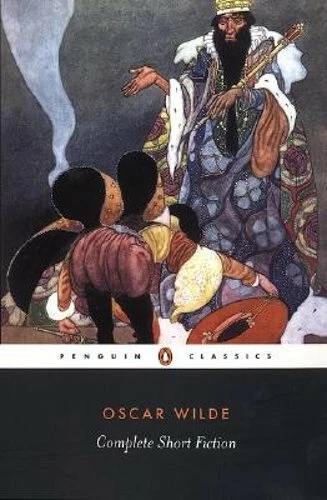
Complete Shorter Fiction PDF - Oscar Wilde
Oscar Wilde • Fantasy novels • 367 Pages
(0)
Quate
Review
Save
Share
Book Description
Complete Shorter Fiction by Oscar Wilde brings together the full range of Oscar Wilde’s celebrated shorter narrative works, offering readers a vivid journey into one of the most brilliant literary voices of the late nineteenth century. Known for his razor-sharp wit, elegant prose, and deep understanding of human nature, Wilde transforms even the shortest story into a layered exploration of beauty, morality, irony, and social commentary. This collection is an essential entry point into Wilde’s fictional world, showcasing the richness of his imagination beyond his famous plays and novel The Picture of Dorian Gray.
Oscar Wilde remains one of the most quoted and admired writers in English literature, and his shorter fiction captures the essence of his genius in concentrated form. These stories combine fairy tale tradition, philosophical reflection, and satirical critique of Victorian society, making them as relevant today as when they were first written. Readers will find themselves moving between tenderness and irony, innocence and darkness, humor and tragedy—often within the same narrative.
The Literary World of Oscar Wilde
Oscar Wilde’s shorter fiction is deeply rooted in the aesthetic movement, which emphasized art for art’s sake and the pursuit of beauty as a guiding principle in life and literature. However, Wilde’s stories go beyond simple aestheticism. Beneath their polished surfaces lies a powerful critique of social hypocrisy, class inequality, and moral rigidity.
In works such as The Happy Prince, The Selfish Giant, and The Nightingale and the Rose, Wilde uses the structure of fairy tales to explore themes of sacrifice, love, and redemption. These stories appear simple at first glance, often featuring talking animals, princes, or symbolic characters, but they carry emotional depth that resonates with both younger and adult audiences. The blend of childlike storytelling with philosophical undertones is one of Wilde’s most distinctive achievements.
At the same time, Wilde’s more satirical tales reveal his sharp observational skills and his ability to expose the absurdities of high society. His fiction often highlights the gap between outward respectability and inner moral emptiness, using humor and irony as tools of critique. This duality—gentle storytelling paired with intellectual sharpness—is what makes Wilde’s shorter fiction enduringly powerful.
Themes and Symbolism in Wilde’s Short Fiction
One of the most striking features of Oscar Wilde’s short stories is their rich use of symbolism. Every character, setting, and event often carries a deeper meaning. The Happy Prince, for example, is not just a statue but a symbol of self-sacrifice and compassion. The Swallow becomes a representation of loyalty and love that transcends physical limits. Through such characters, Wilde constructs moral landscapes that invite readers to reflect on human values.
Love, in Wilde’s fiction, is rarely simple. It is often portrayed as noble and selfless, but also tragic and unattainable. In The Nightingale and the Rose, love becomes a force that demands ultimate sacrifice, raising questions about whether idealized romantic devotion is truly meaningful in a harsh and indifferent world.
Another recurring theme is the contrast between appearance and reality. Wilde frequently challenges the idea that outward beauty or social status reflects inner worth. Characters who appear perfect or privileged are often revealed to be morally flawed, while those who are humble or overlooked display true generosity and depth.
Social criticism also plays a central role in these stories. Wilde subtly critiques Victorian society’s obsession with wealth, reputation, and rigid moral codes. His stories often expose the cruelty hidden beneath polite social behavior, encouraging readers to question accepted norms.
Reading Experience and Style
Reading Complete Shorter Fiction by Oscar Wilde is a uniquely immersive experience. Wilde’s writing style is elegant yet accessible, filled with lyrical descriptions, witty dialogue, and carefully crafted sentences that often feel like miniature works of art. His use of language is both decorative and purposeful, designed to create emotional impact while also conveying philosophical meaning.
The tone of the collection shifts frequently, moving from whimsical and lighthearted to deeply emotional or even tragic. This variation keeps the reader engaged while also reflecting the complexity of Wilde’s worldview. Even in stories that appear simple or moralistic, there is often an undercurrent of ambiguity that encourages deeper reflection.
Wilde’s storytelling also benefits from its rhythmic quality. Many of his stories read almost like spoken tales, echoing the tradition of oral storytelling while maintaining a refined literary structure. This makes the collection appealing to a wide range of readers, from those interested in classic literature to those seeking emotionally resonant short fiction.
Audience and Appeal
This collection appeals to a broad audience, including students of English literature, fans of classic fiction, and readers interested in philosophical storytelling. It is particularly valuable for those studying Victorian literature, as it provides insight into the cultural and intellectual environment of the late nineteenth century.
For younger readers, Wilde’s fairy tales offer accessible entry points into literary fiction, combining imaginative storytelling with meaningful life lessons. For adult readers, the stories reveal deeper layers of irony, social critique, and emotional complexity.
Educators and literary scholars also value Wilde’s shorter fiction for its rich thematic content and stylistic brilliance. Each story can be analyzed from multiple perspectives—literary, philosophical, historical, and cultural—making it a versatile text for academic study.
The Enduring Legacy of Wilde’s Short Fiction
Oscar Wilde’s influence on literature extends far beyond his lifetime, and his shorter fiction continues to be widely read, adapted, and studied across the world. His ability to merge beauty with critique, simplicity with depth, and humor with tragedy has ensured that his stories remain relevant across generations.
The emotional resonance of stories like The Happy Prince continues to move readers, while the satirical edge of his more critical tales remains strikingly modern. Wilde’s exploration of identity, morality, and societal expectation speaks to contemporary concerns just as much as it did in the Victorian era.
Ultimately, Complete Shorter Fiction by Oscar Wilde stands as a testament to the power of storytelling. It captures the full range of Wilde’s literary talent, from tender moral fables to sharp social satire, offering readers a complete portrait of one of literature’s most fascinating and influential writers.
Oscar Wilde
Oscar Wilde (1854-1900) was an Irish playwright, poet, and novelist who is widely regarded as one of the greatest writers of the Victorian era. He was born in Dublin, Ireland, and educated at Trinity College, Dublin, and Magdalen College, Oxford. Wilde was a flamboyant figure in Victorian society, known for his wit, dandyism, and homosexuality, which was then considered a crime.
Wilde's literary career began in the 1880s, when he gained popularity with his comedic plays, including "Lady Windermere's Fan," "A Woman of No Importance," and "The Importance of Being Earnest." These plays were known for their clever wordplay, social commentary, and satirical portrayal of Victorian society.
In addition to his plays, Wilde also wrote novels, including "The Picture of Dorian Gray," which tells the story of a beautiful young man who makes a Faustian pact to remain young and beautiful while his portrait ages and becomes ugly. The novel caused controversy when it was first published in 1890 because of its decadent themes and homoerotic undertones.
Despite his literary success, Wilde's personal life was tumultuous. In 1895, he was convicted of homosexual acts and sentenced to two years of hard labor. The trial and subsequent imprisonment destroyed his reputation and health, and he died in Paris in 1900, at the age of 46.
Wilde's legacy lives on through his works, which continue to be celebrated for their wit, humor, and social commentary. His writing has influenced generations of writers, and his plays continue to be performed and adapted for film and television. Today, Wilde is remembered not only as a great writer, but also as a symbol of resistance against Victorian moralism and hypocrisy.
Earn Rewards While Reading!
Every 10 pages you read and spent 30 seconds on every page, earns you 5 reward points! Keep reading to unlock achievements and exclusive benefits.
Read
Rate Now
5 Stars
4 Stars
3 Stars
2 Stars
1 Stars
Complete Shorter Fiction Quotes
Top Rated
Latest
Quate
Be the first to leave a quote and earn 10 points
instead of 3
Other books by Oscar Wilde
Other books like Complete Shorter Fiction
'%20/%3e%3c/svg%3e "Fantastic Beasts: The Crimes of Grindelwald - the Original Screenplay")
J. K. Rowling.
Fantasy novels
(0)
7574
English
Comments
Be the first to leave a comment and earn 5 points
instead of 3