

The source of the book
This book is published for the public benefit under a Creative Commons license, or with the permission of the author or publisher. If you have any objections to its publication, please contact us.
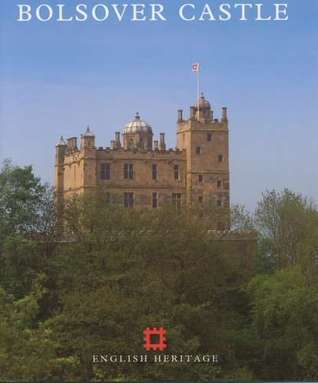
Bolsover Castle PDF - Lucy Worsley
Lucy Worsley • Literary articles • 27 Pages
(0)
Quate
Review
Save
Share
Book Description
Bolsover Castle by Paul Drury: An Illuminating Guide to One of England’s Most Distinctive Historic Sites
Bolsover Castle by Paul Drury is a richly informative English Heritage guidebook that introduces readers to one of Derbyshire’s most memorable historic landmarks. Published as a paperback guidebook, this compact yet detailed volume explores the story of Bolsover Castle as both a medieval site and a spectacular 17th-century aristocratic retreat, making it an ideal choice for readers interested in British history, English castles, heritage architecture, historic houses, and cultural travel. The book is especially valuable for visitors who want to understand the castle before, during, or after a trip, but it also works as an accessible historical introduction for anyone fascinated by the Cavendish family, early modern England, and the layered lives of buildings that have survived centuries of change.
A Guide to the History and Character of Bolsover Castle
This Bolsover Castle guidebook brings together the essential history of a place that is far more unusual than a conventional castle ruin. Perched above the Vale of Scarsdale, Bolsover Castle occupies the site of a medieval fortress, yet its best-known features belong to the early 17th century, when Sir Charles Cavendish began the Little Castle in 1612 as a refined retreat near the family’s principal seat at Welbeck. Rather than presenting the site only as a defensive stronghold, the book helps readers see Bolsover as a place of display, pleasure, architecture, symbolism, hospitality, and aristocratic identity.
At the heart of the guide is the story of the Little Castle, a building designed to evoke the appearance of a Norman tower while functioning as an elegant and imaginative house. Its dramatic position, richly decorated interiors, carved fireplaces, painted rooms, and carefully staged views all contribute to the impression of a building created not simply for shelter, but for meaning. Readers searching for a clear and engaging book about Bolsover Castle history will find that this guide explains how architecture, landscape, politics, family ambition, and artistic taste came together in one remarkable Derbyshire landmark.
The Cavendish Family, Court Culture, and Aristocratic Display
A major strength of Bolsover Castle by Paul Drury is its focus on the Cavendish family and the social world that shaped the site. After Sir Charles Cavendish began the Little Castle, his son William Cavendish inherited it and completed much of its interior character with the help of architect John Smythson. William later became 1st Duke of Newcastle, and his life as a courtier, writer, Royalist, horseman, and patron gives the castle much of its distinctive historical atmosphere. Through this story, the guidebook connects Bolsover not only to local Derbyshire history, but also to the wider world of Stuart England, court entertainment, civil conflict, exile, restoration, and elite cultural performance.
The book is particularly appealing for readers interested in 17th-century England, because Bolsover Castle was not merely a private retreat. It became a stage for aristocratic reception and royal entertainment, including the 1634 visit of King Charles I and Queen Henrietta Maria, when Ben Jonson’s masque Love’s Welcome was performed in the garden. This historical episode gives the castle a vivid theatrical dimension and helps modern readers understand why the building’s decoration, gardens, rooms, and approaches mattered so much. Bolsover was designed to impress, to entertain, and to communicate status, taste, learning, and loyalty.
Architecture, Wall Paintings, and the Experience of Place
For readers drawn to historic architecture and English Heritage sites, this guidebook offers a rewarding introduction to the visual and spatial qualities that make Bolsover Castle exceptional. The Little Castle’s rooms are known for rare early 17th-century wall paintings, including richly decorated private spaces such as the Heaven and Elysium Closets. These interiors invite close attention, because they reveal a world of allegory, religion, mythology, classical references, and personal display. The guide helps readers move beyond a simple appreciation of old walls and ruins toward a deeper understanding of how decoration and architecture worked together to create meaning.
Bolsover Castle also includes the Riding House Range, associated with William Cavendish’s passion for training great horses. English Heritage identifies the Riding House as one of the earliest in England to survive complete, making it an important landmark in the history of British equestrian culture. For readers interested in country houses, aristocratic sport, horse training, and the ceremonial life of the nobility, this aspect of the castle adds another layer to the guidebook’s appeal. It shows Bolsover as a place of performance in more than one sense: a setting for royal entertainment, architectural display, painted symbolism, and refined horsemanship.
Why This Book Appeals to Visitors and History Readers
Bolsover Castle is especially useful for readers who want a clear, compact, and reliable companion to the site. As an English Heritage Red Guide, it is designed to make the history of the place understandable without overwhelming the reader, balancing factual detail with a strong sense of atmosphere. Visitors can use it to identify important buildings, understand the sequence of development, and appreciate details they might otherwise miss, while general readers can enjoy it as a concise introduction to one of England’s most unusual castles.
The guidebook also suits readers who enjoy books about places where history has accumulated in layers. Bolsover Castle began with a medieval foundation, was reimagined through early modern aristocratic ambition, suffered decline, was affected by the industrial landscape after the opening of Bolsover Colliery, and eventually entered the care of English Heritage in 1984. That long arc gives the book a wider historical value: it is not only about construction and ownership, but also about survival, restoration, interpretation, and the changing ways people relate to heritage.
A Concise and Atmospheric Book About a Remarkable Derbyshire Castle
For anyone searching for a book about Bolsover Castle, a Derbyshire castle guide, or a readable introduction to one of the most atmospheric English Heritage properties, Bolsover Castle by Paul Drury offers a strong combination of historical clarity and visual interest. It captures the castle as a place of imagination: part medieval memory, part aristocratic retreat, part theatrical stage, part family monument, and part restored heritage site. The result is a guidebook that helps readers understand why Bolsover Castle continues to fascinate visitors, historians, architecture lovers, and anyone interested in the dramatic relationship between buildings, power, art, and landscape.
Lucy Worsley
Lucy Worsley is a British historian, author, curator, and television presenter known for making history lively, accessible, and strongly connected to ordinary human experience. She was born on 18 December 1973 in Reading, Berkshire, England, and grew up with an interest in old buildings, historic houses, domestic spaces, and the small details that reveal how people lived in earlier periods. Her academic path followed that curiosity. She studied Ancient and Modern History at New College, University of Oxford, and later earned a doctorate in art history from the University of Sussex. This training helped her approach history through buildings, images, objects, rooms, and social habits as well as through written documents. Her early career was connected to historic houses and heritage conservation, where she learned how to protect the past and explain it to modern visitors. She later worked for many years with Britain’s historic royal palaces, focusing on research, collections, exhibitions, and public history. At the end of 2024, she stepped away from her long-standing permanent role there after more than two decades in heritage work. As a writer and presenter, Lucy Worsley has a curious, energetic, detailed, and approachable professional personality. She does not treat history as a remote subject made only of rulers, wars, and official dates. Instead, she looks closely at homes, clothes, food, family habits, social rules, women’s lives, private spaces, and people whose stories were often pushed to the edge of traditional history. Her books and documentaries often explore British history, royal courts, historic houses, women writers, domestic culture, old crimes, social customs, and the relationship between power and everyday life. Her style combines careful research with clear storytelling. She can explain complex subjects without making them heavy, and she presents historical figures as real human beings shaped by ambition, fear, pressure, desire, mistakes, and contradiction. This makes her work educational but also warm and memorable. One of her strengths is that she notices details other writers might pass over: a room arrangement, a dress, a household rule, a letter, a meal, a rumor, or a habit. Through these details, she opens a larger view of society. Lucy Worsley is admired as a public historian because she helps readers and viewers feel that the past is close, understandable, and full of human meaning. Her work shows that history can be found in palaces and archives, but also in kitchens, bedrooms, clothing, manners, family stories, and the private choices that shaped ordinary lives.
Earn Rewards While Reading!
Every 10 pages you read and spent 30 seconds on every page, earns you 5 reward points! Keep reading to unlock achievements and exclusive benefits.
Read
Rate Now
5 Stars
4 Stars
3 Stars
2 Stars
1 Stars
Bolsover Castle Quotes
Top Rated
Latest
Quate
Be the first to leave a quote and earn 10 points
instead of 3
'%20/%3e%3c/svg%3e "Jane Austen at Home")
Comments
Be the first to leave a comment and earn 5 points
instead of 3