

The source of the book
This book is published for the public benefit under a Creative Commons license, or with the permission of the author or publisher. If you have any objections to its publication, please contact us.
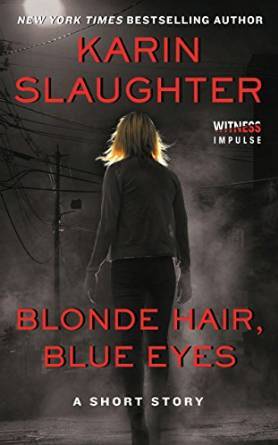
Blonde Hair, Blue Eyes PDF - Karin Slaughter
Karin Slaughter • short stories • 119 Pages
(0)
Quate
Review
Save
Share
Book Description
A Dark Short Thriller About Disappearance, Fear, and the Girl Who Refuses to Look Away
Blonde Hair, Blue Eyes by Karin Slaughter is a gripping crime thriller short story that distills the author’s trademark darkness, emotional pressure, and sharp sense of danger into a compact and unsettling reading experience. Presented as a digital short, the story centers on Julia Carroll, a beautiful and intelligent nineteen-year-old college freshman who should be enjoying the freedom of early adulthood, but instead finds herself increasingly frightened by a pattern of disappearances around her. A fellow student, Beatrice Oliver, has vanished. A homeless woman known as Mona-No-Name is also missing. Both women were taken from the street, and both are gone without a trace. Rather than turn away from the fear spreading around her, Julia becomes determined to understand what is happening before she becomes the next girl whose story begins with a familiar and terrifying sentence. (Karin Slaughter)
A Compact Story with Karin Slaughter’s Signature Intensity
Although Blonde Hair, Blue Eyes is shorter than Karin Slaughter’s major novels, it carries many of the qualities that have made her one of the most recognized names in modern crime fiction. Slaughter is known for writing suspense that does not treat violence as a distant puzzle or a simple plot device. In her work, danger has emotional weight, and every crime leaves behind fear, damage, silence, and consequences. This short story uses a small frame, but it creates a strong atmosphere of vulnerability: a young woman noticing the shape of danger before the people around her fully understand it.
The title itself immediately suggests the way victims can be reduced to descriptions. Blonde hair, blue eyes sounds like a missing-person detail, the kind of phrase repeated in news reports and police summaries until a living person becomes a set of identifying features. Slaughter uses that idea to place Julia in a deeply uncomfortable position. The missing girl in the news reminds Julia of herself, not only because of appearance, but because of age, gender, setting, and the fragile illusion of safety that surrounds young women in public spaces. What begins as concern becomes obsession, and what begins as curiosity becomes a personal confrontation with danger.
Julia Carroll and the Terror of Recognition
Julia is one of the most compelling elements of Blonde Hair, Blue Eyes because she is not written as a passive figure waiting for the plot to happen to her. She is observant, anxious, intelligent, and increasingly unable to ignore the possibility that the disappearances are connected. Her decision to dig deeper, including her interest in writing about the case for her college paper, gives the story a strong investigative drive. She is not a detective in the official sense, but she has the instinct that many people in Slaughter’s fiction possess: the need to keep asking questions when everyone else would rather accept an easier explanation.
That determination creates the story’s tension. Julia wants to know why girls are disappearing, but every step toward the truth brings her closer to the danger she is trying to understand. The result is a thriller built not only on external suspense, but also on psychological pressure. Julia’s fear is not irrational. It grows from patterns she can see, from details that do not feel accidental, and from the knowledge that women often recognize danger before institutions respond to it. This gives Blonde Hair, Blue Eyes a claustrophobic emotional charge, even when the story moves through ordinary spaces.
Missing Women, Hidden Patterns, and the Limits of Safety
One of the most powerful themes in Blonde Hair, Blue Eyes is the difference between being warned and being protected. Julia sees the missing women as more than isolated incidents. Beatrice Oliver is a fellow student, someone whose disappearance feels close to Julia’s own life. Mona-No-Name, by contrast, is a homeless woman, someone society might overlook more easily. By placing these disappearances side by side, Slaughter draws attention to the way vulnerability can cross social lines while public concern does not always fall evenly. The fear is broader than one case, and the danger is more systematic than one frightening headline.
This theme fits naturally within Karin Slaughter’s larger body of work. Her novels often examine the cost of violence, especially violence against women, and the ways trauma can be ignored, misread, or buried until it becomes impossible to deny. In Blonde Hair, Blue Eyes, the reader feels the pressure of that pattern on a smaller scale. There is no need for excessive exposition; the premise itself is enough to create dread. Girls are disappearing. People are vanishing from the street. Julia notices. And once she notices, she cannot return to the carefree life she is supposed to be living.
A Strong Entry Point into Slaughter’s Darker Fiction
For readers who know Karin Slaughter through books such as Pretty Girls, Pieces of Her, The Good Daughter, the Grant County novels, or the Will Trent series, Blonde Hair, Blue Eyes offers a concentrated dose of her suspense style. Slaughter’s official biography describes her as a number one bestselling author of more than twenty-five novels, published in one hundred and twenty countries, with more than forty million copies sold worldwide. That reputation comes from her ability to combine crime plotting with emotional intensity, and this shorter work shows how effectively she can create dread with limited space. (Karin Slaughter)
The story is also closely associated with the world of Pretty Girls for many readers, and the Penguin edition notes that Blonde Hair, Blue Eyes includes an extract from that novel. This makes it especially appealing to readers interested in Slaughter’s standalone psychological thrillers and in stories where family, disappearance, violence, and long-hidden truth collide. (Penguin)
Why Readers Choose Blonde Hair, Blue Eyes
Blonde Hair, Blue Eyes is ideal for readers looking for a short crime thriller, a tense psychological suspense story, or a compact introduction to Karin Slaughter’s darker themes. It is not a gentle mystery or a cozy investigation. It is sharper, more unsettling, and more concerned with the fear that grows when ordinary life begins to feel unsafe. The story works because it places the reader close to Julia’s awareness. Every missing woman becomes a warning. Every unanswered question deepens the threat. Every attempt to understand the truth makes the danger feel nearer.
Its shorter length makes it especially effective for readers who want a fast but memorable thriller. Instead of building a large cast or a sprawling investigation, Slaughter focuses on atmosphere, recognition, and the tightening circle around Julia. The result is a story that can be read quickly but lingers because of what it suggests: that danger can exist in plain sight, that some disappearances are noticed too late, and that the act of asking questions can become dangerous when the truth is close.
A Disturbing and Memorable Karin Slaughter Story
Ultimately, Blonde Hair, Blue Eyes is a tense and haunting story about a young woman who sees herself reflected in the missing and refuses to dismiss that fear. It is about disappearance, obsession, vulnerability, and the terrible moment when curiosity becomes survival. With a spare but powerful premise, Karin Slaughter creates a story that captures the dread of being watched, the urgency of uncovering a pattern, and the emotional chill of realizing that the next victim may not be a stranger at all.
Karin Slaughter
Karin Slaughter is an American crime writer and one of the most influential names in contemporary thriller fiction. Her work is known for its intensity, emotional force, forensic detail, and unflinching exploration of violence, trauma, justice, and survival. Her official biography describes her as a number one bestselling author of more than twenty-five novels, with more than forty million copies sold worldwide and publication in one hundred and twenty countries. Her publisher also notes the screen adaptations connected to her work, including Pieces of Her, Will Trent, and The Good Daughter.
What makes Karin Slaughter distinctive is her refusal to treat crime as a neat puzzle detached from human consequence. In her novels, murder, disappearance, assault, corruption, and secrecy all leave deep marks on individuals and communities. Her stories are often brutal, but their power does not come from shock alone. It comes from the seriousness with which she writes victims, survivors, investigators, doctors, families, and damaged people trying to live after violence has changed them. She understands that crime fiction can be suspenseful and commercially gripping while still carrying moral weight.
Slaughter first became widely known through the Grant County series, beginning with Blindsighted. Set in a fictional Georgia community, the series introduced readers to Sara Linton, a pediatrician and medical examiner whose professional skill and personal life become central to the emotional fabric of the books. The strength of this series lies in the contrast between small-town familiarity and hidden danger. Grant County may seem close-knit, but Slaughter uses that closeness to intensify suspicion, grief, and buried conflict. In her world, a town where everyone knows everyone can also be a place where secrets survive for years.
Her Will Trent series expanded her readership even further. Will Trent is one of modern crime fiction’s most memorable investigators: brilliant, wounded, observant, and shaped by a difficult past. Through him, Slaughter writes about the mechanics of investigation, but also about shame, resilience, literacy, childhood trauma, loyalty, and the struggle to trust others. The series is not only about solving crimes. It is about the long emotional cost of violence and the way damaged people can still become protectors, partners, and seekers of truth.
In addition to her series fiction, Karin Slaughter has written several major standalone thrillers, including Pretty Girls, The Good Daughter, False Witness, and Pieces of Her. These books often focus on families cracked open by hidden histories. A past event returns, a woman discovers that someone close to her has been living a lie, or a survivor is forced to confront what was once buried. Slaughter’s standalone novels are especially effective because they combine domestic tension with large-scale danger. The reader is pulled into mysteries that feel both intimate and explosive.
A major theme across Slaughter’s work is the lasting impact of violence against women, children, and vulnerable people. She does not write these subjects casually. Her novels can be disturbing, but they are also deeply invested in showing aftermath, trauma, rage, institutional failure, and survival. Her female characters are rarely simple victims. They are doctors, lawyers, investigators, sisters, daughters, mothers, witnesses, and survivors with agency, anger, intelligence, and complicated emotional lives. This gives her thrillers a powerful human center.
Slaughter is also known as a public supporter of libraries. She founded the Save the Libraries project, which her official site says has raised more than three hundred thousand dollars for a Georgia library foundation. This advocacy reflects a broader commitment to reading culture and public access to books, adding another dimension to her identity as a bestselling writer whose influence extends beyond the page.
For readers who enjoy dark crime fiction, forensic suspense, psychological thrillers, strong female characters, morally complex investigations, and emotionally charged mysteries, Karin Slaughter is an essential author. Her books are tense, sometimes harrowing, and often difficult to forget. They ask what justice means after damage has already been done, how people survive the worst moments of their lives, and why the truth, no matter how painful, still matters.
Earn Rewards While Reading!
Every 10 pages you read and spent 30 seconds on every page, earns you 5 reward points! Keep reading to unlock achievements and exclusive benefits.
Read
Rate Now
5 Stars
4 Stars
3 Stars
2 Stars
1 Stars
Blonde Hair, Blue Eyes Quotes
Top Rated
Latest
Quate
Be the first to leave a quote and earn 10 points
instead of 3
'%20/%3e%3c/svg%3e "Pretty Girls")
Comments
Be the first to leave a comment and earn 5 points
instead of 3