

The source of the book
This book is published for the public benefit under a Creative Commons license, or with the permission of the author or publisher. If you have any objections to its publication, please contact us.
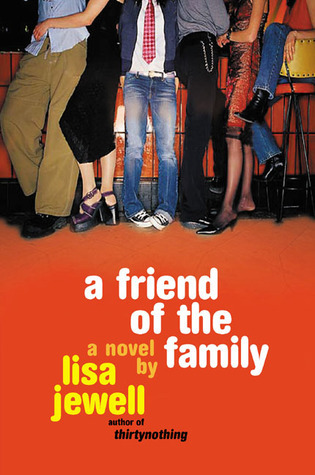
A Friend of the Family PDF - Lisa Jewell
Lisa Jewell • romantic novels • 336 Pages
(0)
Quate
Review
Save
Share
Book Description
A Friend of the Family by Lisa Jewell is a warm, witty, and emotionally observant contemporary family novel about three grown brothers, their parents, and the mysterious outsider whose arrival unsettles an already fragile household. Long before Lisa Jewell became widely known for her darker psychological thrillers, this novel showed the qualities that have always made her fiction so readable: sharp insight into relationships, affection for flawed people, a strong sense of domestic chaos, and the ability to find humor and heartbreak in the ordinary pressures of adult life. Published in the United States by Plume in 2004 and later reissued in the United Kingdom by Penguin, the novel remains a strong choice for readers who enjoy family drama, relationship fiction, and character-driven stories about love, identity, and the difficult transition from youth into real adulthood. (PenguinRandomhouse.com)
A Story of the London Family in Crisis
At the center of A Friend of the Family is the London family: parents Gerry and Bernie London, and their three sons, Tony, Sean, and Ned. From the outside, the family seems to have given its children a good start in life, but adulthood has not worked out neatly for any of the brothers. Tony is newly divorced and struggling with his body, his confidence, and feelings he knows he should not be entertaining. Sean is a prize-winning novelist whose professional success has not protected him from creative paralysis, romantic complications, and the pressure of expectation. Ned has returned from Australia without the woman he left with and without a clear plan for what comes next. Into this already complicated family situation comes Gervase, a mysterious new lodger whose presence raises questions about why Bernie is so determined to bring him into the household and whether he will become a source of comfort or disruption. (penguin.co.uk)
This premise gives the novel its lively emotional engine. The Londons are not facing one dramatic problem, but a cluster of smaller crises that together reveal how difficult family life can become when everyone is grown, disappointed, defensive, and still in need of love. Jewell uses the household as a place where unresolved feelings rise to the surface. Divorce, writer’s block, failed romance, parental concern, sibling tension, attraction, insecurity, and the fear of being left behind all move through the story with a natural rhythm. The result is a novel that feels both funny and recognizable, because its drama grows from human confusion rather than from melodrama.
Three Brothers, Three Versions of Adulthood
One of the strongest elements of A Friend of the Family is the way it studies the three London brothers as different versions of the same question: what happens when life does not turn into the future you expected? Tony, Sean, and Ned each carry a different kind of frustration. Tony’s divorce places him in an uncomfortable emotional territory where longing and embarrassment sit side by side. Sean has achieved the kind of success that should make him feel secure, yet he is blocked, anxious, and unsettled by the arrival of a new romantic complication. Ned, the youngest, returns home with the loose energy of someone who has been away but has not yet become the person he hoped travel might make him.
Through these brothers, Lisa Jewell explores male vulnerability with humor and compassion. The novel does not treat adulthood as a clean achievement, but as a messy process of making mistakes, choosing badly, recovering slowly, and learning that family can be both a safety net and a source of pressure. The brothers are not heroic figures; they are imperfect, sometimes self-absorbed, sometimes confused, and often painfully human. That makes them memorable. Readers who enjoy novels about siblings, complicated families, and emotional growing pains will find the London brothers especially engaging because their problems are personal without feeling artificially exaggerated.
Gervase and the Trouble of a Stranger in the House
The arrival of Gervase gives A Friend of the Family its central disturbance. A stranger inside a family home always changes the balance of the people already living there, and Jewell uses this idea with a light but effective touch. Gervase is not simply a plot device; he is a catalyst. His presence forces the Londons to look more closely at themselves and at one another. Why does Bernie feel drawn to helping him? What does he represent to each member of the family? Is he someone who can offer a fresh perspective, or does he expose weaknesses that were already waiting to be found?
This is where the book’s title becomes especially meaningful. A friend of the family can be a comfort, a witness, a disruption, or an outsider who sees too much. In Jewell’s hands, the phrase carries both warmth and uncertainty. The novel asks whether families truly understand themselves from the inside, or whether sometimes it takes a stranger to reveal the patterns everyone else has learned to ignore. That tension gives the story its gentle suspense, not in the sense of a thriller, but in the emotional sense of wondering what will happen when secrets, desires, and disappointments can no longer remain politely hidden.
Lisa Jewell’s Early Strengths: Humor, Emotion, and Social Observation
Readers who know Lisa Jewell mainly through books such as Then She Was Gone, The Family Upstairs, or None of This Is True may be surprised by the lighter, more comic tone of A Friend of the Family. Yet the novel clearly belongs to the same writer. Jewell’s later psychological suspense depends on her ability to understand families, secrets, longing, and the hidden stories people carry inside ordinary lives. Those same strengths are present here, though in a warmer and more relationship-focused form. Penguin’s author profile notes that Jewell’s first novel, Ralph’s Party, was published in 1999 and became the bestselling debut novel of the year, and that she later published many more novels, including darker psychological thrillers. (penguin.co.uk)
In A Friend of the Family, Jewell’s emotional intelligence is visible in the way she writes embarrassment, attraction, parental worry, and sibling rivalry. She understands how families communicate through jokes, silences, habits, and small acts of interference. She also understands how grown children can remain emotionally tied to their parents even while trying to prove that they are independent. This makes the novel appealing not only as a funny family story, but also as a thoughtful look at the gap between the life people imagine for themselves and the life they actually manage to build.
A Contemporary Family Novel with Heart
A Friend of the Family is ideal for readers searching for a Lisa Jewell family drama, a British contemporary fiction novel, or a warm, character-led story about parents, adult children, and the complicated bonds that hold a family together. It offers the pleasure of a page-turner without relying on heavy darkness. The conflicts are emotional, romantic, social, and personal, and the tone balances comedy with sincerity. Penguin describes the book as an “addictive and emotionally satisfying page-turner,” a phrase that captures its blend of readability and feeling. (penguin.co.uk)
The novel’s appeal also lies in its honesty about imperfect people. Tony, Sean, Ned, Gerry, Bernie, and Gervase all contribute to a story in which no one has life fully under control. Everyone is looking for something: love, reassurance, purpose, admiration, escape, forgiveness, or simply a clearer sense of who they are meant to be. Jewell allows these searches to unfold with humor and tenderness, making the book feel generous even when its characters behave foolishly.
Why A Friend of the Family Still Appeals to Readers
What makes A Friend of the Family lasting and enjoyable is its understanding that family life is rarely tidy. Parents do not stop worrying when children grow up. Siblings do not stop comparing themselves. Adults do not stop making romantic mistakes. Success does not prevent insecurity, and coming home does not always mean knowing where one belongs. Lisa Jewell turns these familiar truths into a charming, layered novel about connection, disruption, and the fragile hope that people can still change.
For readers interested in the earlier side of Lisa Jewell’s career, A Friend of the Family offers an engaging portrait of the author before her full move into darker psychological suspense. It is funny, perceptive, affectionate, and emotionally grounded, with a cast of flawed characters whose problems feel recognizably human. More than anything, it is a novel about the strange ways families survive crisis: by interfering, forgiving, misunderstanding, laughing, and sometimes welcoming the very person who may turn everything upside down.
Lisa Jewell
Lisa Jewell is a British author whose name has become strongly associated with psychological thrillers, domestic suspense, family secrets, missing-person mysteries, and emotionally layered crime fiction. Her fiction is widely read because it combines page-turning tension with a close understanding of ordinary lives: marriages, friendships, neighborhoods, memories, grief, obsession, and the quiet unease that can exist behind respectable doors. Her publisher describes her as a number one New York Times bestselling author of twenty-four novels, including Don’t Let Him In, None of This Is True, The Family Upstairs, Then She Was Gone, Invisible Girl, and Watching You; the same publisher notes that her novels have sold more than fifteen million copies internationally and have been translated into more than thirty languages.
Jewell’s career began with Ralph's Party, a novel that helped establish her as a fresh voice in popular fiction at the end of the 1990s. In her early work, she was often associated with warm, witty, relationship-driven fiction, but her career later moved into darker psychological territory. That shift is one of the reasons her body of work is so appealing: she did not abandon character or emotional realism when she entered the thriller field. Instead, she brought those strengths into stories about secrecy, manipulation, disappearance, memory, and danger. As a result, her thrillers feel intimate as well as suspenseful. The fear in her books often begins not with a spectacular crime scene, but with a person noticing that something in a familiar relationship does not quite fit.
One of Jewell’s defining qualities is her ability to make ordinary settings feel charged with hidden meaning. A family home, a London street, a garden, a pub, or a quiet community can become the center of a mystery where the past refuses to stay buried. In novels such as Then She Was Gone, The Family Upstairs, The Night She Disappeared, Invisible Girl, and None of This Is True, she often explores what happens when private histories collide with public identities. Her characters are rarely simple heroes or villains. They are grieving parents, lonely strangers, unreliable witnesses, wounded children, charming manipulators, and people who have learned to survive by hiding pieces of themselves. This psychological depth gives her stories a strong emotional pull.
Jewell is especially effective at writing suspense that is accessible without being shallow. Her chapters are usually shaped by momentum, revelation, and shifting points of view, but beneath the structure lies a steady interest in trauma, denial, family damage, and the stories people tell in order to protect themselves. Readers who come to her books for twists often stay for the emotional stakes. She understands that a secret is not only a plot device; it is also a burden that changes how people love, remember, trust, and fear. This makes her novels highly suitable for fans of domestic thrillers, crime fiction, book club mysteries, and psychological suspense novels that combine readability with emotional complexity.
Her reputation has continued to grow with the modern thriller audience. Penguin has described her as an author once beloved for romance who has become a household name in crime fiction, with books frequently appearing on the Sunday Times bestseller list. None of This Is True also became a major reader favorite; the BBC reported that it won Book of the Year at the 2024 TikTok Book Awards, reflecting the way Jewell’s suspense reaches both traditional readers and contemporary online reading communities.
A major part of Jewell’s appeal lies in her control of uncertainty. She rarely gives the reader a complete picture at the beginning. Instead, she offers fragments: a memory that may be wrong, a person whose charm feels slightly rehearsed, a disappearance that has never been fully explained, or a household whose surface calm hides something rotten. The reader is invited to assemble the truth alongside the characters, but the truth usually arrives with emotional consequences. That structure gives her books their compulsive rhythm, making them the kind of novels readers often describe as difficult to put down.
For readers discovering Lisa Jewell, her work offers a strong entry point into contemporary British suspense. She writes about fear, but also about longing, grief, family bonds, social performance, and the way the past can return through the smallest detail. Her novels appeal to readers who enjoy clever plotting, morally complicated characters, and stories where danger grows from the most familiar spaces. Whether the book begins with a missing girl, a strange inheritance, a dangerous friendship, or a man who seems too perfect to trust, Jewell’s fiction promises a carefully built atmosphere of suspicion and emotional discovery.
Earn Rewards While Reading!
Every 10 pages you read and spent 30 seconds on every page, earns you 5 reward points! Keep reading to unlock achievements and exclusive benefits.
Read
Rate Now
5 Stars
4 Stars
3 Stars
2 Stars
1 Stars
A Friend of the Family Quotes
Top Rated
Latest
Quate
Be the first to leave a quote and earn 10 points
instead of 3
'%20/%3e%3c/svg%3e "None of This Is True")
Comments
Be the first to leave a comment and earn 5 points
instead of 3