

The source of the book
This book is published for the public benefit under a Creative Commons license, or with the permission of the author or publisher. If you have any objections to its publication, please contact us.
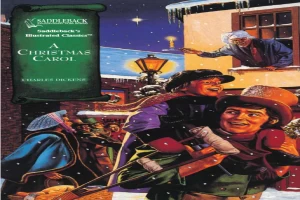
A Christmas Carol PDF - Charles Dickens
Charles Dickens • Literary novels • 117 Pages
(0)
Author
Charles DickensCategory
literatureNumber Of Downloads
88
Number Of Reads
229
File Size
6.65 MB
Views
1,906
Quate
Review
Save
Share
Book Description
A Christmas Carol by Charles Dickens is one of the most enduring works of classic English literature, a powerful and atmospheric Christmas novella that combines a ghost story, a moral fable, and a moving portrait of personal transformation. First published in London in 1843 by Chapman and Hall, with illustrations by John Leech, the book has become inseparable from the modern idea of Christmas as a season of generosity, memory, family, and renewed conscience.
At the heart of the story is Ebenezer Scrooge, a cold, miserly businessman whose name has become a lasting symbol of greed, bitterness, and emotional isolation. On Christmas Eve, Scrooge is visited by the ghost of his former partner, Jacob Marley, and by three spirits who lead him through scenes of the past, present, and future. Through these supernatural encounters, Dickens creates a story that is suspenseful, dramatic, and deeply humane, inviting readers to reflect on the choices that shape a life and the possibility of change before it is too late.
A Classic Christmas Ghost Story with a Moral Heart
Although A Christmas Carol is often remembered as a warm holiday story, it is also a beautifully crafted ghost story of Christmas, filled with shadows, silence, strange visions, and unforgettable emotional contrasts. Dickens uses the supernatural not simply to frighten, but to reveal hidden truths. Each spirit forces Scrooge to see what he has tried to ignore: the loneliness of his own past, the suffering around him, the fragile happiness of ordinary families, and the future consequences of a life lived without kindness.
This blend of mystery and moral awakening gives the novella its lasting strength. Readers searching for a classic Christmas book, a short Victorian novel, or a meaningful story about redemption will find that Dickens offers far more than a seasonal tale. The book speaks to universal concerns: how money can harden the heart, how memory can reopen compassion, how social neglect affects the vulnerable, and how even a deeply flawed person may still be capable of renewal.
Ebenezer Scrooge and the Journey from Isolation to Redemption
Scrooge is one of Dickens’s most memorable characters because his transformation is both dramatic and psychologically meaningful. At the beginning of the story, he rejects warmth, celebration, charity, and human connection. Christmas appears to him as an interruption to business, and other people’s needs seem like burdens rather than responsibilities. Yet Dickens does not present him as a simple villain. Through the visits of the spirits, readers gradually glimpse the disappointments, losses, and choices that have shaped him.
This makes Scrooge’s redemption one of the central pleasures of the novella. The story does not excuse his cruelty, but it shows that moral change begins with recognition. By revisiting his childhood, observing the lives of those he dismisses, and confronting the emptiness of his possible future, Scrooge is pushed toward a new understanding of what it means to live well. His journey gives the book its emotional force and makes it especially appealing to readers interested in stories about second chances, conscience, generosity, and personal growth.
Social Conscience in Victorian Literature
Charles Dickens wrote A Christmas Carol during the Victorian period, a time marked by industrial growth, economic inequality, and public debate about poverty and social responsibility. Britannica notes that Dickens wrote the book partly to raise awareness of the living conditions of the working poor in England, a concern shaped by his own early experiences and his lifelong attention to social injustice.
This social dimension gives the novella lasting relevance. Through characters such as Bob Cratchit and Tiny Tim, Dickens presents the dignity, tenderness, and vulnerability of working families living under pressure. The book asks readers to consider not only individual kindness, but also the moral obligations people have toward one another within a society. Its message remains clear without becoming abstract: compassion must be active, generosity must be practical, and human worth cannot be measured by wealth alone.
Why A Christmas Carol Still Matters to Readers
The continuing appeal of A Christmas Carol lies in its rare combination of simplicity and depth. The plot is easy to follow, yet the emotional and ethical questions are rich enough to reward repeated reading. It can be enjoyed as a festive story, a supernatural tale, a character study, a work of Victorian fiction, or a powerful reflection on poverty, memory, and moral responsibility. This flexibility has helped the novella remain popular with students, general readers, families, teachers, and lovers of classic literature.
For readers discovering Dickens for the first time, A Christmas Carol is an excellent entry point. It is shorter and more accessible than many of his major novels, yet it contains many of the qualities that define his writing: vivid characterization, memorable dialogue, strong atmosphere, emotional intensity, humor, social criticism, and a deep concern for the overlooked and vulnerable. Charles Dickens is widely regarded as one of the greatest novelists of the Victorian era, and this compact work shows his ability to turn a simple premise into a story of extraordinary cultural power.
A Book for Classic Literature, Holiday Reading, and Meaningful Reflection
A Christmas Carol by Charles Dickens is ideal for readers who enjoy classic novels, Christmas stories, literary ghost stories, and books with a strong moral and emotional message. It is also a valuable choice for students studying English literature, readers interested in the social world of Victorian England, and anyone looking for a short but unforgettable book about kindness, regret, and renewal. Its language carries the charm of the nineteenth century while its themes remain immediately understandable.
The novella’s popularity has also been strengthened by its many stage, film, television, and audio adaptations, which have kept Scrooge, Marley, the three spirits, and the Cratchit family alive in public imagination across generations. Yet the original text still offers a unique experience: sharper, richer, and more moving than any summary can capture. Reading Dickens’s own words allows the humor, darkness, tenderness, and moral urgency of the story to appear in their fullest form.
A Lasting Story of Christmas Spirit and Human Change
More than a holiday tradition, A Christmas Carol is a story about the recovery of humanity. Dickens reminds readers that a life closed against others can still be opened, that joy can return where bitterness has taken root, and that generosity is not merely a seasonal gesture but a way of seeing the world. Its Christmas setting gives the book warmth and familiarity, but its deeper power comes from its belief that people are responsible for one another and that transformation is possible.
For anyone seeking a meaningful classic Christmas book, a beautifully written Charles Dickens novella, or a timeless story about compassion and redemption, A Christmas Carol remains an essential work. It continues to speak to readers because its message is both simple and profound: a life becomes richer when it is shared, and the true spirit of Christmas begins with an awakened heart.
Charles Dickens
Earn Rewards While Reading!
Every 10 pages you read and spent 30 seconds on every page, earns you 5 reward points! Keep reading to unlock achievements and exclusive benefits.
Read
Rate Now
5 Stars
4 Stars
3 Stars
2 Stars
1 Stars
A Christmas Carol Quotes
Top Rated
Latest
Quate
Be the first to leave a quote and earn 10 points
instead of 3
'%20/%3e%3c/svg%3e "A tale of two cities")
Comments
Be the first to leave a comment and earn 5 points
instead of 3