

The source of the book
This book is published for the public benefit under a Creative Commons license, or with the permission of the author or publisher. If you have any objections to its publication, please contact us.
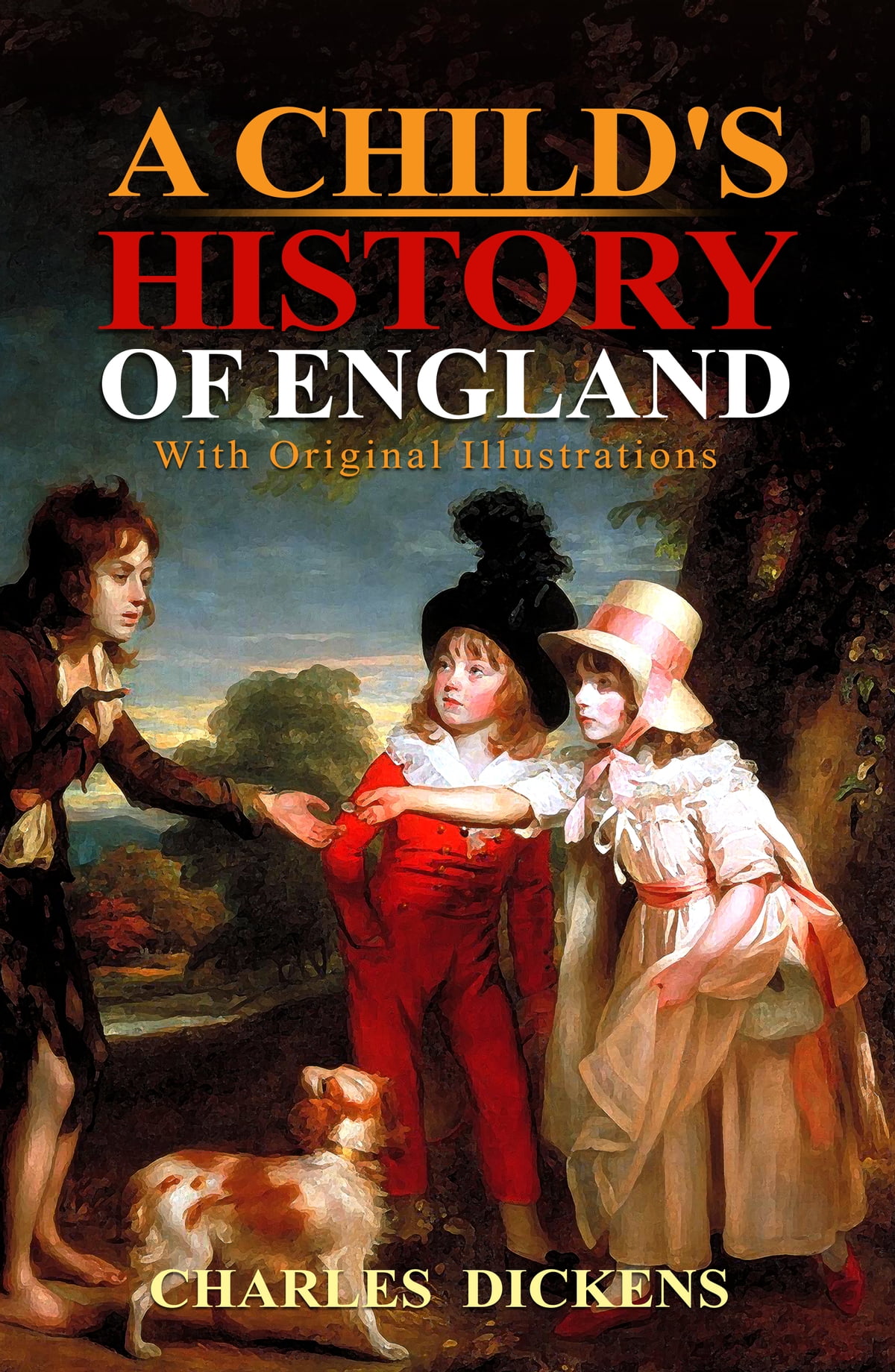
A Child's History of England PDF - Charles Dickens
Charles Dickens • literature • 370 Pages
(0)
Author
Charles DickensCategory
literatureSection
Number Of Downloads
91
Number Of Reads
273
File Size
2.33 MB
Views
1,944
Quate
Review
Save
Share
Book Description
A Child’s History of England by Charles Dickens is a distinctive work of classic historical nonfiction in which one of the greatest novelists of the Victorian age turns his storytelling power toward the long and dramatic story of England. Written in a direct, vivid, and highly readable style, the book presents English history not as a dry sequence of dates, kings, battles, and political changes, but as a living narrative filled with ambition, conflict, courage, cruelty, reform, betrayal, and consequence. For readers searching for A Child’s History of England by Charles Dickens, this work offers a fascinating combination of history, literature, and moral reflection, shaped by the unmistakable voice of the author of Oliver Twist, David Copperfield, Great Expectations, and A Tale of Two Cities.
Although the title suggests a book written for young readers, A Child’s History of England remains engaging for adults as well, especially for those interested in English history, Victorian literature, and the way nineteenth-century writers interpreted the past. Dickens wrote with the intention of making history understandable and memorable, and he does so through strong narrative movement, clear explanations, and sharply drawn portraits of rulers and public figures. His version of history is opinionated, energetic, and often dramatic, giving the reader not only a record of events but also a sense of how those events might feel when told by a master novelist.
A Classic Introduction to English History
The book follows the history of England from ancient times and Roman Britain through major periods of monarchy, conquest, religious change, civil conflict, and political transformation. Dickens guides the reader through episodes associated with the Romans, the Saxons, the Norman Conquest, the Plantagenets, the Tudors, the Stuarts, and the Revolution of 1688, before briefly looking forward toward later developments and the age of Queen Victoria. Rather than presenting every detail with academic distance, he selects memorable scenes and figures that help the reader understand the larger movement of the nation’s story.
This makes A Child’s History of England especially valuable as an accessible entry point into British history. Readers encounter famous names and turning points such as William the Conqueror, King John, Magna Carta, Henry VIII, Elizabeth I, the English Civil War, Oliver Cromwell, and the changing relationship between monarchy, Parliament, religion, and the people. Dickens is particularly interested in justice, tyranny, public suffering, and the responsibilities of power, themes that appear throughout his fiction and also shape his historical writing. His history is never merely about rulers; it is also about the ordinary people affected by the decisions of rulers.
Dickens as Storyteller and Historian
What separates this book from many traditional history books is the presence of Charles Dickens himself on every page. His narrative voice is lively, personal, and morally engaged. He praises courage and fairness, condemns cruelty and oppression, and often invites the reader to judge historical figures by their treatment of the vulnerable. In this sense, A Child’s History of England is not only a history of kings and queens but also a Dickensian reflection on power, society, and human character.
Readers familiar with Dickens’s novels will recognize his gift for turning public events into scenes full of tension and personality. He does not write like a modern academic historian, and the book should not be approached as a neutral contemporary textbook. Instead, it is best read as a classic Victorian interpretation of English history, written by a novelist who believed that history should teach moral awareness as well as factual knowledge. This gives the book a unique literary value: it reveals how Dickens understood the past, what he wanted younger readers to remember, and how he connected historical events with questions of justice, liberty, and responsibility.
A Readable History for Young Readers and Adults
Despite its historical range, A Child’s History of England is designed to be approachable. Dickens uses clear language, strong pacing, and memorable descriptions to help readers follow complex periods without becoming lost in excessive detail. This makes the book suitable for students, general readers, lovers of classic literature, and anyone looking for a readable overview of the history of England from a literary perspective. It can also be useful for readers who want to build background knowledge before approaching more detailed works on medieval England, Tudor history, the English Reformation, or the rise of constitutional government.
The book’s appeal lies partly in its balance between education and storytelling. Dickens does not simply list events; he arranges them into a sequence that feels like a national drama. The reader sees England changing through invasion, lawmaking, religious conflict, royal ambition, rebellion, and reform. Because Dickens writes with urgency and feeling, even well-known events gain a sense of immediacy. His account encourages readers to ask not only what happened, but why it mattered and who suffered or benefited from it.
Themes of Power, Justice, and National Memory
One of the strongest themes in A Child’s History of England is the danger of unchecked power. Dickens repeatedly returns to the consequences of bad government, selfish rulers, religious persecution, and political violence. His sympathy often rests with those who endure hardship rather than those who hold authority. This moral emphasis gives the book a clear connection to his novels, where children, workers, prisoners, debtors, and the poor often stand at the center of social criticism.
Another important theme is the development of freedom and public rights. As Dickens moves through centuries of English history, he pays attention to moments when authority is challenged, law is strengthened, or the people demand better treatment. His discussion of historical change reflects a Victorian liberal belief in progress, reform, and the importance of resisting injustice. For modern readers, this perspective is part of the book’s interest: it shows both the history Dickens describes and the values of the age in which he was writing.
The book also raises questions about how history is remembered and taught. By writing for younger readers, Dickens suggests that the stories a nation tells its children matter deeply. He wants history to be exciting, but he also wants it to shape judgment. A Child’s History of England therefore works as both a historical narrative and a study of historical imagination, showing how the past can be made vivid, meaningful, and morally serious.
Why Read A Child’s History of England Today?
Modern readers may come to A Child’s History of England for several reasons. Some will read it because they admire Charles Dickens and want to explore one of his lesser-known works. Others will be drawn to it as a classic introduction to English history for young readers, or as a literary retelling of Britain’s past. It is also an excellent choice for readers interested in how nineteenth-century authors wrote about history, childhood education, monarchy, religion, and national identity.
The book remains rewarding because it combines information with personality. Dickens’s judgments can be strong, and his interpretations reflect his own time, but that is precisely what makes the work historically and literarily interesting. It is not only a book about ancient, medieval, and early modern England; it is also a book about Dickens’s England, and about the values he believed should guide future generations. Readers who enjoy classic nonfiction, historical storytelling, and the moral energy of Victorian prose will find much to appreciate here.
A Lasting Work of Historical Storytelling
A Child’s History of England by Charles Dickens stands as a memorable example of how history can be written with imagination, conviction, and narrative force. It introduces major events in England’s past while preserving the dramatic spirit that made Dickens one of the most beloved writers in the English language. The book is educational, opinionated, lively, and unmistakably Dickensian, offering readers a journey through centuries of kings, queens, battles, laws, revolutions, and social change.
For anyone seeking a classic book on English history, a readable historical work by Charles Dickens, or a literary introduction to the events that shaped England, A Child’s History of England remains a compelling choice. It invites the reader to see history not as a distant collection of names and dates, but as a powerful story of human action, public responsibility, and the long struggle between oppression and justice.
Charles Dickens
Earn Rewards While Reading!
Every 10 pages you read and spent 30 seconds on every page, earns you 5 reward points! Keep reading to unlock achievements and exclusive benefits.
Read
Rate Now
5 Stars
4 Stars
3 Stars
2 Stars
1 Stars
A Child's History of England Quotes
Top Rated
Latest
Quate
Be the first to leave a quote and earn 10 points
instead of 3
Other books by Charles Dickens
Other books like A Child's History of England
'%20/%3e%3c/svg%3e "The Missionary Position: Mother Teresa in Theory and Practice")
3635
English
Comments
Be the first to leave a comment and earn 5 points
instead of 3