

The source of the book
This book is published for the public benefit under a Creative Commons license, or with the permission of the author or publisher. If you have any objections to its publication, please contact us.
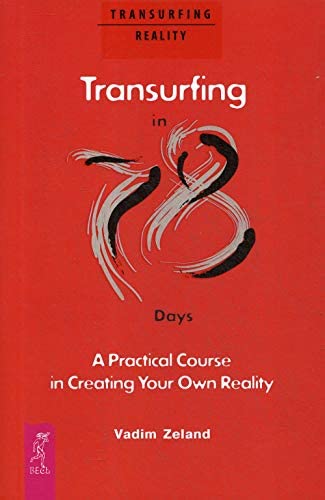
Transurfing in 78 Days PDF - Vadim Zeland
Vadim Zeland • Human Development • 108 Pages
(0)
Author
Vadim ZelandCategory
Social sciencesSection
Number Of Downloads
53
Number Of Reads
200
File Size
0.89 MB
Views
1,919
Quate
Review
Save
Share
Book Description
Transurfing in 78 Days by Vadim Zeland is a practical and accessible guide to the ideas behind Reality Transurfing, a personal development system focused on intention, awareness, choice, and the way individuals relate to the world around them. Designed as a structured course, the book presents the core principles of Transurfing in daily portions, making it especially useful for readers who want more than abstract theory. Instead of approaching self-transformation as a sudden breakthrough, Zeland organizes the material as a gradual process of observation, reflection, and inner adjustment.
At the heart of the book is the idea that a person’s relationship with reality is not fixed, passive, or entirely controlled by external events. Zeland invites readers to examine how attention, expectation, emotional importance, and habitual reactions shape their experience of life. For those interested in creating your own reality, conscious living, manifestation, or mindset transformation, this book offers a distinctive framework that blends metaphysical thinking with practical psychological exercises.
A Practical Course in Reality Transurfing
Unlike longer introductions to the Transurfing system, Transurfing in 78 Days is arranged as a day-by-day course. Each section introduces a specific principle or insight, giving readers time to absorb the concept and apply it to everyday situations. This structure makes the book suitable both for beginners who are new to Vadim Zeland’s Reality Transurfing and for returning readers who want a more organized way to practice the method.
The book does not simply ask the reader to think positively or repeat affirmations. Instead, it focuses on changing the way one moves through reality: reducing excessive importance, becoming aware of inner resistance, observing the influence of social and mental patterns, and learning how intention can be used more calmly and effectively. Zeland’s approach is especially appealing to readers who feel that traditional self-help advice can be too simplistic, because Transurfing offers a broader model of perception, decision-making, and personal alignment.
The Main Ideas Behind Transurfing in 78 Days
One of the central themes of Transurfing in 78 Days is the difference between forcing life and moving with awareness. Zeland suggests that many people exhaust themselves by fighting circumstances, chasing approval, or becoming trapped in emotional reactions. Through the language of Transurfing, he encourages readers to step back from automatic behavior and learn how to choose their direction with greater clarity.
The book explores ideas such as intention, reality management, inner freedom, emotional balance, and the importance of allowing oneself and others to be different. These concepts are presented in a way that encourages daily reflection rather than passive reading. Readers are invited to notice how their thoughts, assumptions, and reactions may be reinforcing the very situations they want to change. In this sense, the book functions as both a spiritual guide and a practical self-development manual.
Another important aspect of the book is its focus on possibility. Zeland’s Transurfing model encourages readers to see life not as a single rigid path, but as a field of alternatives shaped by attention, choice, and alignment. Whether the reader approaches these ideas as metaphysical philosophy, personal growth, or a symbolic method for changing habits, the book provides a memorable vocabulary for understanding how people can become more active participants in their own lives.
Reading Experience and Style
The reading experience of Transurfing in 78 Days is reflective, direct, and practical. Because the book is divided into short daily lessons, it can be read slowly as a course rather than quickly as a conventional self-help book. This makes it a strong choice for readers who enjoy structured personal development, journaling, meditation, or daily mindset practice.
Vadim Zeland’s style is confident and often unconventional. He presents Transurfing as a system that challenges ordinary assumptions about reality, success, effort, and desire. Readers who enjoy books about manifestation, law of attraction, spiritual self-help, quantum-inspired philosophy, or personal transformation will likely find familiar themes, but Zeland’s terminology and structure give the book its own distinctive identity.
The book is also valuable because it encourages practice over mere inspiration. Many self-help books create temporary motivation, but this course-like format is designed to keep the reader returning to the ideas day after day. By working through the material gradually, readers can observe how the principles apply to decisions, relationships, goals, emotional reactions, and the search for a more balanced way of living.
Who Should Read This Book?
Transurfing in 78 Days is ideal for readers who are interested in Reality Transurfing but want a more manageable entry point into Vadim Zeland’s work. It is also well suited to those looking for a daily guide that combines mindset work, metaphysical ideas, and practical reflection. Readers who are drawn to books about consciousness, intention, self-mastery, manifestation, and alternative approaches to personal success will find this title especially relevant.
This book may also appeal to people who feel stuck in repetitive life patterns and want a new way to think about change. Rather than encouraging constant struggle, Zeland’s method invites readers to reduce tension, observe their inner state, and act from a place of clearer intention. For anyone searching for a book that connects spiritual philosophy with everyday decisions, Transurfing in 78 Days offers a structured path into a larger system of thought.
At the same time, the book is best approached with openness and discernment. Its ideas are not presented as conventional science, and some readers may experience them more as spiritual philosophy, symbolic psychology, or practical metaphysical teaching. This flexibility is part of its appeal: readers can engage with the material in the way that best supports their own reflection and growth.
Why Transurfing in 78 Days Remains a Meaningful Guide
The lasting appeal of Transurfing in 78 Days by Vadim Zeland lies in its combination of structure and imagination. It gives readers a clear daily format while also asking them to reconsider their assumptions about reality, effort, desire, and personal power. The result is a book that feels both practical and expansive, offering a method for inner change that can be revisited over time.
For readers exploring Reality Transurfing books, this volume provides a focused and approachable way to understand the principles behind Zeland’s system. For those new to the subject, it serves as a guided introduction to a way of thinking that emphasizes awareness, calm intention, and the possibility of choosing a more aligned life path. For experienced readers, it can function as a practical reminder of the core ideas that make Transurfing such a distinctive approach to self-development.
Transurfing in 78 Days is more than a collection of motivational reflections. It is a step-by-step invitation to observe reality differently, respond to life more consciously, and explore the possibility that meaningful change begins with the way attention and intention are directed. Readers who are ready for a thoughtful, unusual, and practice-oriented journey into personal transformation will find in this book a compelling guide to the principles of creating your own reality.
Vadim Zeland
Vadim Zeland is a contemporary Russian author best known for Reality Transurfing, a widely circulated system of metaphysical self-development that combines practical psychology, modern spirituality, symbolic language, and a distinctive vocabulary of intention, choice, attention, and personal reality management. His name is sometimes searched or written as Vadim Zeeland, but the spelling most commonly used on his books and in English-language editions is Vadim Zeland. He is an unusually private figure in the self-help world, and this privacy has become part of the atmosphere surrounding his work. The brief public biography associated with him states that before the collapse of the Soviet Union he was involved in research connected with quantum physics, later worked in computer technology, and eventually turned to writing; he also presents himself as living in Russia and as someone who prefers not to turn his private life into a public spectacle. As a result, readers often approach Zeland less as a celebrity teacher and more as the author of an enigmatic system of ideas. His most influential work is Reality Transurfing: Steps I–V, a major collection that brings together the core stages of his method. The sequence includes titles such as The Space of Variations, A Rustle of Morning Stars, Forward to the Past, Ruling Reality, and Apples Fall to the Sky. The central idea of Reality Transurfing is that reality may be imagined not as one fixed path but as a vast field of possible variations or life lines. According to the model, a person does not need to force reality through constant struggle, anxiety, obsessive effort, or rigid control. Instead, the individual can move toward more desirable life lines through awareness, intention, inner balance, reduced excess importance, and alignment between what Zeland calls the heart or soul and the rational mind. One of his best-known concepts is the pendulum, a term he uses for collective structures of attention and emotional energy: social conflicts, ideologies, fears, trends, institutions, and group reactions that pull people into reactive behavior and drain their inner freedom. Other recurring concepts in his work include outer intention, the alternatives space, the target slide, coordination, and excess potential. These terms give his books a recognizable identity and make them different from conventional motivational writing. Zeland does not simply tell readers to think positively or work harder. He asks them to examine where their attention goes, why excessive importance creates tension, how fear can reinforce unwanted scenarios, and how a calmer relationship with desire may allow goals to unfold with less resistance. His references to quantum physics, energy, and reality should be understood as part of a metaphysical and symbolic framework rather than as established academic science. Beyond the main Transurfing volumes, his bibliography includes Transurfing in 78 Days, Tufti the Priestess: Live Stroll Through a Movie, and Priestess Itfut, books that expand his imagery and present life as something like a film in which a person can learn to wake up, see the script, and choose more consciously. For readers interested in the law of attraction, consciousness, intention, alternative spirituality, popular philosophy, and unconventional personal-growth systems, Vadim Zeland remains one of the most recognizable authors in the field of metaphysical self-help.
Earn Rewards While Reading!
Every 10 pages you read and spent 30 seconds on every page, earns you 5 reward points! Keep reading to unlock achievements and exclusive benefits.
Read
Rate Now
5 Stars
4 Stars
3 Stars
2 Stars
1 Stars
Transurfing in 78 Days Quotes
Top Rated
Latest
Quate
Be the first to leave a quote and earn 10 points
instead of 3
'%20/%3e%3c/svg%3e "The Space of Variations")
Comments
Be the first to leave a comment and earn 5 points
instead of 3