

The source of the book
This book is published for the public benefit under a Creative Commons license, or with the permission of the author or publisher. If you have any objections to its publication, please contact us.
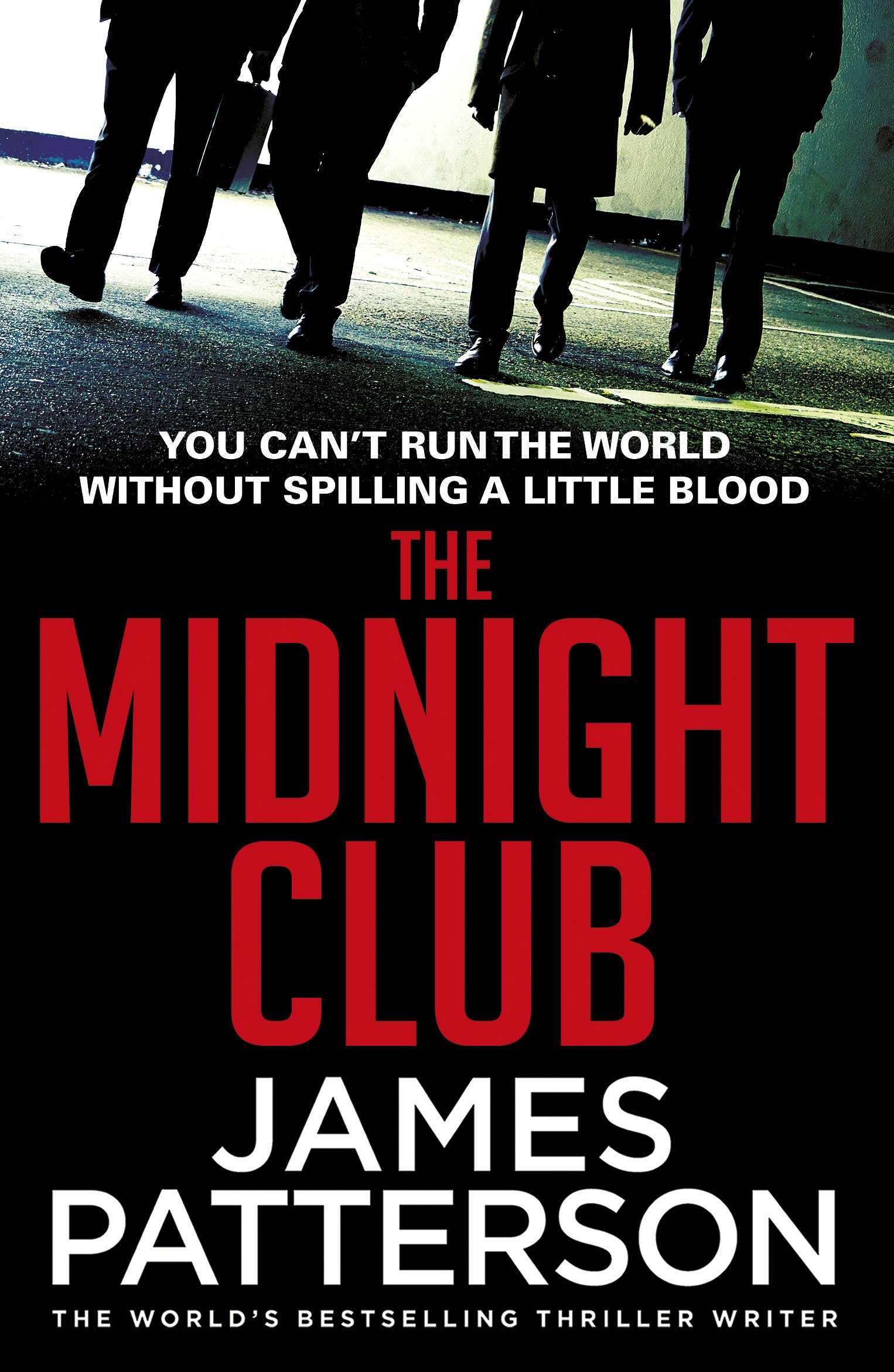
The Midnight Club PDF - James Patterson
James Patterson • Crime novels and mysteries • 275 Pages
(0)
Author
James PattersonCategory
literatureSection
Number Of Downloads
35
Number Of Reads
90
File Size
1.38 MB
Views
1,122
Quate
Review
Save
Share
Book Description
The Midnight Club by James Patterson
The Midnight Club by James Patterson is a dark, fast-paced crime thriller about obsession, revenge, organized crime, and one detective’s refusal to surrender after a killer takes almost everything from him. Set in the dangerous underworld of New York and beyond, the novel follows John “Stef” Stefanovitch, a tough and determined police officer whose life is shattered by a brilliant criminal known as Alexandre St.-Germain, also called the Grave Dancer. Published as one of Patterson’s earlier standalone thrillers, the book is described by its publisher as a suspenseful story about a powerful mobster facing a relentless cop and his loyal team of crime fighters.
A Crime Thriller Built Around Revenge and Determination
At the center of The Midnight Club is John Stefanovitch, a New York detective who understands the city’s criminal world better than most. He has spent his career pursuing dangerous men, but no enemy haunts him like Alexandre St.-Germain, a ruthless and sophisticated crime lord whose influence reaches far beyond ordinary street crime. When Stef is attacked and left in a wheelchair, his battle against St.-Germain becomes deeply personal. He has lost not only his physical freedom, but also the life he once knew, and the pain of that loss drives him forward rather than stopping him.
This gives the novel its emotional force. Stef is not an invincible action hero moving easily through danger. He is a wounded man, physically changed and psychologically scarred, but still determined to bring down the criminal responsible for so much destruction. His disability does not weaken the suspense; it intensifies it. Every step of the investigation becomes a test of will, intelligence, and endurance.
John Stefanovitch: A Cop Who Refuses to Break
John Stefanovitch is one of the strongest elements of The Midnight Club because his courage is shaped by damage. He has been hurt badly, and the world around him may expect him to step back from the fight, but Stef refuses to let St.-Germain define the rest of his life. His determination makes the novel more than a traditional mob thriller. It becomes a story about survival, pride, grief, and the refusal to let evil have the final word.
Stef’s work is driven by justice, but also by memory. He knows what St.-Germain has taken from him, and that knowledge makes the case impossible to treat as routine. Yet Patterson avoids making Stef only a figure of revenge. He is also a detective, a strategist, and a man who must rely on his mind, allies, and instincts to continue a fight that his body can no longer approach in the same way. This makes The Midnight Club appealing to readers who enjoy crime thrillers with wounded heroes, police suspense, and stories where personal loss becomes the fuel for justice.
Alexandre St.-Germain and the Power of the Midnight Club
The villain at the center of the novel is not a simple gangster. Alexandre St.-Germain is dangerous because he is intelligent, polished, and powerful. He is part of a secret international criminal organization known as the Midnight Club, a hidden network of crime leaders who operate behind respectable public identities. These are not criminals who always look like criminals. They may appear to be businessmen, influential figures, or members of the legitimate world, but beneath that surface they are connected to violence, corruption, and organized crime on a massive scale.
This makes the threat in The Midnight Club feel larger than a single man. St.-Germain may be Stef’s central enemy, but the organization around him suggests a global underworld where power protects itself through money, secrecy, and fear. The novel taps into the fear that the most dangerous criminals are not always hiding in alleys; sometimes they are seated in boardrooms, protected by wealth and influence, making decisions that destroy lives from a distance.
A Secret Society of Crime Lords
The idea of the Midnight Club gives the book a strong conspiracy-thriller edge. Patterson creates a criminal structure where the world’s most ruthless crime figures are connected by shared ambition and mutual protection. Their respectability is part of their weapon. Because they appear legitimate, they can move through society with less suspicion, making it harder for law enforcement to expose them.
This theme gives the novel lasting appeal for readers who enjoy organized crime fiction, mob thrillers, and stories about hidden networks of power. The danger does not come only from guns or assassins, but from the ability of powerful criminals to shape public reality. Stef’s mission is not simply to arrest one man; it is to confront an entire system built to keep men like St.-Germain untouchable.
A Journalist in Danger
Another important figure in The Midnight Club is a journalist whose involvement places her in serious danger. The publisher’s description highlights the presence of a beautiful journalist suddenly facing grave risk, adding a media and investigative dimension to the story. Her role deepens the suspense because truth becomes dangerous when it threatens men who have survived by staying hidden.
The journalist’s presence also adds emotional and narrative tension to Stef’s world. She is drawn toward the same darkness he is trying to expose, but she does not carry the badge or protection of a police officer. Her search for the truth places her directly in the path of criminals who understand that information can be as dangerous as testimony. This gives the novel a strong investigative thriller element, where police work, journalism, and personal danger overlap.
Patterson’s Early Thriller Style
The Midnight Club is especially interesting for readers familiar with James Patterson’s later work because it shows many of the qualities that would become central to his bestselling thrillers: short chapters, direct pacing, high-stakes crime, emotionally driven investigators, and villains who combine intelligence with brutality. Patterson has described the novel as one he wrote shortly before Along Came a Spider, noting that ideas in this book helped lead toward the creation of later characters such as Alex Cross and Sampson.
That connection gives The Midnight Club added value for Patterson fans. It is not part of the Alex Cross series, but readers can feel the development of Patterson’s crime-fiction style: the wounded but brilliant investigator, the psychologically charged villain, the sense of a city under threat, and the mixture of personal emotion with large-scale criminal danger.
New York Crime, International Power, and Personal Justice
The novel works on two levels at once. On one level, it is a New York police thriller about a detective pursuing the man who destroyed his life. On another level, it is an international organized crime thriller about a secret club of powerful criminals who believe they can operate beyond the reach of ordinary justice. This combination gives the book both intimacy and scale.
Stef’s pain keeps the story personal, while the Midnight Club itself expands the danger far beyond one city. The reader is pulled between the emotional urgency of one man’s revenge and the broader threat of criminals whose power crosses borders. That balance makes The Midnight Club a strong choice for readers who like thrillers where one personal case exposes a much larger criminal world.
Who Should Read The Midnight Club?
The Midnight Club is a strong choice for readers who enjoy James Patterson books, standalone crime thrillers, organized crime novels, police suspense, and stories about determined investigators facing powerful enemies. It will especially appeal to readers who like wounded heroes, ruthless crime lords, secret criminal networks, and investigations where the stakes are both personal and global.
The book is also suitable for readers interested in Patterson’s earlier thriller writing. It offers a darker, grittier crime story with many of the narrative elements that later helped define his most famous series: a memorable detective, a dangerous villain, emotional stakes, and a fast-moving plot built around pursuit, danger, and justice.
A Dark and Relentless Crime Thriller
The Midnight Club stands out as a tense and atmospheric James Patterson thriller about a cop who refuses to stop fighting, even after a criminal mastermind leaves him physically broken and emotionally scarred. With John Stefanovitch pursuing Alexandre St.-Germain, a secret society of crime lords operating behind respectable masks, and a journalist drawn into deadly danger, the novel delivers a strong mix of crime, suspense, revenge, organized crime, police investigation, and psychological intensity.
For readers searching for a James Patterson standalone thriller with a powerful villain and a determined detective at its center, The Midnight Club offers a gripping reading experience. It is a story about the criminals who believe wealth can make them untouchable, the detective who knows better, and the long, dangerous fight to prove that even the most hidden empire of crime can still be brought into the light.
James Patterson
James Patterson is an American novelist, storyteller, and major figure in contemporary popular fiction, best known for his crime novels, psychological thrillers, suspense series, and highly readable books for adults, young readers, and children. His reputation rests on a distinctive narrative style built around short chapters, rapid scene changes, direct dialogue, rising danger, and the constant feeling that another revelation is waiting on the next page. Born in New York, Patterson studied English literature before beginning a successful career in advertising, and that professional background helped shape the way he approaches fiction. He understands pacing, audience attention, memorable titles, and the emotional pull of a strong opening, and these qualities appear throughout his novels. Patterson first gained recognition with his early fiction, but his international fame expanded dramatically with the creation of Alex Cross, the detective and psychologist who became one of the most recognizable characters in modern American crime writing. Through Alex Cross, Patterson developed a powerful blend of police investigation, psychological tension, personal vulnerability, family loyalty, moral pressure, and confrontation with dangerous criminals. The series helped define his public image as a writer who could deliver suspense with speed and emotional clarity. Beyond Alex Cross, Patterson has created or co-created many successful series, including Women’s Murder Club, Michael Bennett, Maximum Ride, Private, Middle School, I Funny, and other projects that move across crime fiction, adventure, young adult fantasy, humor, and family reading. His range is one of the reasons his readership is so broad. He does not write only for dedicated thriller fans; he also writes for reluctant readers, younger audiences, casual readers, and people who want a book that is easy to begin and difficult to put down. His prose is not designed to be ornamental or slow. Instead, it favors momentum, clarity, suspense, and dramatic payoff. Critics have sometimes debated his commercial style, his extraordinary productivity, and his frequent collaborations with other writers, yet his influence on the publishing world remains undeniable. Patterson helped turn the modern thriller series into a powerful reading brand, showing how recurring characters, familiar structures, and cinematic pacing can create long-term reader loyalty. His collaborative method also reflects a broader understanding of publishing as both creative storytelling and organized production, allowing him to sustain multiple fictional worlds at the same time. Themes that appear often in his work include justice, fear, violence, corruption, family protection, survival, friendship, courage, and the tension between public duty and private life. Several of his books have reached audiences beyond the printed page, strengthening his connection with popular culture. Patterson is also widely associated with literacy advocacy. He has supported libraries, schools, independent bookstores, teachers, scholarships, and programs designed to help children discover the pleasure of reading. This commitment gives his career a cultural dimension beyond bestseller lists. He is not only a writer of commercial success, but also a public advocate for books and reading. For a book website, James Patterson is an important author to present because his work offers many entry points for different readers: crime lovers can begin with Alex Cross, mystery fans can explore Women’s Murder Club, action readers can follow Michael Bennett, and younger readers can discover his school stories and adventure series. His career shows how popular fiction can combine accessibility, suspense, emotional engagement, and professional discipline to become a global reading phenomenon.
Earn Rewards While Reading!
Every 10 pages you read and spent 30 seconds on every page, earns you 5 reward points! Keep reading to unlock achievements and exclusive benefits.
Read
Rate Now
5 Stars
4 Stars
3 Stars
2 Stars
1 Stars
The Midnight Club Quotes
Top Rated
Latest
Quate
Be the first to leave a quote and earn 10 points
instead of 3
Other books by James Patterson
Other books like The Midnight Club
'%20/%3e%3c/svg%3e "The Harbinger: The Ancient Mystery that Holds the Secret of America's Future")
Jonathan Cahn.
Crime novels and mysteries
(0)
3004
English
Jonathan Cahn.
Crime novels and mysteries
(0)
2668
English
Comments
Be the first to leave a comment and earn 5 points
instead of 3