

The source of the book
This book is published for the public benefit under a Creative Commons license, or with the permission of the author or publisher. If you have any objections to its publication, please contact us.
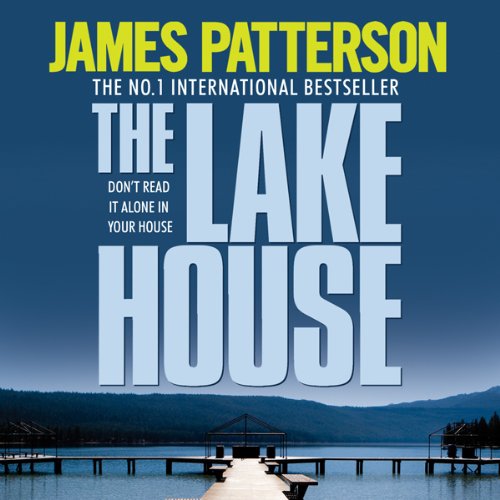
The Lake House PDF - James Patterson
James Patterson • science fiction novels • 259 Pages
(0)
Author
James PattersonCategory
literatureSection
Number Of Downloads
47
Number Of Reads
99
File Size
1.18 MB
Views
1,035
Quate
Review
Save
Share
Book Description
The Lake House by James Patterson
The Lake House by James Patterson is a suspenseful science-fiction thriller and the sequel to When the Wind Blows, continuing the story of six extraordinary children whose lives were forever changed by secret genetic experiments. Blending genetic engineering fiction, medical suspense, emotional drama, and high-stakes thriller pacing, the novel returns to the world of Max, the winged children, Frannie O’Neill, and Kit, exploring what happens after rescue, when survival is no longer enough and safety proves far more fragile than anyone expected.
The story follows six children who have escaped horrifying experiments, captivity, and the threat of death. For the first time, they are living in the outside world, but freedom does not feel like home. The children long to be reunited with Kit and Frannie, the two adults who risked everything to protect them, and the one place that represents safety to them is the waterfront cabin known as the Lake House. Yet the nightmare they escaped has not fully disappeared. A sinister survivor from their past is still dangerous, and the children soon face a threat that reaches far beyond their own lives.
A Sequel Filled with Danger, Emotion, and Wonder
The Lake House deepens the emotional and moral questions introduced in When the Wind Blows. The first novel revealed a shocking world of scientific cruelty, where children were treated as experiments rather than human beings. This sequel asks what happens after that truth is exposed. Can children created and damaged by science ever live normal lives? Can love and protection undo years of captivity? And what kind of future awaits children whose very existence frightens the world around them?
At the center of the novel is the tension between freedom and belonging. Max and the other children may have escaped the laboratory, but they have not escaped fear, public attention, or the trauma of being treated as something less than human. Their wings make them extraordinary, but Patterson keeps the emotional focus on their vulnerability. They are not simply miracles of science or symbols of human evolution; they are children who want family, safety, and the right to live without being hunted.
Max and the Winged Children
Max remains one of the most memorable figures in this story world. Strong, intelligent, and fiercely protective, she carries the responsibility of leadership even while still being young and afraid. Her fear that the flock is about to face a danger greater than anything before gives the novel its urgent emotional pulse. She understands better than most adults that the past is not finished with them, and her instincts become central to the suspense.
The other children also represent different sides of the same tragedy. They have extraordinary abilities, but those abilities were born from suffering and control. Their desire to return to Kit and Frannie is not only a wish for comfort; it is a need for people who see them as children rather than specimens. This gives The Lake House a strong emotional foundation, making it appealing to readers who enjoy science fiction thrillers with human stakes, not just scientific ideas.
Frannie and Kit as Protectors
Frannie O’Neill and Kit return as essential figures in the children’s lives. Frannie’s compassion and Kit’s determination made them powerful protectors in the first book, and in The Lake House, their bond with the children becomes even more important. They are not merely rescuers from a past crisis; they are the closest thing to family the children trust completely.
Their struggle to protect the children adds a legal, emotional, and moral dimension to the thriller. The question is not simply where the children should live, but who truly understands what they need. The outside world wants to classify them, control them, study them, or use them. Frannie and Kit want to love and protect them. That contrast gives the novel its heart and turns the Lake House itself into a symbol of refuge in a world that has repeatedly failed the children.
Genetic Engineering and the Fear of Human Ambition
Like When the Wind Blows, The Lake House is driven by the unsettling possibilities of genetic engineering. Patterson uses the idea of winged children not as simple fantasy, but as the result of hidden scientific ambition taken to a dangerous extreme. The novel explores what happens when powerful people treat life as something they can redesign, own, or exploit.
This gives the book strong appeal as a genetic engineering thriller and medical suspense novel. The danger is not only physical pursuit, but the larger question of what science becomes when it loses its ethical limits. The children are proof of extraordinary possibility, but they are also proof of cruelty. Their existence forces readers to confront the difference between discovery and exploitation, between progress and violation.
The Lake House as a Symbol of Safety
The title The Lake House carries deep emotional meaning within the novel. It is not just a location; it is the place the children associate with protection, family, and the hope of a life beyond fear. After captivity, experiments, escape, and constant danger, the idea of a peaceful home becomes powerful. The children’s longing for the Lake House reflects their longing for a world where they are not hunted or judged for what was done to them.
Because of that, the novel’s suspense feels especially personal. The threat is not only that the children may be captured or harmed, but that their dream of safety may be destroyed. Patterson builds tension around the fragile possibility of home, showing that for people who have never truly been free, peace can be just as precious as survival.
A Fast-Paced James Patterson Thriller with a Speculative Edge
Readers familiar with James Patterson thrillers will recognize the quick pacing, short chapters, and strong forward momentum that define much of his work. The Lake House moves through danger, discovery, emotional conflict, and escalating suspense with the speed of a commercial thriller, while its science-fiction premise gives it a distinctive identity within Patterson’s catalog.
The novel is especially suitable for readers who want a story that combines action with emotional stakes. It is not a slow or heavily technical science-fiction novel. Instead, it uses speculative ideas to create suspense, moral conflict, and a powerful sense of danger. Readers looking for fast-paced science fiction, medical thrillers, genetic experiment novels, or books connected to the origins of Maximum Ride will find this story particularly interesting.
Connection to When the Wind Blows and Maximum Ride
The Lake House is best read after When the Wind Blows, because it continues the story of the winged children and the adults who helped save them. The official James Patterson series page groups When the Wind Blows and The Lake House together under the “When the Wind Blows” series, connecting them to the broader winged-child concept associated with Patterson’s later Maximum Ride books.
At the same time, The Lake House has a darker and more adult thriller tone than the young adult Maximum Ride series. It focuses more strongly on trauma, custody, scientific ethics, adult danger, and the consequences of genetic experimentation. This makes it a strong choice for readers who are curious about the earlier, more suspense-driven version of the winged-children concept.
Who Should Read The Lake House?
The Lake House is a strong choice for readers who enjoy James Patterson books, science-fiction thrillers, genetic engineering fiction, medical suspense, and stories about children in danger from powerful scientific forces. It will especially appeal to readers who enjoyed When the Wind Blows and want to know what happens next to Max, the flock, Frannie, and Kit.
The novel is also suitable for readers who like thrillers with emotional depth. Its suspense comes not only from villains and pursuit, but from the fear that vulnerable children may never be allowed to live freely. Readers who enjoy stories about found family, survival after trauma, and the fight to protect innocence from corruption will find The Lake House an engaging and meaningful continuation.
A Suspenseful Story of Survival, Family, and Scientific Fear
The Lake House stands out as a tense and emotional sequel that expands the world of When the Wind Blows while deepening its central questions about science, humanity, and protection. Through Max and the other winged children, James Patterson creates a story about extraordinary lives shaped by cruelty, and about the adults willing to fight so those lives can still have a future.
For readers searching for a James Patterson science-fiction thriller with danger, emotion, genetic experimentation, and a powerful found-family theme, The Lake House offers a gripping reading experience. It is a novel about children who can fly but still need a home, about science that has crossed a terrible line, and about the high price of protecting the future when powerful people are willing to destroy it.
James Patterson
James Patterson is an American novelist, storyteller, and major figure in contemporary popular fiction, best known for his crime novels, psychological thrillers, suspense series, and highly readable books for adults, young readers, and children. His reputation rests on a distinctive narrative style built around short chapters, rapid scene changes, direct dialogue, rising danger, and the constant feeling that another revelation is waiting on the next page. Born in New York, Patterson studied English literature before beginning a successful career in advertising, and that professional background helped shape the way he approaches fiction. He understands pacing, audience attention, memorable titles, and the emotional pull of a strong opening, and these qualities appear throughout his novels. Patterson first gained recognition with his early fiction, but his international fame expanded dramatically with the creation of Alex Cross, the detective and psychologist who became one of the most recognizable characters in modern American crime writing. Through Alex Cross, Patterson developed a powerful blend of police investigation, psychological tension, personal vulnerability, family loyalty, moral pressure, and confrontation with dangerous criminals. The series helped define his public image as a writer who could deliver suspense with speed and emotional clarity. Beyond Alex Cross, Patterson has created or co-created many successful series, including Women’s Murder Club, Michael Bennett, Maximum Ride, Private, Middle School, I Funny, and other projects that move across crime fiction, adventure, young adult fantasy, humor, and family reading. His range is one of the reasons his readership is so broad. He does not write only for dedicated thriller fans; he also writes for reluctant readers, younger audiences, casual readers, and people who want a book that is easy to begin and difficult to put down. His prose is not designed to be ornamental or slow. Instead, it favors momentum, clarity, suspense, and dramatic payoff. Critics have sometimes debated his commercial style, his extraordinary productivity, and his frequent collaborations with other writers, yet his influence on the publishing world remains undeniable. Patterson helped turn the modern thriller series into a powerful reading brand, showing how recurring characters, familiar structures, and cinematic pacing can create long-term reader loyalty. His collaborative method also reflects a broader understanding of publishing as both creative storytelling and organized production, allowing him to sustain multiple fictional worlds at the same time. Themes that appear often in his work include justice, fear, violence, corruption, family protection, survival, friendship, courage, and the tension between public duty and private life. Several of his books have reached audiences beyond the printed page, strengthening his connection with popular culture. Patterson is also widely associated with literacy advocacy. He has supported libraries, schools, independent bookstores, teachers, scholarships, and programs designed to help children discover the pleasure of reading. This commitment gives his career a cultural dimension beyond bestseller lists. He is not only a writer of commercial success, but also a public advocate for books and reading. For a book website, James Patterson is an important author to present because his work offers many entry points for different readers: crime lovers can begin with Alex Cross, mystery fans can explore Women’s Murder Club, action readers can follow Michael Bennett, and younger readers can discover his school stories and adventure series. His career shows how popular fiction can combine accessibility, suspense, emotional engagement, and professional discipline to become a global reading phenomenon.
Earn Rewards While Reading!
Every 10 pages you read and spent 30 seconds on every page, earns you 5 reward points! Keep reading to unlock achievements and exclusive benefits.
Read
Rate Now
5 Stars
4 Stars
3 Stars
2 Stars
1 Stars
The Lake House Quotes
Top Rated
Latest
Quate
Be the first to leave a quote and earn 10 points
instead of 3
Other books by James Patterson
Other books like The Lake House
'%20/%3e%3c/svg%3e "Imprisoned with the Pharaohs")
3047
English
Comments
Be the first to leave a comment and earn 5 points
instead of 3