

The source of the book
This book is published for the public benefit under a Creative Commons license, or with the permission of the author or publisher. If you have any objections to its publication, please contact us.
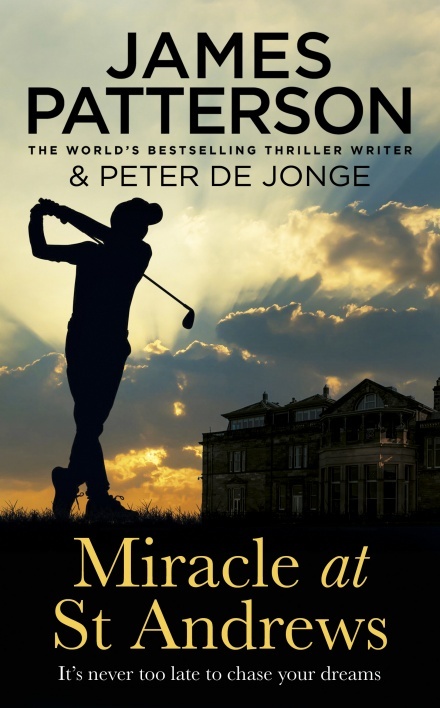
Miracle at St Andrews PDF - James Patterson
James Patterson • Literary novels • 147 Pages
(0)
Author
James PattersonCategory
literatureSection
Number Of Downloads
49
Number Of Reads
100
File Size
1.14 MB
Views
1,157
Quate
Review
Save
Share
Book Description
Miracle at St. Andrews by James Patterson and Peter de Jonge
Miracle at St. Andrews by James Patterson and Peter de Jonge is a warm, uplifting golf novel about failure, renewal, family, and the search for one last meaningful chance. Continuing the story of Travis McKinley, the ordinary man whose unexpected golf talent changed his life in Miracle on the 17th Green and Miracle at Augusta, this novel follows Travis after his professional dreams have begun to fade. His time on the senior tour is slipping away, his confidence is damaged, and the game that once gave him purpose now seems to be leaving him behind. When he travels with his family to Scotland and reaches the legendary courses of St. Andrews, Travis finds himself facing not only the history of golf, but the deeper question of what greatness really means.
A Golf Novel About Losing the Game and Finding Yourself
At the heart of Miracle at St. Andrews is a powerful emotional situation: Travis McKinley’s golfing career appears to be over. After disappointing performances, he crashes out of the U.S. Senior Tour and must face the painful possibility that his miracle run has ended. For a man who discovered golf as a late-life gift, this loss is more than professional frustration. It feels like the closing of a door he once believed had opened for a reason.
This gives the novel a different kind of tension from the earlier Travis McKinley stories. In Miracle on the 17th Green, Travis discovered that life could still surprise him. In Miracle at Augusta, he learned that success without humility could become its own burden. In Miracle at St. Andrews, he must confront decline, disappointment, and the fear that his best moments may already be behind him. The result is an inspiring sports fiction story about what happens when a person who has experienced a miracle must learn how to live after the applause fades.
Travis McKinley and the Pilgrimage to the Birthplace of Golf
The setting of St. Andrews gives the novel much of its emotional power. Known as the birthplace of golf, St. Andrews represents tradition, reverence, memory, and the spiritual center of the game. For Travis, traveling there is not simply a vacation. It is a pilgrimage. Every fairway, green, bunker, and stretch of links land carries the weight of golf history, making the journey feel deeply personal for a man trying to understand his place in the sport.
Travis takes his family on a long-awaited trip to the United Kingdom, hoping to escape the disappointment of his failing career and reconnect with the game he loves. Scotland becomes a place of reflection as much as competition. The beauty and history of the courses remind him why golf once mattered to him in the first place: not because of fame, money, or rankings, but because the game offered moments of grace, focus, and possibility. When an unexpected opportunity to play in the Scottish Open appears, Travis is forced to decide whether he still has the courage to believe in one more chance.
Family, Humility, and the Meaning of a Final Chance
Although Miracle at St. Andrews is clearly a golf story, its deeper appeal comes from family and self-discovery. Travis’s journey has never been only about tournaments. Across the series, golf has tested his marriage, his relationship with his children, his sense of identity, and his understanding of success. In this novel, those themes continue as he tries to balance disappointment with gratitude and ambition with perspective.
The idea of a “final chance” gives the story emotional weight. Travis is no longer the surprising newcomer chasing an impossible dream. He is a man who has tasted success and now must face the possibility of losing it. That makes the novel especially relatable for readers who understand that life’s hardest moments often come not before success, but after it—when a person must decide who they are without the dream that once defined them.
An Inspirational Sports Story with Classic Patterson Readability
Readers familiar with James Patterson will recognize the clear pacing, short chapters, and accessible storytelling that make his books easy to enter and enjoyable to read. But Miracle at St. Andrews has a gentler tone than his thrillers. The suspense is not built around crime or danger. Instead, it comes from emotional pressure: whether Travis can recover his confidence, whether he can honor the game without being consumed by it, and whether he can find meaning even if victory is no longer guaranteed.
Peter de Jonge, who co-writes the Travis McKinley golf novels, brings a natural feel for the sport and its emotional rhythms. The book understands that golf is not only physical skill; it is patience, memory, discipline, failure, and mental courage. A single shot can change a round, but a single round can also reveal something about a person’s character. That makes Miracle at St. Andrews appealing not only to golf fans, but also to readers who enjoy reflective, hopeful fiction about ordinary people facing defining moments.
Themes of Renewal, Grace, and the Search for Greatness
One of the strongest themes in Miracle at St. Andrews is renewal. Travis is not beginning again from innocence. He has already known triumph, embarrassment, pressure, and doubt. His challenge is to find a new kind of faith after experience has made him more aware of failure. This gives the novel a mature and thoughtful quality. It does not suggest that dreams are easy or that second chances always arrive in perfect form. Instead, it shows that hope can return quietly, often when a person is willing to let go of pride.
The novel also explores greatness in a meaningful way. Greatness in Miracle at St. Andrews is not only about winning a tournament or playing on a legendary course. It is about becoming honest with oneself, respecting the game, staying connected to family, and understanding that a miracle may be less about the scoreboard than about the person changed by the journey.
Who Should Read Miracle at St. Andrews?
Miracle at St. Andrews is a strong choice for readers who enjoy golf fiction, inspirational novels, sports stories, and books about second chances later in life. It will especially appeal to readers who followed Travis McKinley through Miracle on the 17th Green and Miracle at Augusta, because this third novel gives his journey a reflective and satisfying continuation. The publisher lists the book as part of the Travis McKinley series and under Fiction and Sports, making it a natural fit for readers looking for a warm, character-centered golf novel.
The book is also suitable for readers who want a lighter, more hopeful side of James Patterson. It is not a murder mystery or a crime thriller. Instead, it is a story about aging, family, disappointment, faith, and the quiet courage required to try again after the world has already begun to count you out.
A Hopeful Novel About Golf, Family, and One Last Shot
What makes Miracle at St. Andrews memorable is the way it treats golf as both a sport and a metaphor for life. Travis McKinley’s journey to Scotland is a journey into the soul of the game, but it is also a journey into his own doubts, regrets, and hopes. On the legendary greens of St. Andrews, he must face the truth about his career, his family, and the kind of man he wants to be when the miracle seems almost gone.
For readers searching for a heartwarming James Patterson golf novel, Miracle at St. Andrews offers inspiration, sports drama, emotional reflection, and a moving story about one ordinary man’s search for greatness. It is a novel about the beauty of the game, the pain of decline, and the enduring possibility that life can still offer one more extraordinary round.
James Patterson
James Patterson is an American novelist, storyteller, and major figure in contemporary popular fiction, best known for his crime novels, psychological thrillers, suspense series, and highly readable books for adults, young readers, and children. His reputation rests on a distinctive narrative style built around short chapters, rapid scene changes, direct dialogue, rising danger, and the constant feeling that another revelation is waiting on the next page. Born in New York, Patterson studied English literature before beginning a successful career in advertising, and that professional background helped shape the way he approaches fiction. He understands pacing, audience attention, memorable titles, and the emotional pull of a strong opening, and these qualities appear throughout his novels. Patterson first gained recognition with his early fiction, but his international fame expanded dramatically with the creation of Alex Cross, the detective and psychologist who became one of the most recognizable characters in modern American crime writing. Through Alex Cross, Patterson developed a powerful blend of police investigation, psychological tension, personal vulnerability, family loyalty, moral pressure, and confrontation with dangerous criminals. The series helped define his public image as a writer who could deliver suspense with speed and emotional clarity. Beyond Alex Cross, Patterson has created or co-created many successful series, including Women’s Murder Club, Michael Bennett, Maximum Ride, Private, Middle School, I Funny, and other projects that move across crime fiction, adventure, young adult fantasy, humor, and family reading. His range is one of the reasons his readership is so broad. He does not write only for dedicated thriller fans; he also writes for reluctant readers, younger audiences, casual readers, and people who want a book that is easy to begin and difficult to put down. His prose is not designed to be ornamental or slow. Instead, it favors momentum, clarity, suspense, and dramatic payoff. Critics have sometimes debated his commercial style, his extraordinary productivity, and his frequent collaborations with other writers, yet his influence on the publishing world remains undeniable. Patterson helped turn the modern thriller series into a powerful reading brand, showing how recurring characters, familiar structures, and cinematic pacing can create long-term reader loyalty. His collaborative method also reflects a broader understanding of publishing as both creative storytelling and organized production, allowing him to sustain multiple fictional worlds at the same time. Themes that appear often in his work include justice, fear, violence, corruption, family protection, survival, friendship, courage, and the tension between public duty and private life. Several of his books have reached audiences beyond the printed page, strengthening his connection with popular culture. Patterson is also widely associated with literacy advocacy. He has supported libraries, schools, independent bookstores, teachers, scholarships, and programs designed to help children discover the pleasure of reading. This commitment gives his career a cultural dimension beyond bestseller lists. He is not only a writer of commercial success, but also a public advocate for books and reading. For a book website, James Patterson is an important author to present because his work offers many entry points for different readers: crime lovers can begin with Alex Cross, mystery fans can explore Women’s Murder Club, action readers can follow Michael Bennett, and younger readers can discover his school stories and adventure series. His career shows how popular fiction can combine accessibility, suspense, emotional engagement, and professional discipline to become a global reading phenomenon.
Earn Rewards While Reading!
Every 10 pages you read and spent 30 seconds on every page, earns you 5 reward points! Keep reading to unlock achievements and exclusive benefits.
Read
Rate Now
5 Stars
4 Stars
3 Stars
2 Stars
1 Stars
Miracle at St Andrews Quotes
Top Rated
Latest
Quate
Be the first to leave a quote and earn 10 points
instead of 3
'%20/%3e%3c/svg%3e "Along Came a Spider")
Comments
Be the first to leave a comment and earn 5 points
instead of 3