

The source of the book
This book is published for the public benefit under a Creative Commons license, or with the permission of the author or publisher. If you have any objections to its publication, please contact us.
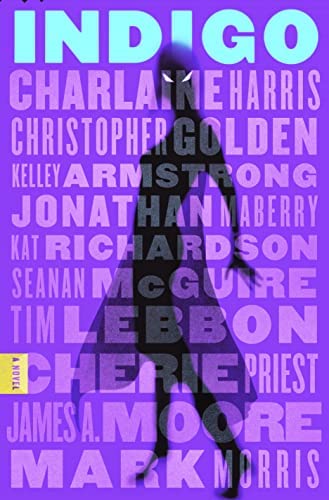
Indigo PDF - Charlaine Harris
Charlaine Harris • Fantasy novels • 297 Pages
(0)
Author
Charlaine HarrisCategory
literatureSection
Number Of Downloads
47
Number Of Reads
130
File Size
1.71 MB
Views
1,594
Quate
Review
Save
Share
Book Description
Indigo by Charlaine Harris and Coauthors
Indigo is a collaborative fantasy thriller and superhero-style mystery written by Charlaine Harris, Christopher Golden, Kelley Armstrong, Jonathan Maberry, Kat Richardson, Seanan McGuire, Tim Lebbon, Cherie Priest, James A. Moore, and Mark Morris. Published as Indigo: A Novel and also described as Indigo: A Mosaic Novel, the book brings together a major lineup of bestselling and acclaimed genre authors to tell one connected story about a shadow-powered vigilante, a dangerous cult, and a heroine whose own memories may be built on lies. Macmillan lists the authors as Charlaine Harris, Christopher Golden, Kelley Armstrong, Jonathan Maberry, Kat Richardson, Seanan McGuire, Tim Lebbon, Cherie Priest, James Moore, and Mark Morris, with the book released on June 20, 2017.
A Dark Superhero Mystery with a Crime-Thriller Edge
At the center of Indigo is Nora Hesper, an investigative reporter in New York City who leads a second life after dark. By day, Nora works with facts, witnesses, and stories; by night, she becomes Indigo, an urban legend and brutal vigilante who can shape darkness into weapons and move through the city by slipping from one shadow to another. Her powers make her terrifying to criminals, but they also isolate her from ordinary life, because Nora’s identity is divided between the public search for truth and the private violence of her hidden mission.
The novel begins with a strong crime-fiction premise: children are being murdered in New York, and Nora is determined to stop the people responsible. Her investigation leads her again and again to the Children of Phonos, a murderous cult whose rituals and secrets are tied to violence, sacrifice, and Nora’s own mysterious past. This gives Indigo a darker tone than a traditional superhero adventure. It is not simply a story of a costumed hero fighting villains. It is a thriller about trauma, memory, identity, and the frightening possibility that the heroine may not know the truth about herself.
Nora Hesper and the Shadow of Indigo
Nora Hesper is a compelling heroine because her life is built around contradiction. As a reporter, she is trained to uncover facts, challenge official stories, and follow evidence. As Indigo, she works outside the law, using fear and violence against people she believes are monsters. That tension gives the novel much of its energy. Nora wants justice, but the form that justice takes becomes increasingly complicated as the truth begins to shift around her.
Her powers are visually striking and thematically meaningful. Indigo can forge darkness into weapons and travel by shadow, which makes her feel like a figure from urban myth rather than a conventional crimefighter. Yet the darkness around her is not only supernatural. It also represents buried memory, hidden trauma, and the parts of her origin story she has never fully questioned. When a dying cultist makes claims that challenge what Nora believes about her past, her identity begins to unravel. Macmillan’s description explains that Nora’s parents were killed when she was nineteen, but as she examines her memories, she discovers that much of what she believes about her later life may be false.
The Children of Phonos and the Horror Beneath the City
The Children of Phonos give Indigo its central threat. They are not ordinary criminals motivated only by money or power. They are a cult whose actions are ritualistic, violent, and connected to a larger supernatural mystery. Publishers Weekly describes the novel as following New York journalist Nora Hesper as she deals with her alter ego, Indigo, and confronts the evil cult known as the Children of Phonos, whose rites include the ritual murder of children.
This cult element adds horror to the story’s thriller structure. New York becomes a city of hidden passages, secret violence, and shadows that contain more than darkness. Nora’s battle with the Children of Phonos is personal, professional, and supernatural at once. She is investigating them as a journalist, hunting them as Indigo, and slowly discovering that her own history may be tied to them in ways she never imagined. That layered conflict makes the book appealing for readers who enjoy dark urban fantasy, supernatural crime fiction, and superhero thrillers with horror elements.
A Collaborative Novel with a Mosaic Structure
One of the most distinctive features of Indigo is its collaborative authorship. Rather than being a standard single-author novel or a short story anthology, the book is a shared narrative created by ten writers known for fantasy, horror, mystery, thriller, and urban fantasy. Fantastic Fiction lists Indigo as a 2017 novel by Kelley Armstrong, Christopher Golden, Charlaine Harris, Tim Lebbon, Jonathan Maberry, Seanan McGuire, James A. Moore, Mark Morris, Cherie Priest, and Kat Richardson.
This mosaic approach gives the book a special appeal for genre readers. Each author brings experience with suspense, supernatural worlds, monsters, magic, crime, and strong protagonists, while the novel remains focused on Nora’s central story. Readers familiar with Charlaine Harris may come for her name, but Indigo also offers the pleasure of seeing several major speculative-fiction voices working inside one shared world. The result is a book that feels like a crossover between a superhero origin story, a supernatural mystery, and a dark city thriller.
Identity, Memory, and the Problem of Origin Stories
Many superhero stories depend on an origin: the event that explains who the hero is and why they fight. Indigo questions that structure directly. Nora believes she knows her own origin story, including the death of her parents, her travels, and the strange training that led her to become Indigo. But the novel slowly suggests that some of this history may have been shaped, planted, or falsified. The mystery is not only who is killing children or what the Children of Phonos want. It is also where Nora’s power really comes from.
This makes Indigo by Charlaine Harris and coauthors especially interesting for readers who enjoy psychological tension inside speculative fiction. Nora’s greatest weapon is darkness, but her greatest danger may be uncertainty. If her memories cannot be trusted, then her mission, her guilt, her rage, and even her identity become unstable. The book uses superhero conventions in a darker way, asking what happens when the hero’s origin is not a source of clarity but a trap.
New York as a City of Shadows
The New York setting gives Indigo a strong urban atmosphere. Nora’s work as a reporter places her in the public life of the city, while Indigo’s shadow-travel moves her through rooftops, alleys, crime scenes, and hidden spaces. The city becomes more than a backdrop; it is a living maze of light and darkness, publicity and secrecy, human grief and supernatural violence.
This setting is especially effective because Nora’s two identities use the city differently. Nora investigates through interviews, evidence, and observation. Indigo moves through fear, stealth, and power. Together, they reveal a city where truth is difficult to reach and danger often hides in plain sight. Readers who enjoy urban fantasy set in New York, crime-solving vigilante stories, and supernatural thrillers will find the atmosphere central to the book’s appeal.
Why Readers Enjoy Indigo
Indigo is ideal for readers who enjoy dark superhero fiction, urban fantasy thrillers, supernatural crime novels, and collaborative genre projects. It offers a shadow-powered heroine, a dangerous cult, a murder investigation, hidden memories, and a mystery that grows larger and stranger as Nora gets closer to the truth. The novel is also appealing for fans of any of its contributing authors, especially readers of Charlaine Harris, Kelley Armstrong, Seanan McGuire, Jonathan Maberry, and Christopher Golden.
Fans of Charlaine Harris’s other work may find Indigo different from the Sookie Stackhouse, Aurora Teagarden, Lily Bard, Harper Connelly, Midnight, Texas, and Gunnie Rose books, but it shares several familiar strengths: a strong female lead, a mystery-driven plot, supernatural danger, readable pacing, and a world where secrets matter. The difference is that Indigo moves more directly into superhero territory, combining vigilante justice with occult horror and psychological mystery.
A Supernatural Vigilante Story About Darkness and Truth
Indigo is a bold and atmospheric collaborative novel about Nora Hesper, a reporter whose shadow-powered alter ego hunts a murderous cult while uncovering disturbing questions about her own past. With its blend of superhero fiction, fantasy thriller, urban mystery, and dark supernatural suspense, the book offers a fast-moving story built around danger, identity, and the hidden cost of becoming a legend.
For readers searching for a Charlaine Harris book, a collaborative fantasy novel, a dark superhero mystery, or an urban fantasy thriller about a vigilante with shadow powers, Indigo delivers a distinctive and memorable reading experience. It is a story about the line between justice and vengeance, the fragility of memory, and the terrifying possibility that the darkness a hero commands may also be the darkness that created her.
Charlaine Harris
Charlaine Harris is an American author best known for her influential work in mystery fiction, urban fantasy, paranormal suspense, and character-driven popular literature. She became internationally famous through the Sookie Stackhouse novels, also known as The Southern Vampire Mysteries, a bestselling series that inspired the television drama True Blood and introduced millions of readers and viewers to her distinctive blend of Southern atmosphere, supernatural intrigue, romance, humor, and danger. Harris’s fiction is especially admired for its accessible storytelling, lively dialogue, and memorable heroines, many of whom live in small communities where secrets, gossip, violence, and loyalty shape daily life. Her books often begin with the familiar textures of ordinary towns, libraries, bars, homes, and local relationships, then gradually reveal hidden worlds of crime, magic, death, prejudice, and moral uncertainty. This ability to make the extraordinary feel rooted in everyday experience is one of the reasons her novels continue to appeal to a wide readership across genres. Before achieving worldwide recognition with Sookie Stackhouse, Harris wrote traditional mysteries and developed several successful series, including the Aurora Teagarden mysteries, which follow a librarian and true-crime enthusiast with a talent for uncovering murder; the Lily Bard novels, set in the town of Shakespeare, Arkansas, and centered on a survivor whose quiet life is repeatedly disturbed by violence; and the Harper Connelly series, which combines crime investigation with a supernatural ability to sense the dead. These works show Harris’s range as a storyteller and her long-standing interest in women who are underestimated by others but possess intelligence, resilience, and emotional strength. Her later projects, including the Midnight, Texas novels and the Gunnie Rose series, further demonstrate her talent for building imaginative fictional communities where fantasy, mystery, and social tension overlap. A central feature of Harris’s writing is her use of genre as a way to explore identity, exclusion, fear, desire, and survival. Vampires, psychics, shapeshifters, witches, gunfighters, and murderers are never simply decorative elements; they are part of a broader narrative world in which outsiders struggle to define themselves and protect those they love. At the same time, Harris never loses sight of entertainment. Her plots are fast-moving, her chapters are easy to follow, and her characters speak with warmth, wit, suspicion, and emotional immediacy. This balance between readability and thematic richness has made her a major figure in contemporary commercial fiction. Charlaine Harris’s books are especially valuable for readers who enjoy mystery novels with strong female protagonists, paranormal stories with human depth, Southern Gothic undertones, and serialized storytelling that rewards long-term emotional investment. Her influence can be seen in the popularity of modern urban fantasy that combines romance, crime, humor, and supernatural world-building. For book websites, author pages, and SEO-focused literary content, Charlaine Harris is strongly associated with keywords such as American mystery writer, Sookie Stackhouse author, Southern Vampire Mysteries, True Blood inspiration, paranormal fiction, urban fantasy novels, Aurora Teagarden mysteries, and bestselling crime fantasy. Her career reflects the power of genre fiction to entertain, surprise, and examine social boundaries while keeping readers deeply attached to characters who feel both unusual and recognizably human.
Earn Rewards While Reading!
Every 10 pages you read and spent 30 seconds on every page, earns you 5 reward points! Keep reading to unlock achievements and exclusive benefits.
Read
Rate Now
5 Stars
4 Stars
3 Stars
2 Stars
1 Stars
Indigo Quotes
Top Rated
Latest
Quate
Be the first to leave a quote and earn 10 points
instead of 3
Other books by Charlaine Harris
Other books like Indigo
'%20/%3e%3c/svg%3e "Fantastic Beasts: The Crimes of Grindelwald - the Original Screenplay")
J. K. Rowling.
Fantasy novels
(0)
7658
English
Comments
Be the first to leave a comment and earn 5 points
instead of 3