
Newly released
This book is new and will be uploaded as soon as it becomes available to us and if we secure the necessary publishing rights.
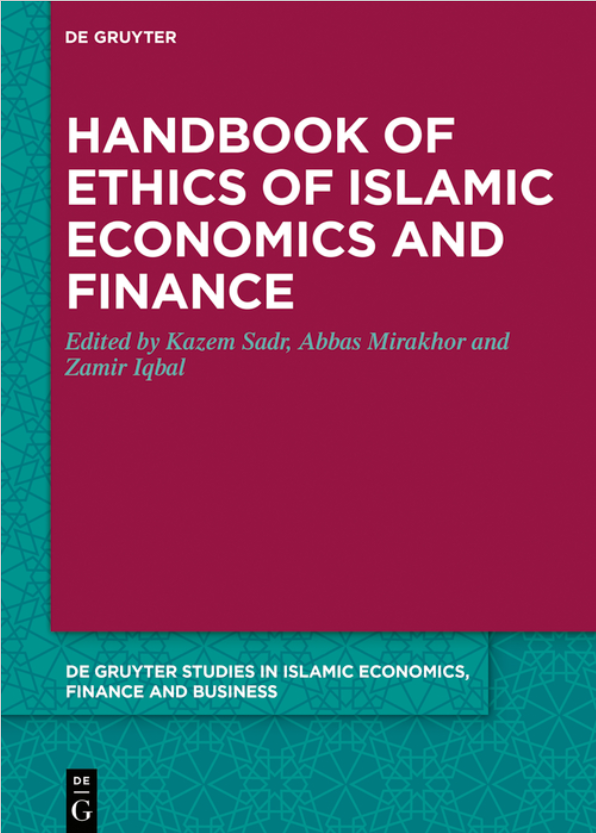
Handbook of Ethics of Islamic Economics and Finance PDF - Zamir Iqbal
Zamir Iqbal • Economy • 651 Pages
(0)
Quate
Review
Save
Share
Book Description
Since the financial crisis of 2007/2008, a renewed discussion on the ethics and finance is being examined from different dimensions - finance for good society, responsible finance, ethical finance, financial crimes, and financial repression. The principal objective of this Handbook on Ethics of Islamic Economics and Finance is to provide a deeper understanding of the ethical underpinning of Islamic economics and finance.
The reader will notice that the Handbook reflects a diversity of views on the subject of economic and business ethics in Islam across the intellectual spectrum of Muslim thought over the globe. Handbook attempts to find answers to some questions concerning the definition and characteristics of the ethical system in Islam. What is its goal and how do its rules and practices ensure welfare for individuals and society? Are the moral principles universal and invariable or do they change and adapt with the social changes of communities and progress in science and technology? Is the present generation accountable for the welfare of future generations? Where is the boundary between law and ethics and who guarantees their adoption and implementation?
Zamir Iqbal
Dr. Zamir Iqbal is Vice President, Finance (Chief Financial Officer) at the Islamic Development Bank. Prior to joining the IDB, Dr. Iqbal served at the World Bank for 25 years, latterly as head of the World Bank’s Global Islamic Finance Development Center in Istanbul. His experience spans the capital markets, asset management and risk management. Islamic finance has been his research focus and he has co-authored several articles and books on Islamic finance on the topics of banking risk, financial inclusion, economic development, financial stability and risk-sharing. He played an instrumental role in the publication of the World Bank’s and the IDB’s first global report on Islamic finance. He earned his Ph.D. in international finance from the George Washington University and served as Professional faculty at the Carey Business School of Johns Hopkins University.
Book Currently Unavailable
This book is currently unavailable for publication. We obtained it under a Creative Commons license, but the author or publisher has not granted permission to publish it.
Rate Now
5 Stars
4 Stars
3 Stars
2 Stars
1 Stars
Handbook of Ethics of Islamic Economics and Finance Quotes
Top Rated
Latest
Quate
Be the first to leave a quote and earn 10 points
instead of 3
Other books by Zamir Iqbal
'%20/%3e%3c/svg%3e "Globalization and Islamic Finance: Convergence, Prospects, and Challenges")
1041
English
Other books like Handbook of Ethics of Islamic Economics and Finance
2025
English
Comments
Be the first to leave a comment and earn 5 points
instead of 3