
Newly released
This book is new and will be uploaded as soon as it becomes available to us and if we secure the necessary publishing rights.
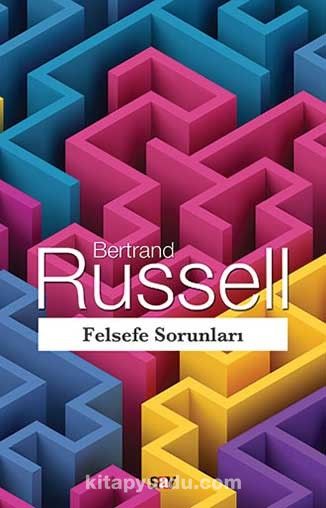
Felsefe Sorunları PDF - Bertrand Russell
Bertrand Russell • Philosophy • 131 Pages
(0)
Quate
Review
Save
Share
Book Description
Felsefenin Sorunları, filozof Bertrand Russell'ın, yazarın felsefenin sorunlarına kısa ve erişilebilir bir rehber oluşturmaya çalıştığı 1912 tarihli bir kitabıdır. Olumlu ve yapıcı tartışmalara yol açacağına inandığı problemlere odaklanan Russell, metafizikten ziyade bilgi üzerinde yoğunlaşır: Eğer dış nesnelerin var olduğu kesin değilse, o zaman onların bilgisine olasılık dışında nasıl sahip olabiliriz. Sırf duyu verileri nedeniyle dış nesnelerin varlığından şüphe etmek için hiçbir neden yoktur. Russell, 1910'da tanıyarak bilgi ve betimleme yoluyla bilgi arasındaki ünlü 1910 ayrımında okuyucuya rehberlik eder ve felsefenin temellerini atmak için Platon, Aristoteles, René Descartes, David Hume, John Locke, Immanuel Kant, Georg Wilhelm Friedrich Hegel ve diğerlerinin önemli teorilerini sunar. genel okuyucular ve bilim adamları tarafından soruşturma. İlerleyen sayfalarda, yalnızca olumsuz eleştiri yersiz göründüğü için, olumlu ve yapıcı bir şeyler söylemenin mümkün olduğunu düşündüğüm felsefe sorunlarıyla esas olarak kendimi sınırladım. Bu nedenle, bu ciltte bilgi teorisi metafizikten daha geniş bir yer kaplar ve filozoflar tarafından çokça tartışılan bazı konular, eğer varsa, çok kısaca işlenir.
Bertrand Russell
Bertrand Arthur William Russell, (18 May 1872 – 2 February 1970) was a British mathematician, philosopher, logician, and public intellectual. He had a considerable influence on mathematics, logic, set theory, linguistics, artificial intelligence, cognitive science, computer science and various areas of analytic philosophy, especially philosophy of mathematics, philosophy of language, epistemology, and metaphysics.
He was one of the early 20th century's most prominent logicians, and a founder of analytic philosophy, along with his predecessor Gottlob Frege, his friend and colleague G. E. Moore and his student and protégé Ludwig Wittgenstein. Russell with Moore led the British "revolt against idealism". Together with his former teacher A. N. Whitehead, Russell wrote Principia Mathematica, a milestone in the development of classical logic, and a major attempt to reduce the whole of mathematics to logic (see Logicism). Russell's article "On Denoting" has been considered a "paradigm of philosophy".
Russell was a pacifist who championed anti-imperialism and chaired the India League.He occasionally advocated preventive nuclear war, before the opportunity provided by the atomic monopoly had passed and he decided he would "welcome with enthusiasm" world government. He went to prison for his pacifism during World War I. Later, Russell concluded that the war against Adolf Hitler's Nazi Germany was a necessary "lesser of two evils" and also criticized Stalinist totalitarianism, condemned the United States' war on Vietnam and was an outspoken proponent of nuclear disarmament. In 1950, Russell was awarded the Nobel Prize in Literature "in recognition of his varied and significant writings in which he champions humanitarian ideals and freedom of thought". He was also the recipient of the De Morgan Medal (1932), Sylvester Medal (1934), Kalinga Prize (1957), and Jerusalem Prize (1963).
Book Currently Unavailable
This book is currently unavailable for publication. We obtained it under a Creative Commons license, but the author or publisher has not granted permission to publish it.
Rate Now
5 Stars
4 Stars
3 Stars
2 Stars
1 Stars
Felsefe Sorunları Quotes
Top Rated
Latest
Quate
Be the first to leave a quote and earn 10 points
instead of 3
'%20/%3e%3c/svg%3e "Sorgulayan Denemeler")
Comments
Be the first to leave a comment and earn 5 points
instead of 3