
Newly released
This book is new and will be uploaded as soon as it becomes available to us and if we secure the necessary publishing rights.
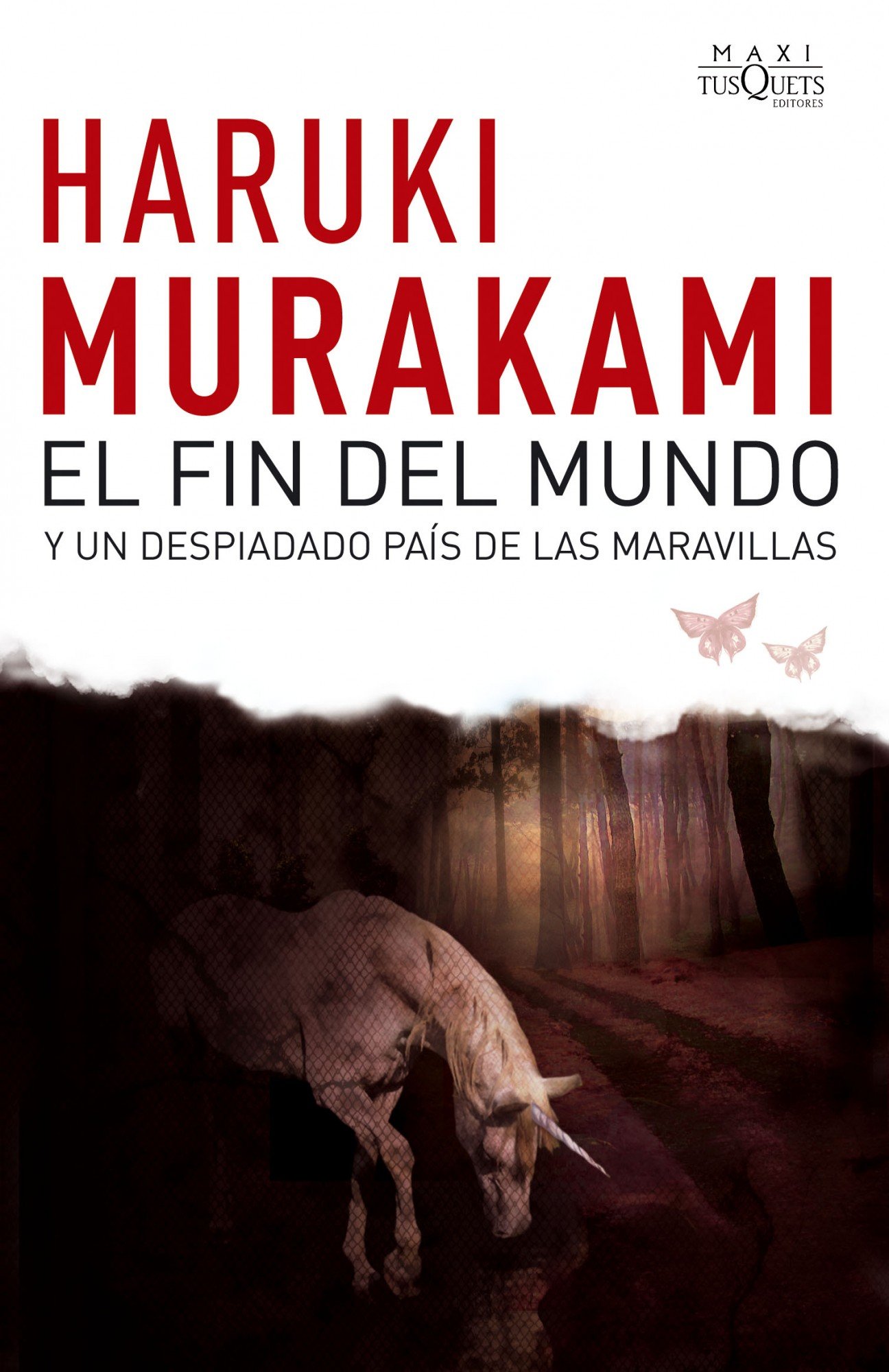
El fin del mundo y un despiadado país de las maravillas PDF - Haruki Murakami
Haruki Murakami • Fantasy novels • 605 Pages
(0)
Quate
Review
Save
Share
Book Description
Dos historias paralelas se desarrollan en escenarios de nombre evocador: una, en una misteriosa ciudad amurallada, el fin del mundo; y la otra, en un Tokio de un futuro quiza no muy lejano, un cruel pais de las maravillas. En la primera, el narrador, anonimo, se ve privado de su sombra, de sus recuerdos, y compelido a leer suenos entre unos habitantes de extranas carencias animicas y unicornios cuyo pelaje se torna dorado en invierno; en la segunda, el narrador, cuyo nombre tambien se desconoce, es un informatico de gustos refinados que trabaja en una turbia institucion paragubernamental enfrentada con otra organizacion no menos siniestra en una guerra por el control de la informacion; sus servicios son requeridos por un inquietante cientifico que juguetea con la manipulacion del subconsciente y vive aislado en la red de alcantarillado, una red poblada por tenebrosas criaturas carnivoras... / Two parallel stories developed in evocative scenarios: one in a mysterious walled city, the other in Tokyo, in a not too distant future. In the first one, the narrator, unnamed, is deprived of his shadow, his memories and dreams, forced to read dreams among people with strange psychic shortcomings and unicorns whose fur turns golden in winter. The second one, the narrator, whose name is also unknown, is a computer of refined tastes who works in an institution faced with another organization no less sinister in a war for control of information.
Haruki Murakami
Haruki Murakami is a Japanese novelist, short story writer, essayist, and literary translator whose fiction has become one of the most distinctive and widely read bodies of contemporary world literature. Born in Kyoto in 1949 and raised in Kobe, he later moved to Tokyo and studied at Waseda University, a background that helped shape his lifelong interest in cities, memory, music, youth, solitude, and the hidden emotional patterns of ordinary life. Before becoming a full time writer, Murakami and his wife ran a small jazz bar, and that experience left a lasting imprint on his imagination. Music in his books is never merely decorative; it often becomes a way for characters to remember, grieve, wait, desire, or understand the distance between themselves and others. He began his literary career with Hear the Wind Sing, followed by Pinball, 1973 and A Wild Sheep Chase, early works that introduced many of the elements now associated with his name: quiet narrators, ironic restraint, cats, disappearances, mysterious women, fragmented memories, popular culture, and sudden openings from everyday life into dreamlike or metaphysical spaces. His breakthrough came with Norwegian Wood, a deeply emotional novel about youth, love, death, depression, memory, and regret. More realistic than many of his later works, it made him a major literary figure in Japan and introduced many readers around the world to the melancholy clarity of his voice. Murakami’s major novels include Hard Boiled Wonderland and the End of the World, Dance Dance Dance, South of the Border, West of the Sun, The Wind Up Bird Chronicle, Sputnik Sweetheart, Kafka on the Shore, After Dark, Colorless Tsukuru Tazaki and His Years of Pilgrimage, Killing Commendatore, and The City and Its Uncertain Walls. Across these books, he blends realism, surrealism, magical realism, psychological mystery, philosophical fiction, romance, fantasy, and noir without losing the calm surface of his prose. A typical Murakami story may begin with a man cooking alone, a missing cat, a phone call, a piece of music, a memory of lost love, a well, a library, or a strange town, but it gradually opens into questions about identity, time, desire, trauma, and the invisible structures that shape human life. His characters are often quiet people who listen closely to music, read books, prepare simple meals, run, wander through cities, or wait for someone who may never return. Their solitude is not empty; it becomes a sensitive space in which the hidden world can be heard. Murakami is also an important writer of short fiction, with collections such as The Elephant Vanishes, After the Quake, Blind Willow, Sleeping Woman, Men Without Women, and First Person Singular. His nonfiction work is equally significant. Underground gathers voices connected to the Tokyo subway sarin attack and reflects on public memory, violence, and ordinary lives touched by catastrophe. What I Talk About When I Talk About Running links long distance running with writing, discipline, endurance, aging, and personal freedom. As a translator into Japanese, Murakami has introduced and renewed interest in major writers from English language literature, including figures associated with modern American fiction, crime fiction, and short story traditions. His books have been translated into dozens of languages and have received major honors including the Yomiuri Prize, the World Fantasy Award, the Franz Kafka Prize, the Jerusalem Prize, the Hans Christian Andersen Literature Award, and the Princess of Asturias Award for Literature. Haruki Murakami’s enduring importance lies in his ability to make loneliness luminous, to turn ordinary rooms into thresholds, and to write novels that feel intimate, musical, mysterious, and universal.
Book Currently Unavailable
This book is currently unavailable for publication. We obtained it under a Creative Commons license, but the author or publisher has not granted permission to publish it.
Rate Now
5 Stars
4 Stars
3 Stars
2 Stars
1 Stars
El fin del mundo y un despiadado país de las maravillas Quotes
Top Rated
Latest
Quate
Be the first to leave a quote and earn 10 points
instead of 3
'%20/%3e%3c/svg%3e "La caza del carnero salvaje")
Comments
Be the first to leave a comment and earn 5 points
instead of 3