
Newly released
This book is new and will be uploaded as soon as it becomes available to us and if we secure the necessary publishing rights.
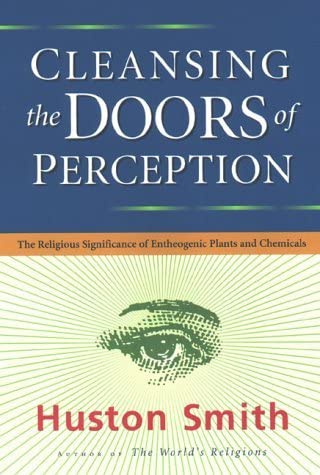
Cleansing the Doors of Perception: The Religious Significance of Entheogenic Plants and Chemicals PDF - Huston Smith
Huston Smith • Religions comparison • 189 Pages
(0)
Quate
Review
Save
Share
Book Description
This book opens with a description of my first entheogen experience, and - because objective understanding of these substances is the book's primaryaim - this leaves me with no alternative but to talk about myself; for there is no direct line from chemical brain states to the experiences they occasion. Invariably the psychological makeup of the subject (his “set,” as investigingestion, its “setting.” The reader needs to be aware of this, for whether Iators call it) acts as a filter, as do the circumstances surrounding the ingestion, its “setting.” The reader needs to be aware of this, for whether I am reporting experiences I have had or registering conclusions that I have reached on the tricky issues this book takes up, I (the book's author) am inevitably present in its pages for establishing the angle from which the subject is viewed. The object of this Introduction is to make that angle clear, and it can be relatively brief, for only things that bear on the book's subject need be included.
Huston Smith
Huston Cummings Smith (May 31, 1919 – December 30, 2016) was an influential scholar of religious studies in the United States, He authored at least thirteen books on world's religions and philosophy, and his book about comparative religion, The World's Religions (originally titled The Religions of Man) sold over three million copies as of 2017.
Born and raised in Suzhou, China in a Methodist missionary family, Smith moved back to the United States at the age of 17 and graduated from the University of Chicago in 1945 with a PhD in philosophy. He spent the majority of his academic career as a professor at Washington University in St. Louis (1947-1958), Massachusetts Institute of Technology (1958–1973) and Syracuse University (1973–1983). In 1983, he retired from Syracuse and moved to Berkeley, California, where he was a visiting professor of religious studies at the University of California, Berkeley until his death.
Early life : On May 31, 1919, Huston Cummings Smith was born in Dzang Zok, Suzhou, China to Methodist missionaries and spent his first 17 years there. His first language was Mandarin Chinese, spoken with Suzhou dialect.
Upon coming to the United States to complete his education, he received a BA from Central Methodist University in 1940 and a PhD in philosophy from the University of Chicago in 1945.
While at Chicago, he married Eleanor Wieman, the daughter of Henry Nelson Wieman, a professor at the University of Chicago Divinity School. She later changed her name to Kendra.They had three daughters, Karen, Gael, and Kimberly Smith.
Academic career : Smith taught at the University of Denver from 1945 to 1947, and then at Washington University in St. Louis, Missouri for the next 10 years.
In 1958, Smith was appointed professor of philosophy at the Massachusetts Institute of Technology (MIT), where he remained until 1973.While there, he participated in experiments with psychedelics that professors Timothy Leary and Richard Alpert conducted at Harvard University. In 1964, during a trip to India, Smith stayed in a Gyuto Tibetan Buddhist monastery. During his visit he heard the monks chanting and realized that each individual was producing a chord, composed of a fundamental note and overtones. He returned to record the chanting in 1967 and asked acoustic engineers at MIT to analyze the sound. They confirmed the finding, which is an example of overtone singing. Smith has called this the singular empirical discovery of his career. The recording was released as Music of Tibet (1967). Royalties from the album continue to support the Gyuto Tantric University. Because of his belief in religion, however, Smith was mistrusted by his colleagues, leading MIT to prohibit him from teaching graduate students.
Book Currently Unavailable
This book is currently unavailable for publication. We obtained it under a Creative Commons license, but the author or publisher has not granted permission to publish it.
Rate Now
5 Stars
4 Stars
3 Stars
2 Stars
1 Stars
Cleansing the Doors of Perception: The Religious Significance of Entheogenic Plants and Chemicals Quotes
Top Rated
Latest
Quate
Be the first to leave a quote and earn 10 points
instead of 3
Other books by Huston Smith
'%20/%3e%3c/svg%3e "The Way Things Are: Conversations with Huston Smith on the Spiritual Life")
Huston Smith.
Religions philosophy
(0)
1580
English
1537
English
Comments
Be the first to leave a comment and earn 5 points
instead of 3