

The source of the book
This book is published for the public benefit under a Creative Commons license, or with the permission of the author or publisher. If you have any objections to its publication, please contact us.
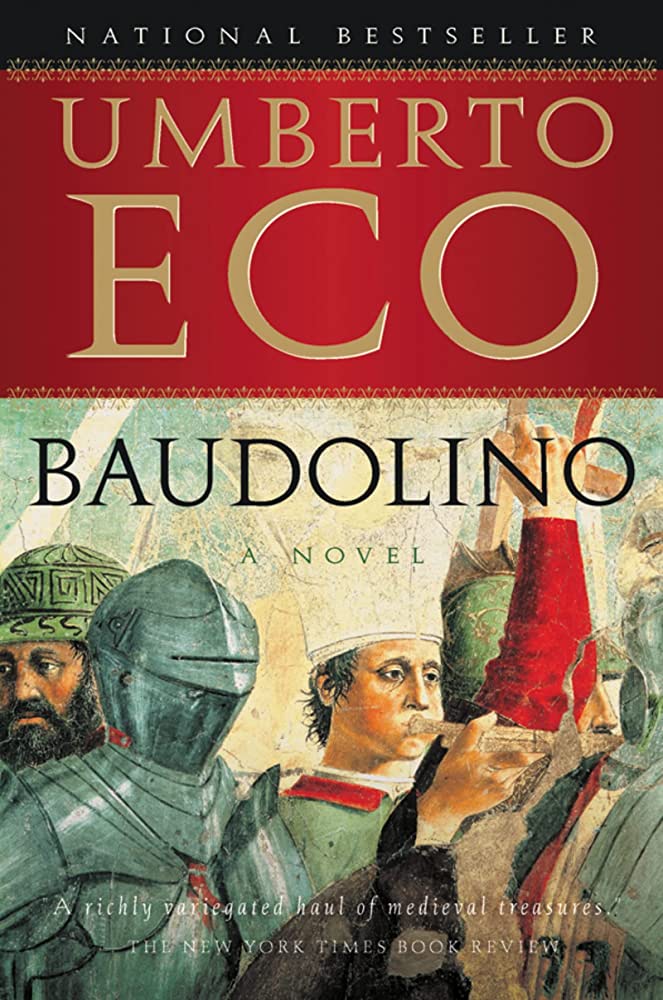
Baudolino PDF - Umberto Eco
Umberto Eco • Fantasy novels • 501 Pages
(0)
Author
Umberto EcoCategory
literatureSection
Number Of Downloads
30
Number Of Reads
243
File Size
1.93 MB
Views
940
Quate
Review
Save
Share
Book Description
"Baudolino" is a captivating novel written by renowned Italian author Umberto Eco. Published in 2000, this book takes readers on an extraordinary journey through medieval Europe, skillfully blending history, fiction, and mystery.
Set in the 12th century, the story revolves around the eponymous protagonist, Baudolino, a young man with a talent for storytelling and a penchant for embellishing the truth. Born in the fictional city of Alessandria, Baudolino embarks on a quest to find the fabled kingdom of Prester John, a mythical land believed to be filled with wonders and wisdom.
As Baudolino travels through the tumultuous landscape of medieval Europe, Eco masterfully recreates the historical backdrop, immersing readers in the political intrigues, religious conflicts, and intellectual ferment of the time. From encounters with historical figures such as Frederick Barbarossa and Nicetas Choniates to the infamous sack of Constantinople during the Fourth Crusade, the novel weaves a rich tapestry of historical events and imaginative storytelling.
At the heart of the novel lies the theme of the power of storytelling and the blurred boundaries between truth and fiction. Baudolino's narrative skills enable him to create elaborate tales and fabrications, blurring the lines between reality and fantasy. Through Baudolino's character, Eco explores the nature of storytelling itself, raising questions about the ways in which history is constructed and the enduring allure of myth and legend.
Eco's intricate prose brings the medieval world to life, with vivid descriptions of landscapes, cities, and religious rituals. His meticulous attention to historical detail is evident throughout the book, showcasing his extensive knowledge and research.
"Baudolino" showcases Eco's signature blend of erudition and imagination. The novel is replete with philosophical musings, theological debates, and references to medieval literature and philosophy. Eco's narrative style is dense yet poetic, demanding the reader's engagement and rewarding those who appreciate intellectual depth.
Beyond its historical and philosophical dimensions, the novel also explores themes of faith, love, and the search for meaning. Baudolino's journey becomes a quest for personal identity and self-discovery, as he grapples with his own desires, ambitions, and moral dilemmas.
In conclusion, "Baudolino" is a masterful work of historical fiction that transports readers to the medieval world, where history and imagination converge. Umberto Eco's rich storytelling, meticulous research, and profound exploration of truth and fiction make this novel a must-read for those who appreciate intellectual challenges and the allure of historical mysteries.
Umberto Eco
Umberto Eco (1932-2016) was an Italian writer, philosopher, semiotician, and literary critic. He is best known for his novel "The Name of the Rose" (Il nome della rosa), which was published in 1980 and became an international bestseller. Eco's works often blended elements of historical fiction, mystery, and intellectual exploration.
Born in Alessandria, Italy, Eco pursued studies in medieval philosophy and literature at the University of Turin. He went on to become a prominent scholar in semiotics, the study of signs and symbols and their interpretation. He developed a unique perspective on semiotics, integrating it with his interests in philosophy, literature, and cultural analysis.
"The Name of the Rose" catapulted Eco to literary fame. The novel is set in a medieval monastery and follows the Franciscan friar William of Baskerville as he investigates a series of mysterious deaths. The book masterfully combines elements of historical fiction, detective fiction, and intricate religious and philosophical debates.
Eco's other notable works include "Foucault's Pendulum" (Il pendolo di Foucault), published in 1988, and "The Prague Cemetery" (Il cimitero di Praga), published in 2010. Both novels explore similar themes of conspiracy, historical events, and the manipulation of information.
Besides his career as a writer, Umberto Eco was a respected academic and intellectual. He taught semiotics at the University of Bologna, where he also founded the Department of Communication Sciences. He published numerous scholarly articles and essays on a wide range of topics, including aesthetics, linguistics, media, and popular culture.
Eco's works often challenged readers with complex narratives, intertextuality, and an abundance of historical, cultural, and philosophical references. He was known for his erudition and intellectual depth, and his writings continue to be studied and celebrated for their richness and complexity.
Earn Rewards While Reading!
Every 10 pages you read and spent 30 seconds on every page, earns you 5 reward points! Keep reading to unlock achievements and exclusive benefits.
Read
Rate Now
5 Stars
4 Stars
3 Stars
2 Stars
1 Stars
Baudolino Quotes
Top Rated
Latest
Quate
Be the first to leave a quote and earn 10 points
instead of 3
Other books by Umberto Eco
Other books like Baudolino
'%20/%3e%3c/svg%3e "Fantastic Beasts: The Crimes of Grindelwald - the Original Screenplay")
J. K. Rowling.
Fantasy novels
(0)
7643
English
Comments
Be the first to leave a comment and earn 5 points
instead of 3